Expert list · Last reviewed April 13, 2026
Best Epilepsy Neurologists in California
Six California epilepsy neurologists — covering seizure surgery, drug-resistant epilepsy, and pediatric cases — selected by research impact and clinical credentials.
Loading map…
Finding the right epilepsy specialist matters more than most people realize. Epilepsy is not one condition — it is hundreds of distinct syndromes with different causes, different seizure types, and different treatment paths. A neurologist who treats temporal lobe seizures in adults is doing something quite different from one who manages pediatric Dravet syndrome or screens patients for seizure surgery. This page profiles six epilepsy neurologists at California's major academic medical centers whose published research, clinical programs, and subspecialty training set them apart.
This content is grounded in peer-reviewed research published by these specialists and informed by their publicly available clinical profiles. It is not a paid ranking.
How we identified these specialists
Each neurologist here holds a faculty appointment at a California academic medical center and carries subspecialty training in epilepsy. Their published research — measured by citation counts and contributions to clinical guidelines — has shaped how epilepsy is diagnosed and treated. Several have been recognized through independent peer-review programs.
No specialist paid to appear here. California has many capable epilepsy neurologists; every entry on this list reflects verifiable, publicly documented credentials.
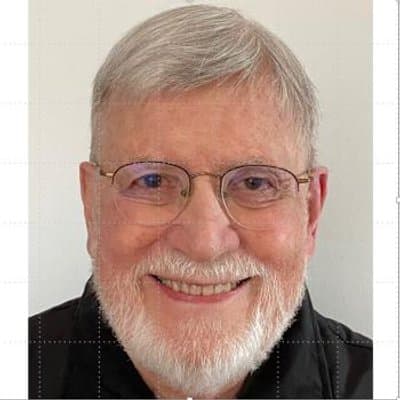
Kimford Meador, MD
Professor of Neurology and Neurological Sciences, Clinical Director, Stanford Comprehensive Epilepsy Center
Stanford Health Care
View specialist profileStanford Health Care, Stanford | Temporal lobe epilepsy, medication safety, neurocognition
Kimford Meador, MD, is Professor of Neurology and Clinical Director of the Stanford Comprehensive Epilepsy Center at Stanford Health Care, which also serves patients through Lucile Packard Children's Hospital Stanford. His clinical focus includes complex epilepsy, the cognitive effects of seizure medications, and epilepsy management during pregnancy. He is among the most-cited epilepsy researchers in the country, with more than 600 published works.
His research addresses some of the most consequential questions patients ask — not just whether a medication controls seizures, but what it does to memory, mood, and fetal development.
A 2006 multicenter study published in The Lancet Neurology that Dr. Meador contributed to identified a practical two-question screening tool for major depression in epilepsy patients — a population where depression often goes undetected because both conditions share overlapping symptoms 1. Depression affects roughly one in three people with epilepsy and directly worsens seizure control when untreated. A 2008 systematic review he led in Epilepsy Research synthesized data from pregnancy registries worldwide to quantify the risks of specific anti-seizure medications on fetal outcomes — work that now informs what neurologists tell women with epilepsy who are pregnant or planning to become pregnant 2. His group also contributed to the development of laser amygdalohippocampotomy (SLAH) for temporal lobe epilepsy, showing that MRI-guided laser surgery could spare naming and recognition functions that open skull surgery more often disrupts 3. Suicide risk in epilepsy — another under-recognized comorbidity — is an area he has also studied directly 4.
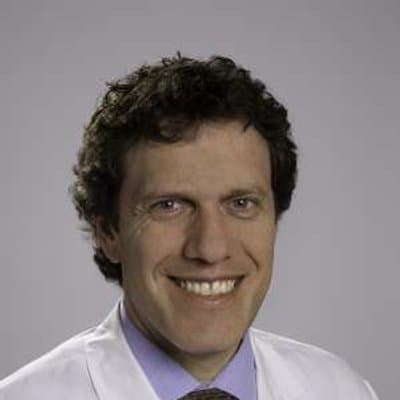
John Stern, MD
Professor and Director of the Epilepsy Clinical Program, Geffen School of Medicine at UCLA; Medical Director, UCLA Seizure Disorder Center
Ronald Reagan UCLA Medical Center
View specialist profileRonald Reagan UCLA Medical Center, Los Angeles | Juvenile myoclonic epilepsy, clinical neurophysiology, EEG
John Stern, MD, directs the Epilepsy Clinical Program in UCLA's Department of Neurology and serves as Medical Director of UCLA's Seizure Disorder Center, where he also runs the Epilepsy Fellowship Training Program. His clinical work covers the full range of seizure disorders in adults, with particular depth in juvenile myoclonic epilepsy and EEG-based diagnostics.
His contribution to a 2018 New England Journal of Medicine study identified a genetic variant in a gene called ICK (intestinal-cell kinase) that appears in roughly 7 percent of patients with juvenile myoclonic epilepsy — a common form of epilepsy that tends to begin in adolescence and is often misdiagnosed for years 5. The study also explained a cellular mechanism behind the characteristic polyspike EEG pattern seen in these patients, which may eventually point toward more targeted treatments than the broad-spectrum medications used today. For patients or families dealing with a JME diagnosis — especially one that has been hard to control — understanding the genetic underpinning can change how the condition is framed and managed.
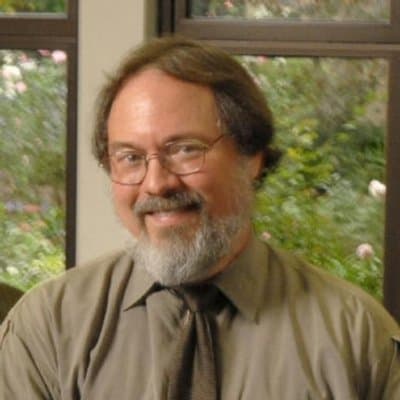
Robert Fisher, MD
Maslah Saul MD Professor and Director of the Stanford Epilepsy Center
Stanford Health Care
View specialist profileStanford Health Care, Stanford | Drug-resistant epilepsy, seizure surgery evaluation, responsive neurostimulation
Robert Fisher, MD, PhD, is the Maslah Saul MD Professor and Director of the Stanford Epilepsy Center. He has been caring for people with epilepsy for decades and is one of the most prominent figures in how epilepsy is defined and classified internationally.
He co-authored the 2017 International League Against Epilepsy paper that revised how seizure types are classified — replacing outdated terms like "complex partial" and "secondarily generalized" with a cleaner system that distinguishes focal from generalized onset and incorporates whether awareness is preserved 6. That classification framework is now used by every neurologist, insurance company, and clinical trial protocol that deals with epilepsy. For patients, it means the terminology your doctor uses today reflects where the science actually is. His 2000 paper documenting how epilepsy affects quality of life from the patient's perspective remains one of the more cited examples of research that put patient experience at the center of epilepsy outcomes measurement 7. His foundational work on animal models of epilepsy, published in 1989, helped establish the preclinical framework researchers still use to test new treatments 8. His current clinical focus at Stanford includes drug-resistant epilepsy, evaluation for seizure surgery, and responsive neurostimulation — devices implanted in the brain that detect and interrupt seizure activity in real time.
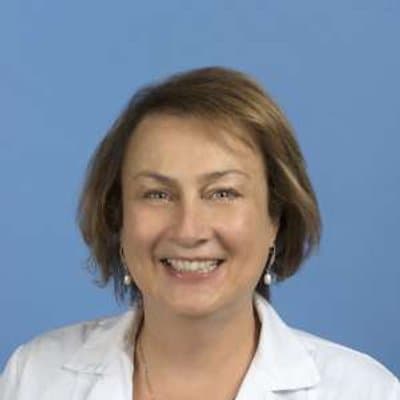
Dawn Eliashiv, M.D.
Professor of Neurology and Co-Director of the UCLA Seizure Disorders Center
UCLA Medical Center
View specialist profileUCLA Medical Center, Los Angeles | Refractory focal epilepsy, MEG-guided surgery, brain stimulation
Dawn Eliashiv, MD, is Professor of Neurology and Co-Director of the UCLA Seizure Disorders Center. Her clinical focus is refractory focal epilepsy — cases where seizures persist despite medications — and the advanced diagnostic and neuromodulation options available for those patients.
Her 2002 study in Neurology showed that ictal magnetoencephalography (MEG) recordings — captured during actual seizures — can localize the seizure onset zone as precisely as invasive electrode recordings in patients with neocortical epilepsy, potentially reducing the need for surgically implanted grids 9. For patients being evaluated for seizure surgery, MEG offers a non-invasive way to map where seizures start. Her research with intracranial EEG has also documented how the medial temporal lobe generates theta-frequency oscillations during real-world movement in epilepsy patients who have had electrodes implanted for clinical monitoring 10 — work that informs how memory and navigation networks are mapped before surgery to avoid damaging them. She has published in Nature, Nature Neuroscience, and eLife on the neuroscience of memory, directly relevant to how temporal lobe epilepsy surgery is planned when seizures originate near memory-critical tissue.
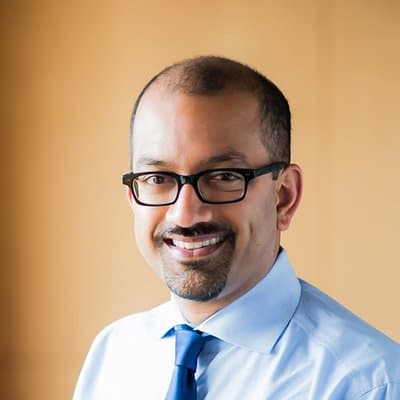
Vikram Rao, MD, PHD
Professor, Neurology; Distinguished Professor in Neurology
UCSF Medical Center
View specialist profileUCSF Medical Center, San Francisco | Adult epilepsy, translational neuroscience, network-based treatments
Vikram Rao, MD, PhD, is Distinguished Professor in Neurology at UCSF, where he sees adult epilepsy patients at UCSF Medical Center and Zuckerberg San Francisco General Hospital. His research background spans basic synaptic neuroscience and clinical epilepsy, with particular interest in how excitatory neurotransmitter systems contribute to seizure generation.
His work on glutamate receptors — specifically NMDA and AMPA receptors — has helped clarify how these channels change their behavior in ways relevant to seizure susceptibility and medication targets 11. These receptors are what many anti-seizure drugs and several experimental therapies act on, and understanding their plasticity is part of why some patients develop tolerance or treatment resistance over time. His dual training in neuroscience research and clinical neurology puts him at the intersection of basic science and patient care, which matters for patients whose epilepsy has not responded to standard medications and who want a neurologist thinking about mechanism, not just next medication choices.
Joseph Sullivan, M.D.
Professor, Neurology; Murphy Parker Endowed Professor in Pediatric Epilepsy
UCSF Benioff Children's Hospital San Francisco
View specialist profileUCSF Benioff Children's Hospital San Francisco, San Francisco | Pediatric epilepsy, Dravet syndrome, genetic epilepsies
Joseph Sullivan, MD, is the Murphy Parker Endowed Professor in Pediatric Epilepsy at UCSF and the director of pediatric epilepsy services at UCSF Benioff Children's Hospital San Francisco. He specializes in children with complex, treatment-resistant, or genetically defined epilepsies — including Dravet syndrome, which is caused by mutations in the SCN1A gene and typically begins in the first year of life.
He contributed to the 2015 Pediatrics study that gave the first reliable estimate of how many children in the United States have Dravet syndrome — about 1 in 15,700 live births — which was important both for clinical planning and for pushing awareness of a diagnosis that is frequently missed or delayed 12. More recently, his work on genetic testing in childhood epilepsy showed that combining standard sequence analysis with intragenic copy number variant detection increased diagnostic yield substantially — roughly a quarter of children with unexplained epilepsy carry a pathogenic variant that standard gene panels miss 13. For families who have received a vague "epilepsy of unknown cause" diagnosis and are wondering whether genetic testing would add anything, that finding is directly relevant. Dr. Sullivan sees patients at UCSF Benioff Children's Hospital in San Francisco and accepts referrals for second opinions on pediatric epilepsy cases.
What to expect from an epilepsy specialist
A first appointment with an epilepsy neurologist will cover different ground than a general neurology visit.
- Your neurologist will review your seizure history in detail — when they started, what they look like from your own experience, and what witnesses have described
- An EEG (electroencephalogram) is usually ordered if you have not had one, and a review of prior EEGs is common
- Brain MRI is standard for new epilepsy evaluations; specialized epilepsy protocols look for structural causes that routine MRI can miss
- Medication history matters — what you have tried, what doses, and whether you stopped due to side effects or lack of effect
- Comorbidities like depression, anxiety, memory problems, and sleep disorders are part of the epilepsy picture and will typically be assessed 1
- If you are a woman of childbearing age, your specialist will address medication safety during pregnancy proactively 2
Questions to ask at your first appointment
- What type of epilepsy do I have, and what does that mean for treatment options?
- Is my seizure onset focal or generalized?
- Have I tried enough medications to be considered drug-resistant, and what comes next if I have?
- Should I be evaluated for seizure surgery or a device like a VNS or RNS?
- Would genetic testing tell us something useful?
- What should I do if I have a seizure and how long before I should call 911?
- What are the driving restrictions in California for my situation?
- Are there clinical trials I should know about?
The bottom line
California has three of the country's leading comprehensive epilepsy centers — Stanford, UCLA, and UCSF — each accredited by the National Association of Epilepsy Centers at the highest level (Level 4). That means surgical evaluation, advanced monitoring, responsive neurostimulation, and specialized pediatric programs are available without leaving the state. The neurologists profiled here work within those programs. If your seizures have not responded to two or more medications, or if you have never been seen by someone who focuses specifically on epilepsy, a referral to one of these centers is worth pursuing.
Sources
- 1.Rapid detection of major depression in epilepsy: a multicentre study — The Lancet Neurology, 2006. DOI
- 2.Pregnancy outcomes in women with epilepsy: A systematic review and meta-analysis of published pregnancy registries and cohorts — Epilepsy Research, 2008. DOI
- 3.Better object recognition and naming outcome with<scp>MRI</scp>‐guided stereotactic laser amygdalohippocampotomy for temporal lobe epilepsy — Epilepsia, 2014. DOI
- 4.Rates and risk factors for suicide, suicidal ideation, and suicide attempts in chronic epilepsy — Epilepsy & Behavior, 2003. DOI
- 5.Variant Intestinal-Cell Kinase in Juvenile Myoclonic Epilepsy — New England Journal of Medicine, 2018. DOI
- 6.Operational classification of seizure types by the International League Against Epilepsy: Position Paper of the ILAE Commission for Classification and Terminology — Epilepsia, 2017. DOI
- 7.The impact of epilepsy from the patient’s perspective I. Descriptions and subjective perceptions — Epilepsy Research, 2000. DOI
- 8.
- 9.
- 10.Theta Oscillations in the Human Medial Temporal Lobe during Real-World Ambulatory Movement — Current Biology, 2017. DOI
- 11.
- 12.
- 13.Possible precision medicine implications from genetic testing using combined detection of sequence and intragenic copy number variants in a large cohort with childhood epilepsy — Epilepsia Open, 2019. DOI
Related specialist lists
neurology
Best Neurologists in New York
Six of New York's top neurologists — covering migraine, epilepsy, stroke, MS, and brain tumors — selected by peer recognition and published research.
neurology
Top neurologists in California 2026
Six of California's top neurologists — covering stroke, multiple sclerosis, Alzheimer's disease, and epilepsy — selected by published research and peer recognition.
neurology
Top neurologists in Massachusetts
Six of Massachusetts' top neurologists — covering epilepsy, neuromuscular disease, MS, and cerebrovascular disease — selected by published research and peer recognition.