Expert list · Last reviewed April 13, 2026
Best Neurologists in Ohio
Five of Ohio's top neurologists — covering epilepsy, multiple sclerosis, cognitive disorders, and sleep neurology — selected by research output and peer recognition.
Loading map…
If you are looking for a neurologist in Ohio, the state has several specialists whose clinical depth and research records place them among the best in the country. You will find the strongest concentration at Cleveland Clinic and the University of Cincinnati, both academic medical centers that run subspecialty programs in epilepsy, multiple sclerosis, cognitive disorders, and sleep neurology. The five neurologists profiled here are currently practicing in Ohio and have published research that has directly shaped how these conditions are treated.
What separates a top neurologist from a competent one: subspecialty training beyond general neurology, affiliation with a center that handles complex cases regularly, and a published research record that reflects sustained engagement with the specific problems you are facing.
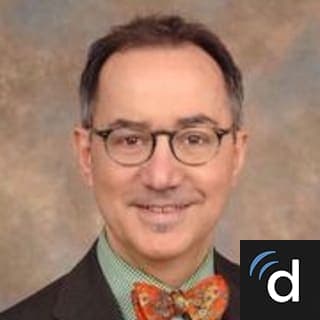
Michael Privitera, MD
Professor of Neurology and Director, Epilepsy Center, University of Cincinnati Gardner Neuroscience Institute
University of Cincinnati Medical Center
View specialist profileMichael Privitera is a professor of neurology and director of the Epilepsy Center at the University of Cincinnati Gardner Neuroscience Institute, one of the larger comprehensive epilepsy programs in the Midwest. His clinical focus is adults with refractory epilepsy, patients whose seizures have not responded to one or more medications, including evaluation for epilepsy surgery and management of psychogenic nonepileptic seizures (PNES).
He has spent more than three decades working on seizure medication pharmacology, with particular attention to patients whose epilepsy resists standard treatment. His early work on topiramate helped establish the dosing parameters clinicians still use: a 1996 trial in Neurology found that topiramate reduced monthly seizure rates by 45 to 48 percent at effective doses in patients who had already failed other medications, compared to 13 percent for placebo 1. A head-to-head comparison published in Acta Neurologica Scandinavica found topiramate at 100 mg/day as effective as standard doses of carbamazepine and valproate in newly diagnosed epilepsy, a finding that influenced first-line prescribing choices 2. His population-based research on PNES, conducted in Hamilton County, Ohio, helped clinicians understand how commonly seizure-like events have psychological rather than electrical causes 3.
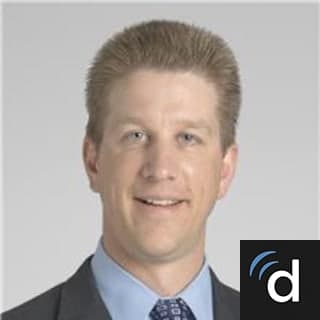
Robert Fox, MD
Staff Neurologist at the Mellen Center for Multiple Sclerosis
Cleveland Clinic
View specialist profileRobert Fox is a staff neurologist at the Mellen Center for Multiple Sclerosis at Cleveland Clinic, one of the most active MS treatment and research programs in the United States. His clinical work focuses on relapsing-remitting and progressive MS, and he has been involved in many of the trials that expanded treatment options over the past two decades.
He contributed to the 2008 rituximab trial in the New England Journal of Medicine that showed a single course of B-cell depletion reduced inflammatory brain lesions and clinical relapses over 48 weeks, providing early evidence that B cells play a role in MS pathophysiology 4. He led the 2012 CONFIRM trial in NEJM comparing BG-12 (dimethyl fumarate) and glatiramer acetate against placebo — a phase 3 study that contributed to FDA approval of dimethyl fumarate and gave patients a non-injection oral option 5. If you are managing relapsing MS and sorting through the evidence on newer oral therapies, his published work covers that ground in detail.

Jeffrey Cohen is a neurologist at Cleveland Clinic, practicing within one of the largest MS programs in the country. His research covers MS diagnosis, imaging biomarkers, and long-term disease management across more than 600 published works.
He contributed to the 2010 revision of the McDonald criteria, the international diagnostic framework clinicians use to determine whether a patient has MS 6. That revision simplified how imaging is used: in some cases, a single MRI scan can now establish the diagnosis without waiting for a second scan months later. If you have received an MS diagnosis or are being evaluated for one, those criteria are part of how your neurologist reached that conclusion. His broader work on clinical outcome measures includes the tools used in routine MS monitoring, including standardized walking tests and MRI protocols.
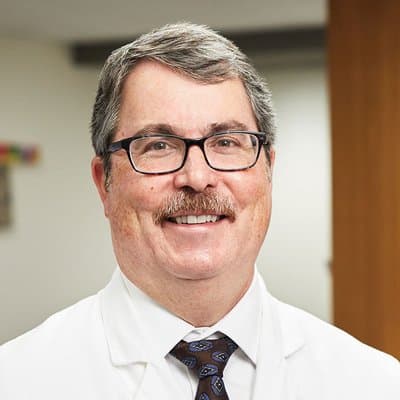
Douglas Scharre, MD
Professor of Neurology; Medical Director, Center for Cognitive and Memory Disorders; Director, Division of Cognitive Neurology
Ohio State University Wexner Medical Center
View specialist profileDouglas Scharre is a professor of neurology at Ohio State University Wexner Medical Center, where he directs the Division of Cognitive Neurology and serves as medical director of the Center for Cognitive and Memory Disorders. His practice focuses on Alzheimer's disease, related dementias, and mild cognitive impairment in older adults.
He developed the Self-Administered Gerocognitive Examination (SAGE), a paper-based cognitive screening test patients can complete at home without a clinician present. Validation data published in Alzheimer's Research & Therapy showed the digital version (eSAGE) performs comparably to in-person neuropsychological assessment, making it a practical early-detection tool for primary care offices 8. He has also run one of the few clinical trials testing deep brain stimulation for Alzheimer's disease: a phase I study targeting frontal lobe networks found that two of three participants showed less cognitive decline over 18 months compared to matched controls from the ADNI cohort, with stable or increased brain metabolism on PET imaging 7. The study was small, but it established safety and feasibility in a patient population with very few experimental options.
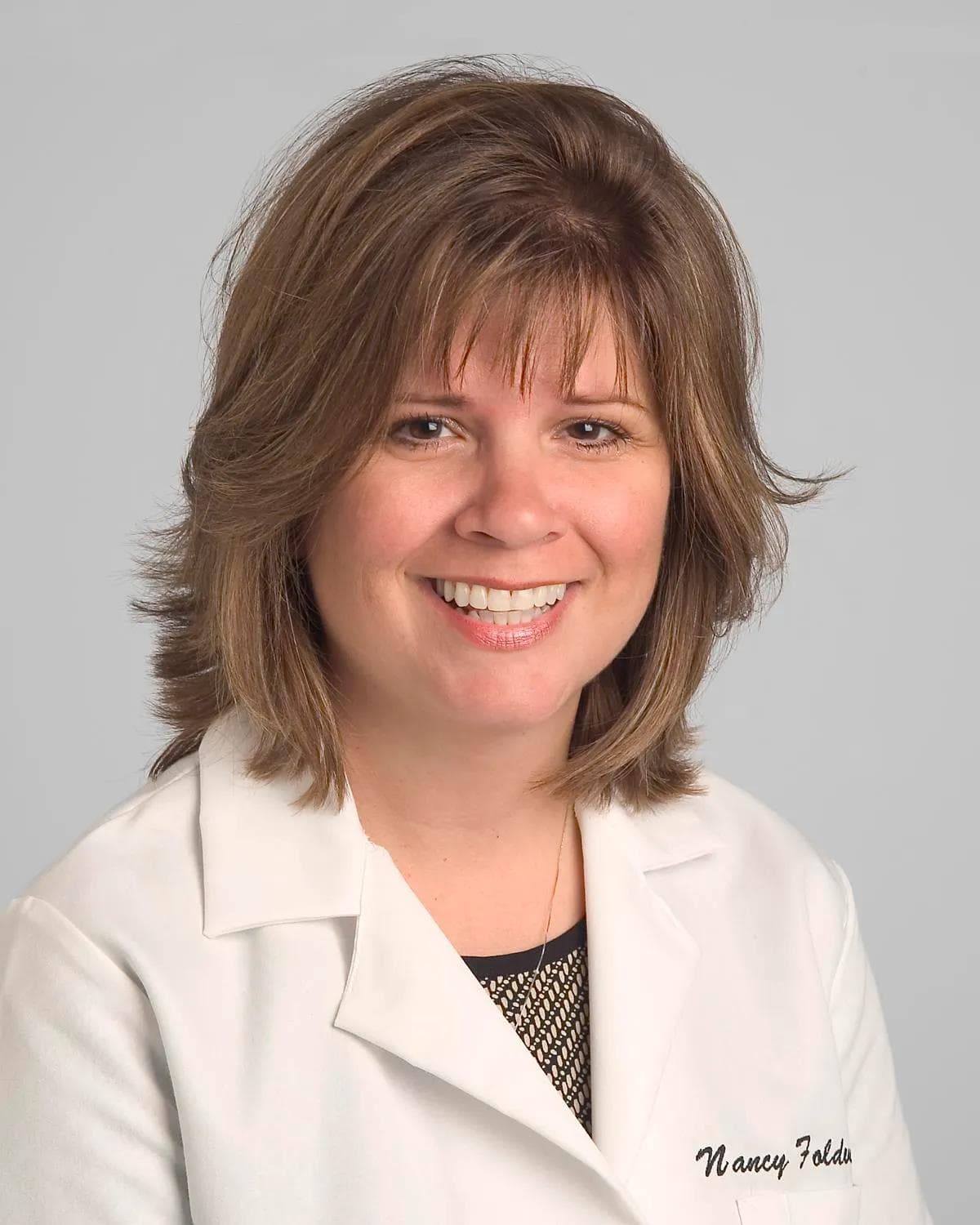
Nancy Foldvary-Schaefer, DO
Professor of Neurology and Staff in the Sleep Disorders and Epilepsy Centers
Cleveland Clinic
View specialist profileNancy Foldvary-Schaefer is a professor of neurology at Cleveland Clinic, where she practices in both the Sleep Disorders Center and the Epilepsy Center. That dual subspecialty focus is uncommon and practically useful: sleep disorders frequently coexist with epilepsy, and disordered sleep can worsen seizure frequency in ways a single-subspecialty neurologist might miss.
Her published work covers both conditions. She has studied how anti-seizure medications affect sleep architecture, finding that gabapentin increases slow-wave sleep in healthy adults, which may partly explain why some patients report improved sleep quality when the drug is added to their regimen 11. She led a long-term trial of solriamfetol for excessive daytime sleepiness in patients with narcolepsy or obstructive sleep apnea, published in SLEEP in 2019, which showed the drug maintained its efficacy and tolerability over an extended treatment period — important for patients managing a chronic sleep condition rather than a short-term one 9. Her contribution to the international consensus on terminology for cortical dysplasias has been cited nearly 950 times and is a standard reference for neurologists evaluating epilepsy tied to structural brain abnormalities 10.
What to look for in an Ohio neurologist
- Epilepsy, MS, memory disorders, sleep neurology, and movement disorders are all treated by neurologists, but each requires dedicated fellowship training and ongoing clinical volume to do well. A general neurologist is usually the right first stop. A subspecialist is often the right second one.
- Cleveland Clinic and Ohio State University Wexner Medical Center both have the infrastructure to coordinate neurologists with neurosurgeons, neuroradiologists, and neuropsychologists when a case requires it. That coordination matters most when your diagnosis is complex or treatment options are not clear-cut.
- Board certification from the American Board of Psychiatry and Neurology is a floor, not a differentiator. The board certifies in general neurology and subspecialties including epilepsy, sleep medicine, vascular neurology, and clinical neurophysiology. Verify that your neurologist is certified, but use it as a starting point.
- Neurologists who publish in their subspecialty tend to stay current, participate in trials that give patients access to emerging therapies, and bring that knowledge into clinic. Look at what a neurologist has published, not just where they trained.
- At a large academic program, ask whether your care will involve other specialists and who coordinates that. A good neurologist at a teaching hospital knows when to bring in a colleague — and who the right colleague is.
Questions to ask before your first appointment
- What is the suspected diagnosis, and what would make you more or less confident in it?
- Is my condition one where a subspecialist would see something a general neurologist might not?
- What treatment options exist, and how do they compare on both effectiveness and side effects?
- Are there clinical trials I qualify for?
- How will we know if treatment is working, and over what time frame?
- What should I do if symptoms change or worsen before my next appointment?
The bottom line
Ohio has concentrated much of its best neurology at two institutions: Cleveland Clinic and Ohio State University Wexner Medical Center. Both run high-volume subspecialty programs where the doctors treating you are also publishing research on your condition. For patients with epilepsy, MS, memory disorders, or complex sleep problems, those are the places worth getting to.
Sources
- 1.Topiramate placebo-controlled dose-ranging trial in refractory partial epilepsy using 600-, 800-, and 1,000-mg daily dosages — Neurology, 1996. DOI
- 2.Topiramate, carbamazepine and valproate monotherapy: double-blind comparison in newly diagnosed epilepsy — Acta Neurologica Scandinavica, 2003. DOI
- 3.Four-year incidence of psychogenic nonepileptic seizures in adults in Hamilton County, OH — Neurology, 2000. DOI
- 4.B-Cell Depletion with Rituximab in Relapsing–Remitting Multiple Sclerosis — New England Journal of Medicine, 2008. DOI
- 5.Placebo-Controlled Phase 3 Study of Oral BG-12 or Glatiramer in Multiple Sclerosis — New England Journal of Medicine, 2012. DOI
- 6.Diagnostic criteria for multiple sclerosis: 2010 Revisions to the McDonald criteria — Annals of Neurology, 2011. DOI
- 7.Deep Brain Stimulation of Frontal Lobe Networks to Treat Alzheimer’s Disease — Journal of Alzheimer s Disease, 2018. DOI
- 8.Digitally translated Self-Administered Gerocognitive Examination (eSAGE): relationship with its validated paper version, neuropsychological evaluations, and clinical assessments — Alzheimer s Research & Therapy, 2017. DOI
- 9.Long-term study of the safety and maintenance of efficacy of solriamfetol (JZP-110) in the treatment of excessive sleepiness in participants with narcolepsy or obstructive sleep apnea — SLEEP, 2019. DOI
- 10.
- 11.
Related specialist lists
neurology
Best Neurologists in New York
Six of New York's top neurologists — covering migraine, epilepsy, stroke, MS, and brain tumors — selected by peer recognition and published research.
neurology
Top neurologists in California 2026
Six of California's top neurologists — covering stroke, multiple sclerosis, Alzheimer's disease, and epilepsy — selected by published research and peer recognition.
neurology
Top neurologists in Massachusetts
Six of Massachusetts' top neurologists — covering epilepsy, neuromuscular disease, MS, and cerebrovascular disease — selected by published research and peer recognition.