Expert list · Last reviewed April 13, 2026
Top neurologists in Massachusetts
Six of Massachusetts' top neurologists — covering epilepsy, neuromuscular disease, MS, and cerebrovascular disease — selected by published research and peer recognition.
Loading map…
Massachusetts is home to one of the densest concentrations of academic neurology in the world, and finding the right specialist inside that system is harder than it sounds. This page profiles six neurologists whose published research, faculty appointments, and peer recognition make them stand out across subspecialties including epilepsy, neuromuscular disease, multiple sclerosis, and cerebrovascular disorders. All six practice in Boston at major academic medical centers.
This content is grounded in peer-reviewed research published by these specialists and informed by their publicly available clinical profiles. It is not a paid ranking.
Why Massachusetts neurology is different
The concentration of academic medical centers along the Longwood corridor — Massachusetts General Hospital, Brigham and Women's, Beth Israel Deaconess, and Boston Children's, all affiliated with Harvard Medical School — means the neurologists here often run the clinical trials, write the guidelines, and train the next generation of subspecialists. Patients with rare or treatment-resistant conditions often end up here because no other option worked closer to home. For straightforward presentations, this level of subspecialty depth can also mean longer wait times. Knowing which specialist fits your diagnosis before you call saves real time.
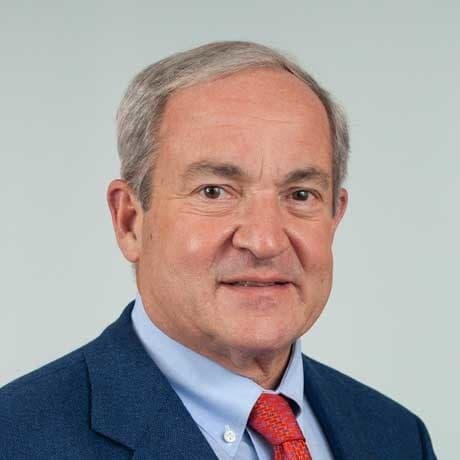
Andrew Cole, MD
Director of the MGH Epilepsy Service, Chief of the Division of Clinical Neurophysiology and Epilepsy and Professor of Neurology at Harvard Medical School
Massachusetts General Hospital, Boston
View specialist profileAndrew Cole is director of the MGH Epilepsy Service and chief of the Division of Clinical Neurophysiology and Epilepsy at Massachusetts General Hospital, where he also holds a faculty appointment as professor of neurology at Harvard Medical School. His clinical work focuses on complex epilepsy, including patients whose seizures have not responded to medication and who may be candidates for surgical evaluation.
Cole's research career spans the neuroscience of seizures at the molecular level and their clinical implications. His 2017 paper in Nature Medicine, using foramen ovale electrodes in patients with Alzheimer's disease, detected silent hippocampal seizures during sleep in patients with no prior seizure history — activity that conventional EEG would miss entirely 1. That finding opened a line of investigation into whether occult epileptic activity contributes to memory decline in Alzheimer's, which matters to anyone whose older family member has unexplained cognitive changes alongside dementia.
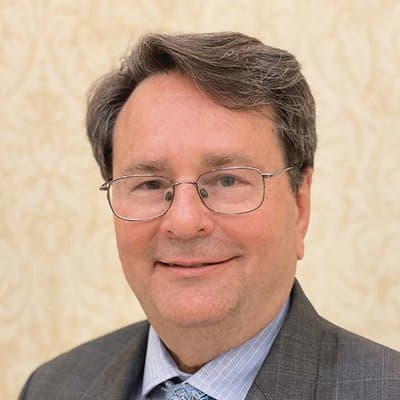
Anthony Amato, MD
Vice-Chairman, Department of Neurology and Professor of Neurology, Harvard Medical School
Brigham and Women's Hospital, Boston
View specialist profileAnthony Amato is vice-chairman of the Department of Neurology at Brigham and Women's Hospital and professor of neurology at Harvard Medical School. His specialty is neuromuscular disease — conditions that affect the nerves supplying muscles and the muscles themselves, including myasthenia gravis, inflammatory myopathies, and hereditary muscle diseases.
He was a principal investigator on the MGTX trial, a large international randomized study published in the New England Journal of Medicine in 2016 that settled a long-debated question in myasthenia gravis: thymectomy combined with standard drug therapy improved clinical outcomes over three years compared to medication alone 3. If you or a family member has myasthenia gravis and your neurologist has raised the question of thymectomy, the clinical standard they are referencing traces back in part to that trial. Amato also helped develop the EULAR/ACR classification criteria for idiopathic inflammatory myopathies, used internationally to classify conditions like dermatomyositis and polymyositis 4.
Elizabeth Thiele, MD PHD
Professor of Neurology, Harvard Medical School
Massachusetts General Hospital, Boston
View specialist profileElizabeth Thiele is a professor of neurology at Harvard Medical School and practices at Massachusetts General Hospital, where she has built one of the country's most recognized programs for tuberous sclerosis complex (TSC) — a genetic condition that causes benign tumors to grow in the brain and other organs, often causing severe, difficult-to-treat epilepsy in children.
Her research on TSC has informed how the disease is managed across its full range of complications. She contributed to the EXIST-1 trial, a phase 3 randomized study published in The Lancet that showed everolimus — an mTOR inhibitor — shrank subependymal giant cell astrocytomas (SEGAs, a type of brain tumor in TSC) compared to placebo 5. SEGAs can obstruct spinal fluid flow and cause life-threatening complications; having a medical option rather than surgery changed how these tumors are managed. Her 2016 Nature Reviews Disease Primers overview of the full TSC disease spectrum is widely used as a clinical and research reference 6.

Steven Greenberg, MD PHD
Professor of Neurology at Harvard Medical School, John J. Conway Endowed Chair in Neurology, Vice-Chair for Faculty Development and Promotions at Massachusetts General Hospital
Massachusetts General Hospital, Boston
View specialist profileSteven Greenberg holds the John J. Conway Endowed Chair in Neurology at Massachusetts General Hospital and is a professor of neurology at Harvard Medical School. He is also vice-chair for faculty development and promotions at MGH. His clinical and research focus is cerebral small vessel disease — the category of conditions that causes most lacunar strokes and a substantial share of vascular dementia, including cerebral amyloid angiopathy (CAA).
Greenberg is the primary author of the Boston Criteria for CAA, a diagnostic framework validated in a 2001 Neurology paper showing that probable CAA can be diagnosed with high accuracy during life using MRI — without waiting for autopsy confirmation 8. Clinically, this matters if you've had a lobar brain hemorrhage and your neurologist is trying to determine whether amyloid-related bleeding is the cause, which affects anticoagulation decisions. His 2013 consensus paper in The Lancet Neurology, which established international neuroimaging standards for small vessel disease research, has been cited more than 5,200 times and shapes how strokes and cognitive decline are studied and classified worldwide 7.
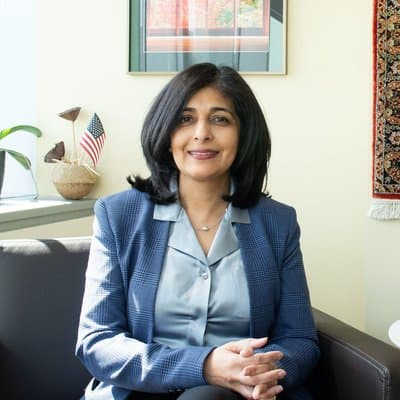
Tanuja Chitnis, MD
Professor of Neurology, Harvard Medical School
Massachusetts General Hospital, Boston
View specialist profileTanuja Chitnis is a professor of neurology at Harvard Medical School with appointments at both Massachusetts General Hospital and Brigham and Women's Hospital. She specializes in multiple sclerosis, with a particular interest in pediatric MS, immune mechanisms underlying the disease, and how disability accumulates over a patient's lifetime.
Her 2022 analysis in Brain, using the Novartis-Oxford MS data pool of more than 27,000 patients, found that as MS evolves, progression independent of relapse activity — not relapses themselves — becomes the main driver of disability accumulation 9. This distinction matters to patients: it means that controlling relapses, while important early on, does not fully prevent long-term worsening, and that starting effective treatment early offers the best chance of delaying serious disability milestones. Chitnis also contributed to a 2016 Nature Communications study linking gut microbiome changes to relapsing-remitting MS, part of a growing body of evidence on how the immune environment shapes the disease course 10.
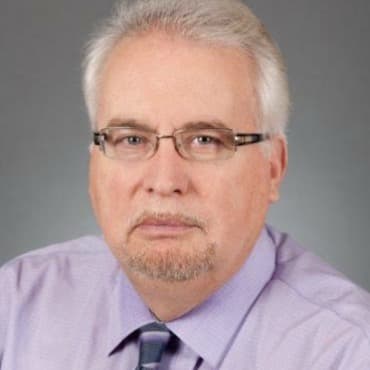
Basil Darras, M.D.
Professor of Neurology, Harvard Medical School; Associate Neurologist-in-Chief; Chief, Division of Clinical Neurology; Director, Neuromuscular Center and Spinal Muscular Atrophy Program, Boston Children's Hospital
Boston Children's Hospital, Boston
View specialist profileBasil Darras is professor of neurology at Harvard Medical School and directs the Neuromuscular Center and Spinal Muscular Atrophy Program at Boston Children's Hospital, where he also serves as associate neurologist-in-chief and chief of the Division of Clinical Neurology. His practice centers on children with neuromuscular diseases, including spinal muscular atrophy (SMA) and muscular dystrophies.
Darras played a central role in the clinical trials that led to the first approved treatments for SMA type 1 — the most severe form of a genetic disease that, until recently, was the leading genetic cause of infant death. He was part of the team behind the phase 1 nusinersen study published in Neurology in 2016, which established the safety and early efficacy signals for the antisense oligonucleotide that later became Spinraza 12. His group also contributed to the FIREFISH trial data for risdiplam, an oral SMA therapy published in the New England Journal of Medicine in 2021, which showed increased functional SMN protein expression in infants treated with the drug 11. For families navigating an SMA diagnosis today, the treatment landscape that exists — including gene therapy, antisense therapy, and oral options — was built on trials where Darras and colleagues ran the natural history studies that made trial design possible.
What to look for in a Massachusetts neurologist
- Subspecialty match. Neurology covers conditions as different as epilepsy, MS, ALS, and stroke. A general neurologist handles many presentations well, but if your diagnosis falls into a narrow subspecialty — movement disorders, neuromuscular disease, rare epilepsy syndromes — finding someone whose practice centers on that condition usually leads to better care.
- Academic medical center access. Specialists at MGH, BWH, or Boston Children's often have access to clinical trials, advanced diagnostics, and multidisciplinary teams that community practices do not. If your condition is complex or rare, that access can matter.
- Wait time reality. The most recognized subspecialists at major academic centers often have long new-patient wait times — sometimes months. Ask the scheduling team about urgent-consult pathways, and consider whether a general neurologist can manage initial workup while you wait.
- Insurance and referral requirements. Harvard-affiliated practices vary in which insurance plans they accept. Confirm coverage and whether you need a referral from your primary care physician before booking.
- Communication style. Neurology diagnoses are often uncertain and evolving. A neurologist who explains findings clearly and treats your questions as legitimate is worth seeking out, especially for a condition you will manage long term.
Questions to ask before your first appointment
- What is your experience treating patients with my specific diagnosis or symptom pattern?
- Are there clinical trials I might be eligible for, either here or at another center?
- How long does it typically take to get a follow-up appointment, and who covers for you when you are unavailable?
- If my condition worsens or changes, what is the process for getting seen quickly?
- What should I bring from my previous providers — imaging, records, prior test results — to make the first visit as useful as possible?
- Do you work with a care team (nurse practitioners, social workers, physical therapists) for ongoing management?
The bottom line
Boston's academic neurology programs produce research that shapes practice worldwide, and many of the specialists here see patients whose conditions couldn't be adequately treated anywhere else. If you are looking for a neurologist in Massachusetts, matching your diagnosis to the right subspecialty is the most important step — and the specialists on this page represent some of the strongest options for the conditions they cover.
Sources
- 1.Silent hippocampal seizures and spikes identified by foramen ovale electrodes in Alzheimer's disease — Nature Medicine, 2017. DOI
- 2.
- 3.
- 4.2017 European League Against Rheumatism/American College of Rheumatology classification criteria for adult and juvenile idiopathic inflammatory myopathies and their major subgroups — Annals of the Rheumatic Diseases, 2017. DOI
- 5.Efficacy and safety of everolimus for subependymal giant cell astrocytomas associated with tuberous sclerosis complex (EXIST-1): a multicentre, randomised, placebo-controlled phase 3 trial — The Lancet, 2012. DOI
- 6.
- 7.Neuroimaging standards for research into small vessel disease and its contribution to ageing and neurodegeneration — The Lancet Neurology, 2013. DOI
- 8.Clinical diagnosis of cerebral amyloid angiopathy: Validation of the Boston Criteria — Neurology, 2001. DOI
- 9.
- 10.
- 11.
- 12.Results from a phase 1 study of nusinersen (ISIS-SMN <sub>Rx</sub> ) in children with spinal muscular atrophy — Neurology, 2016. DOI
Related specialist lists
neurology
Best Neurologists in New York
Six of New York's top neurologists — covering migraine, epilepsy, stroke, MS, and brain tumors — selected by peer recognition and published research.
neurology
Top neurologists in California 2026
Six of California's top neurologists — covering stroke, multiple sclerosis, Alzheimer's disease, and epilepsy — selected by published research and peer recognition.
neurology
Best Neurologists in Ohio
Five of Ohio's top neurologists — covering epilepsy, multiple sclerosis, cognitive disorders, and sleep neurology — selected by research output and peer recognition.