Expert list · Last reviewed April 17, 2026
Best Dermatologists in Ohio: Where to Start Your Search
Find highly regarded dermatologists in Ohio, from psoriasis and cutaneous lymphoma specialists to skin cancer and hair-loss experts.
Loading map…
Ohio has a small group of dermatologists whose research and clinical reputation put them on the national map — here is where to start if you need a skin, hair, or nail specialist.
If you are searching for dermatologists in Ohio, the strongest options cluster around two academic systems in Cleveland: University Hospitals and Case Western Reserve, and Cleveland Clinic. These doctors treat the conditions general dermatology clinics often refer out: stubborn psoriasis, cutaneous lymphoma, scarring hair loss, rare blistering diseases, and aggressive skin cancers. Several have helped write the national treatment guidelines that other dermatologists follow.

Kevin Cooper, MD
Chair, Department of Dermatology; Professor of Dermatology and Pathology, Case Western Reserve University School of Medicine; Director, Murdough Family Center for Psoriasis; Director, Multidisciplinary Cutaneous Lymphoma Program
UH Cleveland Medical Center
View specialist profileDr. Kevin Cooper chairs dermatology at UH Cleveland Medical Center and directs both the Murdough Family Center for Psoriasis and the Multidisciplinary Cutaneous Lymphoma Program. He sees patients whose psoriasis has not responded to standard treatments, as well as people with cutaneous T-cell lymphoma, a rare cancer of the skin's immune cells. His lab helped explain why the immune system misfires in psoriasis, and he led a landmark trial showing denileukin diftitox works for patients whose skin lymphoma keeps returning 1. His research has also shaped how dermatologists think about sun exposure and immune response 5.

Neil Korman, MD
Professor of Dermatology, Case Western Reserve University School of Medicine
University Hospitals
View specialist profileDr. Neil Korman is a professor of dermatology at Case Western Reserve and sees patients at University Hospitals in Cleveland. He focuses on severe psoriasis, psoriatic arthritis, and immune-related blistering diseases like pemphigus and pemphigoid. He helped co-author the American Academy of Dermatology's national guidelines for treating psoriasis with biologic medications 6, 8, 10, which means the treatment plans he uses in clinic closely match what specialists across the country are taught. He was also part of the team that first described paraneoplastic pemphigus, a rare blistering disease linked to hidden cancers 7.
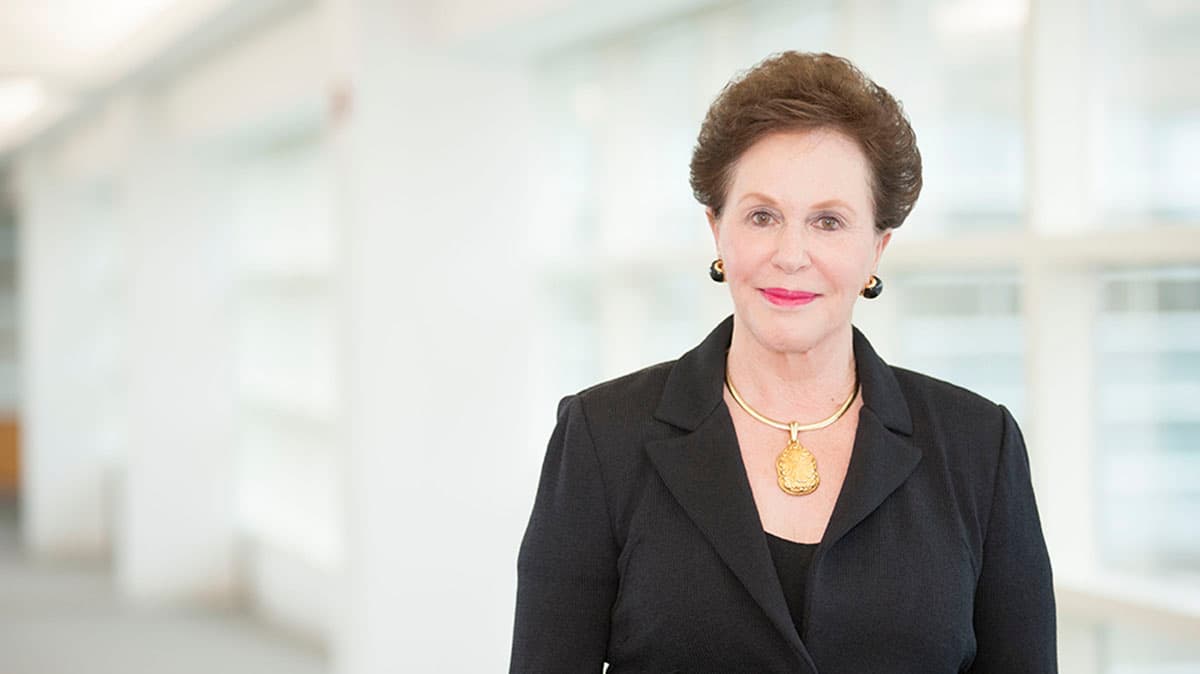
Wilma Bergfeld, M.D.
Professor of Dermatology and Pathology; Director, Dermatopathology Fellowship
Cleveland Clinic
View specialist profileDr. Wilma Bergfeld practices at Cleveland Clinic and directs the dermatopathology fellowship there. She is one of the most recognized names in hair and scalp disorders, and she also reads skin biopsies — so she understands both what the hair loss looks like and what it looks like under a microscope. Her work led the national workshop that standardized how scarring hair loss is diagnosed 11, showed that finasteride does not help postmenopausal women with pattern hair loss 12, and tied iron deficiency to shedding 13. If you have been told your hair loss is "just genetics" and you are not satisfied, she is the kind of specialist to seek out.

Dr. Brett Coldiron practices in Cincinnati and specializes in skin cancer surgery, including Mohs micrographic surgery, a technique used for tumors on the face and other cosmetically sensitive areas. His research produced the most widely cited estimates of how common non-melanoma skin cancer actually is in the United States 16, 17 — numbers that helped convince insurers and public health agencies to take skin cancer screening more seriously. He has also published on harder cases, including extramammary Paget's disease of the genital area 18 and skin conditions in patients with HIV 19.

Dr. Anthony Fernandez practices at Cleveland Clinic and has an unusual focus: dermatology for hospitalized patients. When someone is admitted with a severe rash, drug reaction, or a skin finding that might signal something serious, Fernandez is often the consultant called. His research showed that this kind of bedside dermatology consult changes diagnoses and helps patients leave the hospital sooner 24. He has also written on how TNF-alpha inhibitors used for arthritis can paradoxically trigger psoriasis 23, and was an early voice describing skin findings in COVID-19 22.

Dr. Melissa Piliang chairs dermatology at Cleveland Clinic. Her clinical focus is hair loss — including alopecia areata, an autoimmune condition that causes patchy bald spots — and acral lentiginous melanoma, a skin cancer that appears on the palms, soles, and under fingernails and is often caught late. She co-led the team that built the standard clinical scale now used to grade how severe alopecia areata is 29, which made it easier for new JAK-inhibitor pills to be tested and approved. She also treats cosmetic complications from dermal fillers 26.
What to look for in a dermatology specialist
- Board certification from the American Board of Dermatology
- Fellowship training in the subspecialty that matches your problem (Mohs surgery for skin cancer, dermatopathology for biopsy-driven questions, hair or pediatric dermatology)
- An academic affiliation with a teaching hospital when your case is complex or has not responded to earlier treatment
- Whether the practice is accepting new patients and how long the wait is for a first appointment
- Whether your insurance is in-network and whether a referral is required
Questions to ask before your first appointment
- How many patients with my specific condition do you treat each year?
- What treatment options should I expect you to consider, and in what order?
- Will you take a biopsy at the first visit, and who reads it?
- If I need a procedure like Mohs surgery, do you perform it yourself or refer out?
- What follow-up schedule do you recommend, and who manages me between visits?
- Are there clinical trials here that my condition could qualify for?
The bottom line
Ohio's strongest dermatology care is concentrated in Cleveland and Cincinnati at academic centers that run subspecialty programs for psoriasis, cutaneous lymphoma, hair disorders, and skin cancer surgery. If you have already seen a general dermatologist and your condition is not improving, that is the moment to ask for a referral to one of these programs — and to bring your pathology slides or prior biopsy reports with you so a fresh set of eyes can review them.
Sources
- 1.Pivotal Phase III Trial of Two Dose Levels of Denileukin Diftitox for the Treatment of Cutaneous T-Cell Lymphoma — Journal of Clinical Oncology, 2001. DOI
- 2.Dysfunctional Blood and Target Tissue CD4+CD25high Regulatory T Cells in Psoriasis: Mechanism Underlying Unrestrained Pathogenic Effector T Cell Proliferation — The Journal of Immunology, 2005. DOI
- 3.
- 4.Guidelines of care for atopic dermatitis — Journal of the American Academy of Dermatology, 2004. DOI
- 5.UV exposure reduces immunization rates and promotes tolerance to epicutaneous antigens in humans: relationship to dose, CD1a-DR+ epidermal macrophage induction, and Langerhans cell depletion. — Proceedings of the National Academy of Sciences, 1992. DOI
- 6.Guidelines of care for the management of psoriasis and psoriatic arthritis — Journal of the American Academy of Dermatology, 2008. DOI
- 7.
- 8.Joint AAD-NPF guidelines of care for the management and treatment of psoriasis with biologics — Journal of the American Academy of Dermatology, 2019. DOI
- 9.The First International Consensus on Mucous Membrane Pemphigoid — Archives of Dermatology, 2002. DOI
- 10.Guidelines of care for the management of psoriasis and psoriatic arthritis — Journal of the American Academy of Dermatology, 2008. DOI
- 11.Summary of North American Hair Research Society (NAHRS)-sponsored Workshop on Cicatricial Alopecia, Duke University Medical Center, February 10 and 11, 2001 — Journal of the American Academy of Dermatology, 2003. DOI
- 12.Lack of efficacy of finasteride in postmenopausal women with androgenetic alopecia — Journal of the American Academy of Dermatology, 2000. DOI
- 13.The diagnosis and treatment of iron deficiency and its potential relationship to hair loss — Journal of the American Academy of Dermatology, 2006. DOI
- 14.Evaluation and treatment of male and female pattern hair loss — Journal of the American Academy of Dermatology, 2004. DOI
- 15.Androgenetic Alopecia: An Evidence-Based Treatment Update — American Journal of Clinical Dermatology, 2014. DOI
- 16.Incidence Estimate of Nonmelanoma Skin Cancer (Keratinocyte Carcinomas) in the US Population, 2012 — JAMA Dermatology, 2015. DOI
- 17.Incidence Estimate of Nonmelanoma Skin Cancer in the United States, 2006 — Archives of Dermatology, 2010. DOI
- 18.Surgical treatment of extramammary paget's disease. A report of six cases and a reexamination of mohs micrographic surgery compared with conventional surgical excision — Cancer, 1991. DOI
- 19.Prevalence and Clinical Spectrum of Skin Disease in Patients Infected With Human Immunodeficiency Virus — Archives of Dermatology, 1989. DOI
- 20.No End in Sight: The Skin Cancer Epidemic Continues — Seminars in Cutaneous Medicine and Surgery, 2011. DOI
- 21.FISH for MYC amplification and anti‐MYC immunohistochemistry: useful diagnostic tools in the assessment of secondary angiosarcoma and atypical vascular proliferations — Journal of Cutaneous Pathology, 2011. DOI
- 22.
- 23.TNF-α inhibitor–induced psoriasis: A decade of experience at the Cleveland Clinic — Journal of the American Academy of Dermatology, 2018. DOI
- 24.Dermatology consultations significantly contribute quality to care of hospitalized patients: a prospective study of dermatology inpatient consults at a tertiary care center — International Journal of Dermatology, 2016. DOI
- 25.Low-Dose Naltrexone Treatment of Familial Benign Pemphigus (Hailey-Hailey Disease) — JAMA Dermatology, 2017. DOI
- 26.
- 27.
- 28.A new category of autoinflammatory disease associated with NOD2 gene mutations — Arthritis Research & Therapy, 2011. DOI
- 29.Development of the alopecia areata scale for clinical use: Results of an academic–industry collaborative effort — Journal of the American Academy of Dermatology, 2021. DOI
- 30.
Related specialist lists
dermatology
Top Dermatologists for Skin Cancer in Georgia
Dermatologists in Georgia with deep skin cancer expertise, Mohs surgery experience, and peer-reviewed research to guide your referral.
neurology
Best Neurologists in New York
Six of New York's top neurologists — covering stroke, peripheral neuropathy, multiple sclerosis, epilepsy, and Parkinson's disease — selected by peer recognition and published research.
neurology
Best Neurologists in Ohio
Six of Ohio's top neurologists — covering epilepsy, multiple sclerosis, movement disorders, sleep neurology, and neuromuscular medicine — selected by research output and peer recognition.