Expert list · Last reviewed April 17, 2026
Find a Neurologist in Illinois
Six practicing neurologists in Illinois covering epilepsy, multiple sclerosis, sleep, and cognitive neurology — with research records that shape how these conditions are treated.
Loading map…
If you are trying to find a neurologist in Illinois, most of the state's strongest subspecialty care is concentrated in and around Chicago — and the six neurologists profiled here cover the conditions most patients actually get referred for. Their clinical focus spans epilepsy, multiple sclerosis, sleep disorders, neuro-infectious disease, and cognitive neurology. All practice in Illinois, and all have published research that has directly shaped how their specialty treats patients.
The strongest concentration of neurologic subspecialty care in Illinois sits along the lakefront at Northwestern Memorial Hospital and at the University of Chicago Medical Center, with additional depth at Endeavor Health in the northern suburbs. These are teaching hospitals that handle complex cases week after week, staff multidisciplinary clinics, and run clinical trials that give patients access to therapies not yet available elsewhere.
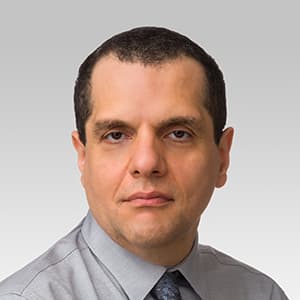
Hrayr Attarian, MD
Professor, Ken and Ruth Davee Department of Neurology, Northwestern University Feinberg School of Medicine
Northwestern Memorial Hospital
View specialist profileDr. Hrayr Attarian is a sleep neurologist at Northwestern Memorial Hospital and a professor in the Ken and Ruth Davee Department of Neurology at Northwestern University Feinberg School of Medicine. He sees patients with insomnia, circadian rhythm disorders, and sleep problems that overlap with other neurologic conditions such as multiple sclerosis.
If you have been struggling with chronic insomnia — trouble falling asleep, staying asleep, or both — his 2016 BMJ review lays out how the treatment landscape has shifted toward behavioral therapy first, with medication used more selectively 1. He was also an early voice connecting fatigue in MS patients to disrupted sleep, and a 2004 study in Archives of Neurology he co-authored found a strong correlation between the two, which changed how MS fatigue gets evaluated in clinic 2. His teaching chapter in CONTINUUM on circadian rhythm abnormalities is widely used to orient trainees and general neurologists on jet lag, shift-work disorder, and delayed sleep-phase syndrome 3.

Dr. Bruce Cohen is a professor and neurologist practicing in the Chicago area. His clinical and research focus is neuro-infectious disease, particularly the neurologic complications of HIV.
He was part of the research group that tracked how HIV-associated dementia, neuropathy, and opportunistic infections of the brain changed after combination antiretroviral therapy became widely used in the late 1990s. A 2001 report in Neurology documented the falling incidence of several HIV-related neurologic diseases after effective treatment became available 4, and a 2002 study in the Journal of NeuroVirology showed that cognitive impairment patterns also shifted in that period 5. Earlier work on progressive multifocal leukoencephalopathy, published in the New England Journal of Medicine, helped establish that cytarabine did not improve outcomes, sparing patients from an ineffective chemotherapy 6. He also contributed to foundational work linking viral load and CD4 counts to risk of HIV-associated dementia and sensory neuropathy 7.
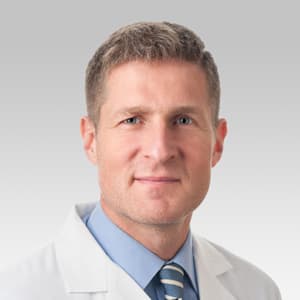
Stephan Schuele, MD
Chief of Epilepsy and Clinical Neurophysiology, Professor, Neurology (Epilepsy/Clinical Neurophysiology), Physical Medicine and Rehabilitation
Northwestern Memorial Hospital
View specialist profileDr. Stephan Schuele is Chief of Epilepsy and Clinical Neurophysiology at Northwestern Medicine and a professor of neurology at Feinberg School of Medicine. His clinical focus is adult epilepsy that has not responded to first- or second-line medication, plus a smaller practice in focal dystonia.
His 2008 Lancet Neurology review on intractable epilepsy is a standard reference for patients and clinicians thinking about what comes next when standard drugs fail, including surgery, neurostimulation devices, and the ketogenic diet 8. On the movement disorder side, he led a study in Neurology of botulinum toxin injections in musicians with focal dystonia — a task-specific movement disorder where the hand or embouchure stops cooperating during performance — and found that more than two-thirds of patients reported improvement 9. A follow-up in Movement Disorders compared multiple treatment strategies and gave musicians a clearer picture of what combinations work over the long term 10. He has also contributed to brain-computer interface research decoding speech directly from motor cortex recordings 11.

Daniel Wynn, M.D.
Director, Clinical Research, Consultants in Neurology MS Center
Endeavor Health
View specialist profileDr. Daniel Wynn directs clinical research at the Consultants in Neurology MS Center in Northbrook and practices in affiliation with Endeavor Health and Northwestern Medicine Lake Forest Hospital. He has spent decades treating multiple sclerosis patients and running the trials that test new therapies.
He was first author on the CHOICE trial in The Lancet Neurology, a phase 2 study of daclizumab added to interferon beta that helped set the direction for later anti-CD25 therapies in MS 12. He also contributed to the PreCISe trial in The Lancet, which showed that starting glatiramer acetate after a first demyelinating event delayed conversion to clinically definite MS — a finding that reshaped early treatment decisions 13. His earlier population study of MS in Olmsted County, Minnesota, published in Neurology, remains one of the most cited epidemiology papers in the field 14. He also contributed to the pivotal trial of dextromethorphan/quinidine for pseudobulbar affect, the uncontrolled laughing or crying that affects some MS and ALS patients 15.

Phyllis Zee, MD
Director, Center for Circadian and Sleep Medicine; Chief of Sleep Medicine in the Department of Neurology; Benjamin and Virginia T. Boshes Professor of Neurology
Northwestern Memorial Hospital
View specialist profileDr. Phyllis Zee directs the Center for Circadian and Sleep Medicine at Northwestern and serves as Chief of Sleep Medicine in the Department of Neurology. She is the Benjamin and Virginia T. Boshes Professor of Neurology at Feinberg School of Medicine.
Her research is among the most cited in the sleep and circadian field. A 2012 position paper in SLEEP laid out why chronic sleep deficiency should be treated as a driver of cardiovascular and metabolic disease, not just a quality-of-life issue 16, and her work in the Multi-Ethnic Study of Atherosclerosis documented how sleep apnea and other sleep disturbances are underdiagnosed in racial and ethnic minority populations 17. Her 2011 paper in Obesity showed that people who go to bed late eat more calories at dinner and after 8 p.m., independent of how long they sleep, which changed how clinicians think about weight and sleep together 18. She also co-authored a 2022 international consensus in PLoS Biology on indoor light exposure timing to support sleep, alertness, and mood 19. A 2010 trial she contributed to showed that aerobic exercise improves sleep and quality of life in older adults with insomnia 20.

Dr. Anthony Reder is a neurologist at The University of Chicago Medical Center, where he treats patients with multiple sclerosis and other neuroimmunologic conditions.
He was senior author on one of the foundational papers measuring inflammatory cytokines in the cerebrospinal fluid of MS patients, published in the Journal of Neuroimmunology, which helped establish the inflammatory basis of MS attacks 21. He contributed to the validation of the Functional Assessment of Multiple Sclerosis quality-of-life questionnaire, a standard instrument clinicians use to track how patients are doing between visits 22. His comprehensive review of vitamin D in multiple sclerosis walked through what the evidence actually supports around supplementation 23, and his work on Neuro-QOL provided patient-reported outcome tools now used across neurologic research and care 24. He has also studied how disease-modifying therapies affect brain volume changes in MS, an imaging marker tied to long-term disability 25.
What to look for in an Illinois neurologist
- Subspecialty training beyond general neurology — epilepsy, MS, sleep medicine, vascular neurology, and movement disorders each require dedicated fellowship training.
- Affiliation with a teaching hospital that handles complex cases regularly and can coordinate neurology with neurosurgery, neuroradiology, and neuropsychology when needed.
- A subspecialty match for your specific condition. A general neurologist is usually the right first stop, but subspecialty referral matters more as a diagnosis becomes clearer.
- Whether they are accepting new patients and what the wait time looks like for a non-urgent appointment.
- Insurance compatibility — academic centers in Chicago accept most major plans, but always verify.
Questions to ask before your first appointment
- What is the suspected diagnosis, and what would make you more or less confident in it?
- How many patients with my condition do you treat each year?
- Is my case one where a subspecialist would see something a general neurologist might not?
- What treatment options exist, and how do they compare on effectiveness and side effects?
- Are there clinical trials I qualify for at your institution?
- How will we know if treatment is working, and over what time frame?
- What should I do if symptoms change before my next visit?
The bottom line
Illinois has deep neurologic expertise, and most of the state's best subspecialty care is in Chicago. If your condition is straightforward, a general neurologist at a community hospital is often the right first stop. If it is complex, hard to diagnose, or not responding to first-line treatment, the teaching programs at Northwestern, the University of Chicago, and Endeavor Health are where you will find neurologists whose daily work and published research line up with what you need.
Sources
- 1.
- 2.The Relationship of Sleep Disturbances and Fatigue in Multiple Sclerosis — Archives of Neurology, 2004. DOI
- 3.
- 4.
- 5.
- 6.
- 7.HIV-associated cognitive impairment before and after the advent of combination therapy — Journal of NeuroVirology, 2002. DOI
- 8.Failure of Cytarabine in Progressive Multifocal Leukoencephalopathy Associated with Human Immunodeficiency Virus Infection — New England Journal of Medicine, 1998. DOI
- 9.Plasma viral load and CD4 lymphocytes predict HIV-associated dementia and sensory neuropathy — Neurology, 1999. DOI
- 10.
- 11.
- 12.Direct classification of all American English phonemes using signals from functional speech motor cortex — Journal of Neural Engineering, 2014. DOI
- 13.
- 14.Focal dystonia in musicians: Treatment strategies and long‐term outcome in 144 patients — Movement Disorders, 2005. DOI
- 15.
- 16.Effect of glatiramer acetate on conversion to clinically definite multiple sclerosis in patients with clinically isolated syndrome (PreCISe study): a randomised, double-blind, placebo-controlled trial — The Lancet, 2009. DOI
- 17.Daclizumab in active relapsing multiple sclerosis (CHOICE study): a phase 2, randomised, double-blind, placebo-controlled, add-on trial with interferon beta — The Lancet Neurology, 2010. DOI
- 18.A reappraisal of the epidemiology of multiple sclerosis in Olmsted County, Minnesota — Neurology, 1990. DOI
- 19.Randomized, controlled trial of dextromethorphan/quinidine for pseudobulbar affect in multiple sclerosis — Annals of Neurology, 2006. DOI
- 20.Accelerometry in persons with multiple sclerosis: Measurement of physical activity or walking mobility? — Journal of the Neurological Sciences, 2010. DOI
- 21.Racial/Ethnic Differences in Sleep Disturbances: The Multi-Ethnic Study of Atherosclerosis (MESA) — SLEEP, 2015. DOI
- 22.
- 23.Aerobic exercise improves self-reported sleep and quality of life in older adults with insomnia — Sleep Medicine, 2010. DOI
- 24.
- 25.Recommendations for daytime, evening, and nighttime indoor light exposure to best support physiology, sleep, and wakefulness in healthy adults — PLoS Biology, 2022. DOI
- 26.
- 27.
- 28.Validation of the Functional Assessment of Multiple Sclerosis quality of life instrument — Neurology, 1996. DOI
- 29.Cytokine levels in the cerebrospinal fluid and serum of patients with multiple sclerosis — Journal of Neuroimmunology, 1991. DOI
- 30.Mechanisms of action of disease-modifying agents and brain volume changes in multiple sclerosis — Neurology, 2008. DOI
Related specialist lists
neurology
Best Neurologists in New York
Six of New York's top neurologists — covering stroke, peripheral neuropathy, multiple sclerosis, epilepsy, and Parkinson's disease — selected by peer recognition and published research.
neurology
Best Neurologists in Ohio
Six of Ohio's top neurologists — covering epilepsy, multiple sclerosis, movement disorders, sleep neurology, and neuromuscular medicine — selected by research output and peer recognition.
neurology
Top neurologists in California 2026
Six of California's top neurologists — covering stroke, multiple sclerosis, Alzheimer's disease, and epilepsy — selected by published research and peer recognition.