Expert list · Last reviewed April 17, 2026
Top Gastroenterologists for Pancreaticobiliary Disease in Ohio
Find Ohio gastroenterologists who specialize in pancreaticobiliary disease, with clinical focus, hospital affiliations, and published research.
Loading map…
Ohio has several gastroenterologists whose experience with pancreaticobiliary disease — problems of the pancreas, bile ducts, and gallbladder — places them among the most capable specialists in the country. Here is where to start.
Pancreaticobiliary disease covers a hard set of problems: chronic pancreatitis, pancreatic cysts and tumors, bile-duct stones and strictures, and post-surgical complications. These conditions usually need advanced endoscopic procedures like ERCP and endoscopic ultrasound, and the outcomes are better at high-volume centers. The gastroenterologists below practice at Cleveland Clinic, University Hospitals, and MetroHealth, and each brings a clinical focus or research contribution that directly affects how these conditions are diagnosed and treated today.

Tyler Stevens, M.D.
Associate Staff physician in the Department of Gastroenterology and Hepatology, Director of the Pancreas Clinic
Fairview Hospital
View specialist profileDr. Stevens directs the Pancreas Clinic at Cleveland Clinic and sees patients at Fairview Hospital and Marymount Hospital. His clinical focus is chronic pancreatitis, pancreatic cysts, and unexplained abdominal pain tied to the pancreas. He runs endoscopic ultrasound with pancreatic function testing to catch disease earlier than imaging alone can. His evidence-based review of how chronic pancreatitis actually develops 1 and his work pairing endoscopic ultrasound with secretin function testing 3 helped standardize how specialists work up suspected early pancreatic disease.

Dr. Tabbaa practices at Cleveland Clinic's Avon Hospital and Fairview Hospital and has spent decades treating complex biliary conditions. He focuses on bile-duct disease, nutrition in liver disease, and unusual pancreatic findings that need careful workup. An earlier paper of his documented endoscopic removal of roundworms from the bile duct 7, a technique that spared patients from open surgery. More recently he has published on how fatty liver disease affects the rest of the digestive tract 8.

Amitabh Chak, MD
Professor, CWRU School of Medicine; Brenda and Marshall B. Brown Master Clinician in Innovations and Discovery, UH Seidman Cancer Center
UH Cleveland Medical Center
View specialist profileDr. Chak is a master clinician at University Hospitals Seidman Cancer Center and professor at Case Western Reserve. He treats patients with a family history of pancreatic cancer, premalignant conditions of the pancreas and bile duct, and tumors of the duodenal papilla that can sometimes be removed endoscopically. He was first author on the international consensus statement that defines who should be screened for familial pancreatic cancer 12 and has contributed to the guidelines gastroenterologists use to measure colonoscopy quality [11, 13].

John Dumot, DO
Director, Digestive Health Institute, University Hospitals; Interim Division Chief, Gastroenterology, UH Ahuja Medical Center; Professor, Medicine, Case Western Reserve University School of Medicine
University Hospitals
View specialist profileDr. Dumot directs the Digestive Health Institute at University Hospitals and serves as interim division chief of gastroenterology at UH Ahuja. He specializes in advanced endoscopy for bile-duct and pancreatic disease, and in endoscopic treatment of Barrett's esophagus. His research has focused on making procedures safer, particularly around sedation and breathing monitoring during long procedures like ERCP [19, 20]. He also contributed to establishing endoscopic spray cryotherapy as a treatment option for high-grade Barrett's esophagus 18.
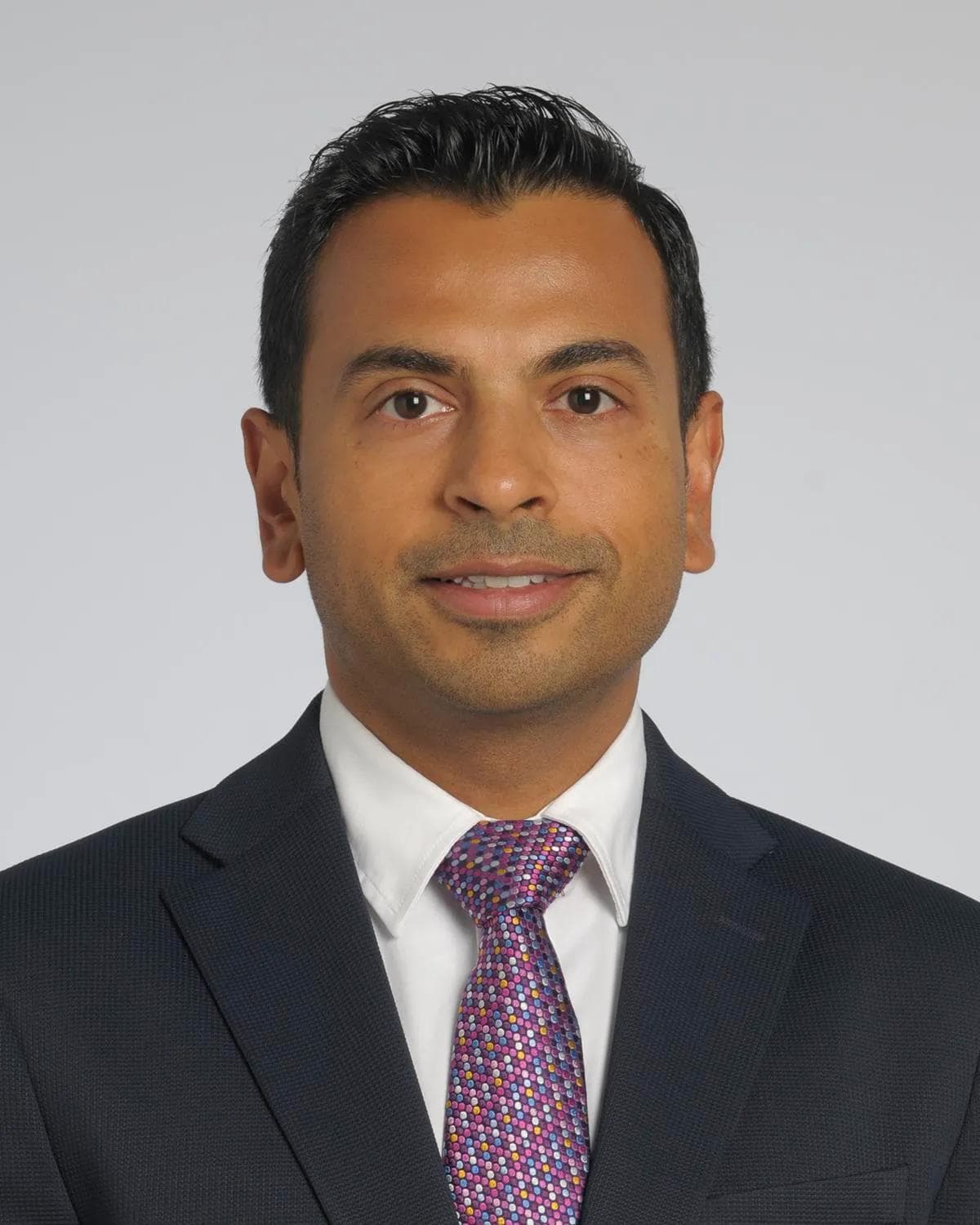
Hassan Siddiki, MD
Assistant Professor of Medicine, Case Western Reserve University; Cleveland Clinic Lerner College of Medicine, Department of Gastroenterology, Hepatology and Nutrition
Avon Hospital at Richard E. Jacobs Campus
View specialist profileDr. Siddiki is on faculty at the Cleveland Clinic Lerner College of Medicine and practices at Avon Hospital and Fairview Hospital. His clinical work covers the imaging and endoscopic workup of inflammatory bowel disease and obscure gastrointestinal bleeding. His first-author study comparing MR enterography and CT enterography in small-bowel Crohn's disease 22 helped clarify which imaging test to use and when. He has also published on finding hidden sources of intestinal bleeding that standard endoscopy misses 24.

John Vargo, MD
Director, Endoscopic Operations; Director, Endoscopic Innovation and Research; Head, Section of Advanced Endoscopy; Chairman Emeritus, Department of Gastroenterology and Hepatology, Cleveland Clinic
MetroHealth Medical Center
View specialist profileDr. Vargo heads the Section of Advanced Endoscopy at Cleveland Clinic and directs endoscopic innovation and research for the department. He is one of the most experienced advanced endoscopists in the country for ERCP, pancreatic cysts, bile-duct stones, and pancreatic cancer staging. He is chairman emeritus of Cleveland Clinic's Department of Gastroenterology and Hepatology and continues to take the complex referrals that community hospitals cannot handle safely.
What to look for in a pancreaticobiliary specialist
- Board certification in gastroenterology, with advanced endoscopy (ERCP, EUS) training where relevant
- Practice at a teaching hospital or high-volume pancreas/biliary center
- Subspecialty focus that matches your condition — chronic pancreatitis, pancreatic cancer surveillance, bile-duct stones, or cysts
- Clear answer on how many procedures of the type you need they perform each year
- Willingness to coordinate with pancreatic surgeons, oncologists, and dietitians
- Whether they are accepting new patients and what insurance they take
Questions to ask before your first appointment
- How many patients with my specific condition do you see each year?
- How many ERCPs or endoscopic ultrasounds do you perform annually?
- What are the risks of the procedure you are recommending, and what is your complication rate?
- Is there a less invasive option we should try first?
- Who else will be involved in my care — surgeon, oncologist, nutritionist?
- If I need a second opinion, where would you suggest I go?
The bottom line
Pancreaticobiliary disease is complex and benefits from specialists who see a high volume of these cases. The Ohio gastroenterologists above practice at the state's largest academic centers and bring deep experience with chronic pancreatitis, pancreatic cancer screening, bile-duct disease, and advanced endoscopy. If your primary care doctor or general gastroenterologist has raised any of these concerns, ask for a referral to one of these programs before a problem becomes urgent.
Sources
- 1.Pathogenesis of Chronic Pancreatitis: An Evidence-Based Review of Past Theories and Recent Developments — The American Journal of Gastroenterology, 2004. DOI
- 2.The validity and accuracy of the Work Productivity and Activity Impairment questionnaire – irritable bowel syndrome version (WPAI:IBS) — Alimentary Pharmacology & Therapeutics, 2004. DOI
- 3.Endoscopic Ultrasound, Secretin Endoscopic Pancreatic Function Test, and Histology: Correlation in Chronic Pancreatitis — The American Journal of Gastroenterology, 2010. DOI
- 4.Protein Alterations Associated with Pancreatic Cancer and Chronic Pancreatitis Found in Human Plasma using Global Quantitative Proteomics Profiling — Journal of Proteome Research, 2011. DOI
- 5.Histologic and Imaging Features of Mural Nodules in Mucinous Pancreatic Cysts — Clinical Gastroenterology and Hepatology, 2011. DOI
- 6.
- 7.Endoscopic balloon catheter extraction of Ascaris lumbricoides from the biliary tree — Gastrointestinal Endoscopy, 1988. DOI
- 8.
- 9.Bronchogenic Cyst Masquerading as Pancreatic Cyst — The American Journal of Gastroenterology, 2016. DOI
- 10.
- 11.
- 12.International Cancer of the Pancreas Screening (CAPS) Consortium summit on the management of patients with increased risk for familial pancreatic cancer — Gut, 2012. DOI
- 13.
- 14.Endoscopic management of adenoma of the major duodenal papilla — Gastrointestinal Endoscopy, 2004. DOI
- 15.Does prophylactic pancreatic stent placement reduce the risk of post-ERCP acute pancreatitis? A meta-analysis of controlled trials — Gastrointestinal Endoscopy, 2004. DOI
- 16.Gastroenterologist-administered propofol versus meperidine and midazolam for advanced upper endoscopy: A prospective, randomized trial — Gastroenterology, 2002. DOI
- 17.Safety and efficacy of endoscopic spray cryotherapy for Barrett's esophagus with high-grade dysplasia — Gastrointestinal Endoscopy, 2010. DOI
- 18.Automated graphic assessment of respiratory activity is superior to pulse oximetry and visual assessment for the detection of early respiratory depression during therapeutic upper endoscopy — Gastrointestinal Endoscopy, 2002. DOI
- 19.Capnographic Monitoring of Respiratory Activity Improves Safety of Sedation for Endoscopic Cholangiopancreatography and Ultrasonography — Gastroenterology, 2009. DOI
- 20.Deep Sedation Occurs Frequently During Elective Endoscopy with Meperidine and Midazolam — The American Journal of Gastroenterology, 2005. DOI
- 21.Prospective Comparison of State-of-the-Art MR Enterography and CT Enterography in Small-Bowel Crohn's Disease — American Journal of Roentgenology, 2009. DOI
- 22.
- 23.Prospective Blinded Comparison of Wireless Capsule Endoscopy and Multiphase CT Enterography in Obscure Gastrointestinal Bleeding — Radiology, 2011. DOI
- 24.Appropriate Patient Selection at Abdominal Dual-Energy CT Using 80 kV: Relationship between Patient Size, Image Noise, and Image Quality — Radiology, 2010. DOI
- 25.Prevalence of penetrating disease and extraintestinal manifestations of Crohnʼs disease detected with CT enterography — Inflammatory Bowel Diseases, 2008. DOI
Related specialist lists
gastroenterology
Gastroenterologists in New York to consider
Research-informed guide to gastroenterologists in New York, drawing on published work from physicians at NYU Langone, NewYork-Presbyterian, and Montefiore.
gastroenterology
Top gastroenterologists in Minnesota
Six of Minnesota's top gastroenterologists — covering IBD, motility, hepatology, fatty liver disease, and advanced endoscopy — by published research.
gastroenterology
Best Gastroenterologists for ERCP and Biliary Endoscopy in Kansas
Kansas gastroenterologists who specialize in ERCP and biliary endoscopy, with deep experience in bile duct stones, strictures, and pancreatic disease.