Expert list · Last reviewed April 17, 2026
Ophthalmologists Near Me in Pennsylvania
Six Pennsylvania ophthalmologists selected by research depth, institutional role, and peer recognition — covering Philadelphia and Plymouth Meeting.
Loading map…
Pennsylvania has several ophthalmologists whose clinical depth and peer recognition place them among the best in the country — and most of them practice in or near Philadelphia. The six below were selected based on published research, institutional roles, and documented clinical focus. No one paid to appear on this page.
Most of the ophthalmologists listed here are part of Wills Eye Hospital in Philadelphia, one of the oldest and highest-volume eye hospitals in the United States, with a faculty that also teaches at the Sidney Kimmel Medical College at Thomas Jefferson University. Their work spans the conditions that drive most specialty eye visits: macular degeneration, diabetic retinopathy, glaucoma, and ocular tumors. Several helped develop the imaging and treatment standards your local eye doctor is using right now.

Allen Ho, MD
Professor of Ophthalmology, Sidney Kimmel Medical College of Thomas Jefferson University; Co-Director, Wills Eye Retina Service and Director, Retina Research
Wills Eye Hospital / Thomas Jefferson University Hospital, Plymouth Meeting, PA
View specialist profileWills Eye Hospital / Thomas Jefferson University Hospital | Plymouth Meeting, PA | Retina, macular degeneration, diabetic eye disease
Allen Ho is Professor of Ophthalmology at Sidney Kimmel Medical College and co-directs the Retina Service at Wills Eye. He treats patients with age-related macular degeneration, diabetic retinopathy, retinal vein occlusion, and other diseases of the back of the eye.
Dr. Ho contributed to the phase III study that established ranibizumab injections as a durable treatment for macular edema following branch retinal vein occlusion, a common cause of sudden vision loss in older adults 1. He also contributed to a long-term analysis of anti-VEGF therapy for diabetic macular edema, which showed that patients who responded well in the first few months kept most of their vision gains years later 3. For patients with diabetes whose blood sugar has just been brought under tight control, his 2018 review on the paradoxical worsening of diabetic retinopathy that can follow 4 is a reference point for how to screen and monitor during that window.
Carol Shields, MD
Director and Chief, Ocular Oncology Service, Wills Eye Hospital; Professor of Ophthalmology, Sidney Kimmel Medical College at Thomas Jefferson University
Wills Eye Hospital / Thomas Jefferson University Hospital, Philadelphia, PA
View specialist profileWills Eye Hospital / Thomas Jefferson University Hospital | Philadelphia, PA | Ocular oncology, uveal melanoma, eye tumors
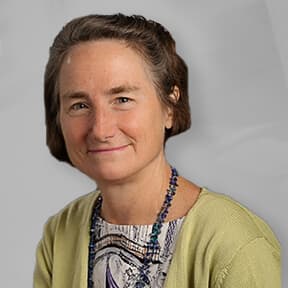
Carol Shields directs the Ocular Oncology Service at Wills Eye, one of the largest eye-tumor practices in the world. She treats children and adults with choroidal melanoma, retinoblastoma, iris tumors, and cancers that spread from elsewhere in the body to the eye.
Dr. Shields led the foundational study on risk factors for growth and metastasis of small choroidal melanocytic lesions 6 — the research clinicians still use when deciding whether a small pigmented spot in the back of the eye should be watched or treated. She also led work on plaque radiotherapy for uveal metastases 9, which offered a vision-sparing option for patients who would otherwise face removal of the eye, and on uveal melanoma in children and teenagers 10, a rare presentation that is easy to misdiagnose. Her research on metastatic tumors to the iris 7 remains one of the most cited series on how cancers from the breast and lung show up in the front of the eye.
Julia Haller, MD, M.D.
Chief Executive Officer and Ophthalmologist-in-Chief, Wills Eye Hospital; William Tasman MD Endowed Chair; Professor and Chair of Ophthalmology, Sidney Kimmel Medical College at Thomas Jefferson University
Wills Eye Hospital / Thomas Jefferson University Hospital, Philadelphia, PA
View specialist profileWills Eye Hospital / Thomas Jefferson University Hospital | Philadelphia, PA | Retina, diabetic macular edema, vitreoretinal surgery
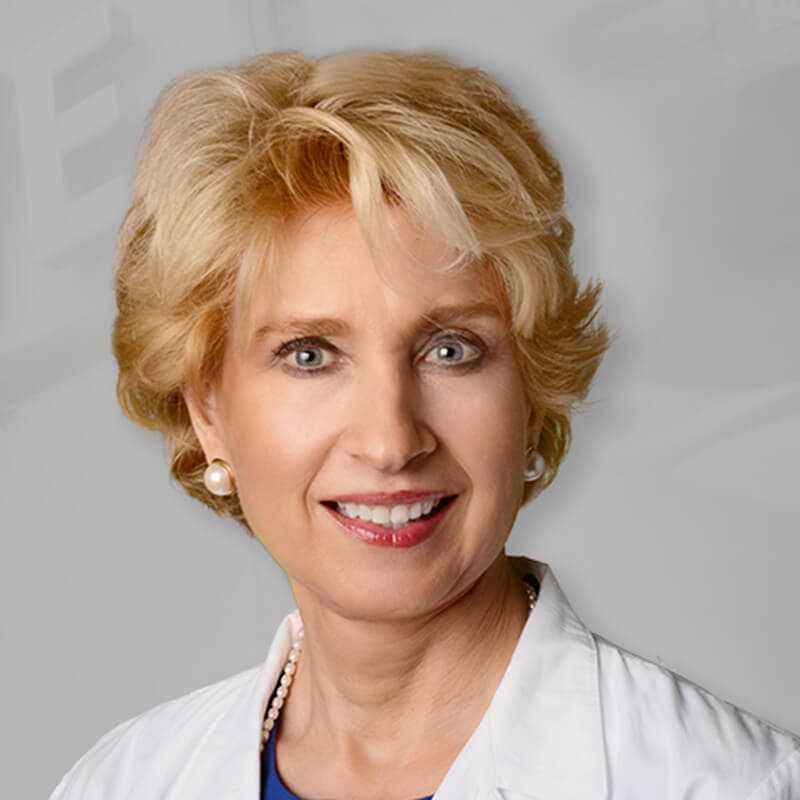
Julia Haller is the Ophthalmologist-in-Chief and CEO of Wills Eye Hospital and chairs Ophthalmology at Sidney Kimmel Medical College. She treats patients with retinal detachments, macular holes, diabetic retinopathy, and macular edema, including cases where standard injections have stopped working.
Dr. Haller was first author on the randomized controlled trial that established the intravitreal dexamethasone implant as a sustained-release treatment for diabetic macular edema 11. For patients who are tired of monthly anti-VEGF shots or whose edema has not resolved, that implant remains one of the main alternatives. She also contributed to a widely cited study on combined cataract surgery and vitrectomy for eyes with both cataract and vitreoretinal disease 13, which is relevant when more than one problem needs to be fixed in a single operation, and to work on single-field fundus photography for diabetic retinopathy screening 12 that shaped how primary care offices now screen diabetic patients for eye disease.

Joel Schuman, MD
Vice Chair for Research Innovation; Co-Director, Glaucoma Service; Professor of Ophthalmology, Sidney Kimmel Medical College at Thomas Jefferson University
Wills Eye Hospital / Pennsylvania Hospital, Philadelphia, PA
View specialist profileWills Eye Hospital / Pennsylvania Hospital | Philadelphia, PA | Glaucoma, optical coherence tomography, advanced imaging
Joel Schuman co-directs the Glaucoma Service at Wills Eye and is Vice Chair for Research Innovation at Sidney Kimmel Medical College. He treats patients with glaucoma of all types, including complex and refractory cases.
Dr. Schuman was part of the original team that developed optical coherence tomography, the non-invasive retinal scan now used at nearly every routine eye exam in the country 14. His subsequent work extended OCT to imaging macular disease 15, showed that ultrahigh-resolution OCT could reveal detail that earlier systems could not 16, and demonstrated the first in vivo retinal imaging in humans 17. He then led the work that turned OCT into a quantitative glaucoma tool by measuring the retinal nerve fiber layer 18, which is how eye doctors now track whether glaucoma is getting worse year over year. If your glaucoma has been hard to monitor or the pressure has been difficult to control, this is a practice with decades of experience managing patients like you.
Allen Chiang, MD, M.D.
Associate Professor of Ophthalmology, Sidney Kimmel Medical College of Thomas Jefferson University
Wills Eye Hospital, Plymouth Meeting, PA
View specialist profileWills Eye Hospital | Plymouth Meeting, PA | Retina, macular degeneration, vitreoretinal surgery
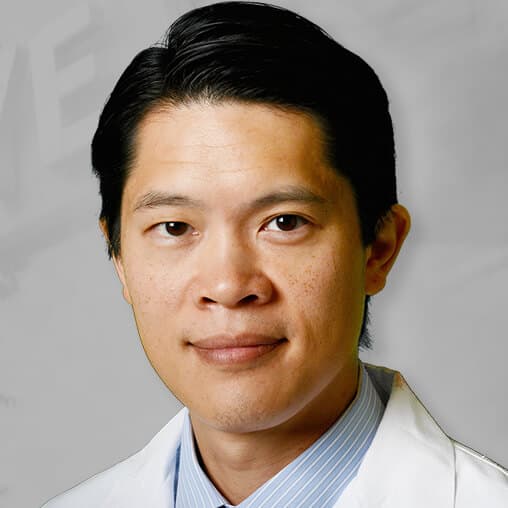
Allen Chiang is Associate Professor of Ophthalmology at Sidney Kimmel Medical College. He treats patients with wet macular degeneration, retinal detachment, macular holes, and complications of prior retinal surgery.
Dr. Chiang was last author and corresponding author on one of the first real-world outcome studies of faricimab — a newer injectable that targets two separate pathways in wet macular degeneration — in patients who had already been treated with other anti-VEGF drugs 21. That study matters for patients who have been getting monthly shots for years and want to know if switching to a longer-interval drug is realistic. He also contributed to evidence on intravitreal ocriplasmin for vitreomacular traction and full-thickness macular holes 20 and to surgical technique research on scleral-fixated versus anterior chamber lens implants at the time of vitrectomy 22, which informs what happens when a patient has no capsular support for a standard cataract lens.

Jonathan Myers, MD, M.D.
Chief, Glaucoma Service, Wills Eye Hospital; Associate Professor of Ophthalmology, Sidney Kimmel Medical College at Thomas Jefferson University
Wills Eye Hospital / Thomas Jefferson University Hospital, Philadelphia, PA
View specialist profileWills Eye Hospital / Thomas Jefferson University Hospital | Philadelphia, PA | Glaucoma, minimally invasive glaucoma surgery, complex glaucoma
Jonathan Myers is Chief of the Glaucoma Service at Wills Eye and Associate Professor of Ophthalmology at Sidney Kimmel Medical College. He treats patients with open-angle, angle-closure, exfoliation, and secondary glaucomas, and performs both traditional and minimally invasive glaucoma surgery.
Dr. Myers led work linking common variants in the LOXL1 gene to exfoliation glaucoma, the most common identifiable cause of secondary glaucoma 23. That finding helped explain why exfoliation runs in families and why it is more common in some populations than others. He also led a widely cited analysis from the Advanced Glaucoma Intervention Study showing that pressure fluctuation — not just average pressure — is a risk factor for visual field progression even when eye pressure looks well controlled 26. His research on two trabecular iStents combined with a suprachoroidal stent in refractory glaucoma 27 contributed to the body of evidence behind the newer class of minimally invasive glaucoma surgeries now offered to patients who cannot tolerate drops. He also contributed to work on iatrogenic glaucoma from steroid medications 25 and to the Boston keratoprosthesis series, which treats patients with corneal disease whose transplants have failed 24.
What to look for in an ophthalmologist
- Board certification by the American Board of Ophthalmology
- Academic affiliation with a teaching hospital if your condition is complex
- A subspecialty match for your problem — retina, glaucoma, cornea, oculoplastics, pediatric ophthalmology, or ocular oncology
- Whether the practice owns the equipment your condition needs, especially OCT, wide-field retinal imaging, and ultrasound
- Wait time for a new-patient appointment and whether they are accepting new patients
- Insurance compatibility, including whether they are in-network for Medicare if that applies to you
Questions to ask before your first appointment
- How many patients with my condition do you treat each year?
- Is my problem something a general ophthalmologist can manage, or do I need a subspecialist?
- If injections or surgery are likely, how many of those do you perform each year?
- What does follow-up look like — how often will I need to be seen, and for how long?
- What imaging will I get at the first visit, and will I get the results the same day?
- If you recommend a procedure, what are my non-surgical options, and what happens if I wait?
- Do you coordinate with my primary care doctor or endocrinologist if my eye disease is tied to diabetes or another systemic condition?
The bottom line
Most of the ophthalmologists on this page practice at Wills Eye Hospital, which gives patients in Pennsylvania access to ocular oncology, retina, and glaucoma expertise that is rare outside of a handful of U.S. centers. If your local eye doctor has flagged something complex — a choroidal lesion, progressive glaucoma despite drops, macular edema that will not clear, or any vision change that does not have an obvious answer — a referral to a subspecialist at a center like this is reasonable. Bring your recent imaging, a current medication list, and a clear description of how your vision has changed over time so the first visit can be spent on decisions rather than data gathering.
Sources
- 1.Sustained Benefits from Ranibizumab for Macular Edema Following Branch Retinal Vein Occlusion: 12-Month Outcomes of a Phase III Study — Ophthalmology, 2011. DOI
- 2.
- 3.Early and Long-Term Responses to Anti–Vascular Endothelial Growth Factor Therapy in Diabetic Macular Edema: Analysis of Protocol I Data — American Journal of Ophthalmology, 2016. DOI
- 4.Worsening of diabetic retinopathy with rapid improvement in systemic glucose control: A review — Diabetes Obesity and Metabolism, 2018. DOI
- 5.Psychophysical evidence for rod vulnerability in age-related macular degeneration. — PubMed, 2000.
- 6.Risk Factors for Growth and Metastasis of Small Choroidal Melanocytic Lesions — Ophthalmology, 1995. DOI
- 7.
- 8.Hydroxyapatite Orbital Implant After Enucleation Experience With Initial 100 Consecutive Cases — Archives of Ophthalmology, 1992. DOI
- 9.
- 10.
- 11.Randomized Controlled Trial of an Intravitreous Dexamethasone Drug Delivery System in Patients With Diabetic Macular Edema — Archives of Ophthalmology, 2010. DOI
- 12.
- 13.Combined phacoemulsification, intraocular lens implantation, and vitrectomy for eyes with coexisting cataract and vitreoretinal pathology — American Journal of Ophthalmology, 2003. DOI
- 14.
- 15.
- 16.
- 17.
- 18.Quantification of Nerve Fiber Layer Thickness in Normal and Glaucomatous Eyes Using Optical Coherence Tomography — Archives of Ophthalmology, 1995. DOI
- 19.Preferred therapies for neovascular age-related macular degeneration — Current Opinion in Ophthalmology, 2011. DOI
- 20.Efficacy of Intravitreal Ocriplasmin on Vitreomacular Traction and Full-Thickness Macular Holes — American Journal of Ophthalmology, 2015. DOI
- 21.Clinical Outcomes of Faricimab in Patients with Previously Treated Neovascular Age-Related Macular Degeneration — Ophthalmology Retina, 2023. DOI
- 22.PARS PLANA VITRECTOMY WITH ANTERIOR CHAMBER VERSUS GORE-TEX SUTURED POSTERIOR CHAMBER INTRAOCULAR LENS PLACEMENT — Retina, 2018. DOI
- 23.Common Sequence Variants in the LOXL1 Gene Confer Susceptibility to Exfoliation Glaucoma — Yearbook of Ophthalmology, 2008. DOI
- 24.
- 25.
- 26.Intraocular Pressure Fluctuation: A Risk Factor for Visual Field Progression at Low Intraocular Pressures in the Advanced Glaucoma Intervention Study — Yearbook of Ophthalmology, 2009. DOI
- 27.Prospective Evaluation of Two iStent® Trabecular Stents, One iStent Supra® Suprachoroidal Stent, and Postoperative Prostaglandin in Refractory Glaucoma: 4-year Outcomes — Advances in Therapy, 2018. DOI
Related specialist lists
ophthalmology
Best Ophthalmologists for Retinal Diseases in Arizona
Leading ophthalmologists for retinal diseases in Arizona, with research focus, hospital affiliations, and what to ask before your first visit.
ophthalmology
Top Ophthalmologists for Intravitreal Injections in Ohio
Ohio ophthalmologists with deep retinal research and clinical volume in intravitreal injections for macular degeneration, diabetic eye disease, and vein occlusion.
ophthalmology / retina
Best Retina and Vitreous Specialists in Oklahoma
Retina and vitreous specialists in Oklahoma who treat detachments, diabetic eye disease, and macular problems at leading hospitals.