Expert list · Last reviewed April 13, 2026
Vascular Neurology & Stroke Specialists in Florida
Six Florida vascular neurologists with deep stroke program expertise, selected by research output, program leadership, and peer recognition.
Loading map…
If you or someone you love has had a stroke or TIA in Florida, the gap between good care and great care often comes down to which program you walk into. Florida has a handful of neurologists who have spent their careers building and running comprehensive stroke centers, publishing the research that shapes national treatment guidelines, and training the next generation of vascular neurologists. This page profiles six of them.
These profiles are grounded in peer-reviewed research published by each specialist and in their publicly available clinical and academic records. No specialist paid to appear here.
Vascular neurology is the subspecialty focused on strokes, transient ischemic attacks (TIAs), cerebral venous thrombosis, and other conditions where blood vessel problems damage the brain. After a stroke, getting to a certified comprehensive stroke center quickly matters enormously. Tissue plasminogen activator (tPA) has a narrow treatment window, and mechanical thrombectomy for large vessel occlusions requires both neurology and neurointerventional expertise on call. The specialists below practice at or lead programs at certified comprehensive stroke centers across the state.

Sebastian Koch, MD
Professor of Clinical Neurology; Chief, Stroke Program, University of Miami Hospital; Director, Patrick Cesarano Neurovascular Laboratory
Jackson Health System, Doral, FL
View specialist profileProfessor of Clinical Neurology, Chief of the Stroke Program at University of Miami Hospital, and Director of the Patrick Cesarano Neurovascular Laboratory, affiliated with Jackson Health System.
Dr. Koch runs one of South Florida's highest-volume stroke programs. His clinical practice covers acute ischemic stroke, TIA, hemorrhagic stroke, and the neurological complications of systemic illness. He has a particular interest in how vascular disease intersects with conditions outside classic stroke risk factors, including how immune-mediated brain edema behaves on advanced MRI. A 2001 study on eclampsia using diffusion-weighted imaging documented both cytotoxic and vasogenic edema patterns in a woman who went on to develop cerebral infarction, contributing to how neurologists use MRI to distinguish reversible injury from permanent damage 1. His laboratory work has examined neuroprotective strategies in focal ischemia, including research comparing the effects of induced hypothermia applied during versus after an ischemic event; the authors noted those findings could inform future clinical trial design for acute stroke 2. His group also published on the mechanisms driving ischemic stroke specifically in HIV-infected patients, finding that vasculitis and hypercoagulable states were relatively common causes in that population and that antiretroviral exposure did not substantially change stroke etiology 3.

Scott Silliman, MD
Professor of Neurology; Medical Director, UF Health Comprehensive Stroke Program; Program Director, Vascular Neurology Fellowship, UF Health Jacksonville
Shands Hospital Gainesville, Jacksonville, FL
View specialist profileProfessor of Neurology, Medical Director of the UF Health Comprehensive Stroke Program, and Program Director of the Vascular Neurology Fellowship at UF Health Jacksonville, affiliated with Shands Hospital Gainesville.
Dr. Silliman directs UF Health's comprehensive stroke program in Jacksonville and trains the fellowship-level neurologists who will staff stroke programs across the region. His academic work has focused on two parts of stroke care that often get less attention than the acute intervention: how to get tPA to patients who live far from a stroke center, and what happens to patients after they survive. A 2003 study he led in Stroke showed that a helicopter transport program linking rural areas to the stroke center extended access to thrombolytic therapy to patients who otherwise would have arrived too late to be treated, a systems-level finding that has influenced how rural stroke networks are designed 4. He has also published on post-stroke swallowing problems, which affect a substantial share of stroke survivors and can lead to aspiration pneumonia and malnutrition. A 2006 study found dysphagia was common at hospital admission and was tied to worse nutritional status 5, and a later randomized trial he contributed to tested whether exercise-based swallowing therapy (McNeill Dysphagia Therapy) outperformed neuromuscular electrical stimulation for post-stroke dysphagia, finding that the exercise approach produced greater reduction in swallowing severity 6. He also contributed to a systematic review on outcomes in patients who need both carotid artery stenting and coronary bypass surgery, a complex combined presentation that stroke neurologists sometimes manage 7.
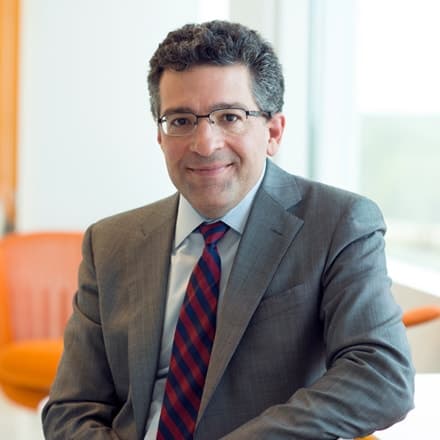
James Meschia, MD
Clinical Professor of Neurology
Mayo Clinic Florida, Jacksonville, FL
View specialist profileClinical Professor of Neurology at Mayo Clinic Florida in Jacksonville.
Dr. Meschia has an h-index of 85 and has published more than 670 works, which places him among the most prolific stroke researchers in the country. His work covers stroke genetics, unusual stroke causes like intracranial artery dissection and CNS vasculitis, and the long-running CREST trial comparing carotid stenting to endarterectomy. The CREST trial, published in the New England Journal of Medicine, was a large randomized study that found no meaningful difference in the composite outcome of stroke, heart attack, or death between the two procedures for symptomatic or asymptomatic carotid stenosis — though stenting carried a higher periprocedural stroke risk and endarterectomy a slightly higher heart attack risk 8. For patients facing a carotid procedure, this distinction still shapes individual decision-making. He also contributed to a 2015 Lancet Neurology review on intracranial artery dissection covering diagnosis, pathophysiology, and management — a condition that causes stroke in younger patients and is easy to miss 9. His group's analysis of 101 patients with primary CNS vasculitis in Annals of Neurology identified key diagnostic and prognostic patterns in a rare disease where early recognition and treatment can prevent serious neurological outcomes or death 10. His research on shared genetic risk between ischemic stroke and coronary artery disease, published in Stroke, found substantial genetic overlap particularly for the large artery stroke subtype — relevant for patients who have both conditions in their family history 11.
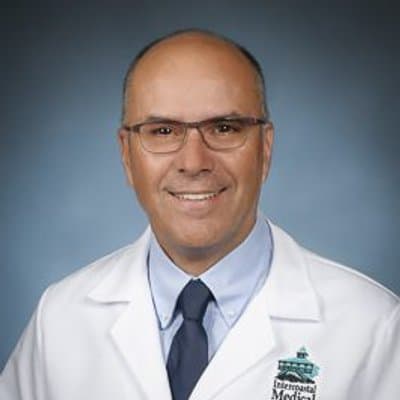
Affiliated with Sarasota Memorial Hospital, HCA Florida Sarasota Doctors Hospital, and Intercoastal Medical Group in Sarasota.
Dr. Concha practices vascular neurology in Sarasota with affiliations at multiple hospital systems on the Gulf Coast. His published research includes work on anticoagulation reversal, which is a central problem when stroke patients were on blood thinners when their intracranial hemorrhage began. He contributed to the ANNEXA-4 trial of andexanet alfa, published in the New England Journal of Medicine, which showed that in patients with major bleeding from factor Xa inhibitors (like rivaroxaban or apixaban), andexanet treatment substantially reduced anti-factor Xa activity and 82% of patients had good or excellent hemostasis at 12 hours 12. A 2023 final study report in Circulation extended those findings with longer follow-up data 13. This matters directly for stroke patients: a growing share of the population is on these newer blood thinners for atrial fibrillation, and knowing how to reverse them safely during an intracranial bleed has become a core stroke neurology skill.

Jose Romano, MD
Chair, Department of Neurology; Olemberg Family Chair of Neurology; Chief of Neurology, Jackson Health System; Medical Director, Jackson Memorial Hospital Comprehensive Stroke Center
Jackson Health System, Miami, FL
View specialist profileChair of the Department of Neurology, Olemberg Family Chair of Neurology, Chief of Neurology at Jackson Health System, and Medical Director of the Jackson Memorial Hospital Comprehensive Stroke Center.
Dr. Romano leads neurology at one of the largest academic health systems in Florida. Jackson Memorial Hospital's comprehensive stroke center handles a high volume of complex cases, including patients transferred from smaller facilities who need thrombectomy or specialized hemorrhagic stroke care. As both department chair and medical director of the stroke center, his role spans clinical leadership, quality improvement, and oversight of the full stroke care pathway from door to treatment. He has an h-index of 38 and has published more than 320 works across his career.

Affiliated with Mayo Clinic Florida in Jacksonville and AdventHealth Orlando.
Dr. Mauricio practices at Mayo Clinic Florida's neurovascular program in Jacksonville. Her published research includes work on hemorrhagic stroke critical care, specifically a study on blood transfusion as a predictor of hospital mortality in patients with aneurysmal subarachnoid hemorrhage, a stroke subtype caused by a ruptured aneurysm. That 2012 study in Neurocritical Care found blood transfusion was independently associated with increased in-hospital death in this population, a finding relevant to how intensivists manage anemia in the neurovascular ICU 14.
What to look for in a Florida stroke specialist
- Board certification in neurology with fellowship training in vascular neurology (a separate subspecialty board exists through the United Council for Neurological Subspecialties)
- Hospital affiliation with a Joint Commission-certified Comprehensive Stroke Center, which means 24/7 availability of thrombectomy-capable teams
- Experience with your specific stroke type — ischemic stroke, hemorrhagic stroke, TIA, and subarachnoid hemorrhage each have different management protocols and follow-up needs
- For younger patients with unusual stroke causes (dissection, CNS vasculitis, inherited clotting disorders), ask about the neurologist's experience with these less common presentations — the workup is different from standard atherosclerotic stroke
- For post-stroke rehabilitation questions, confirm whether the program has in-house speech therapy, physical therapy, and swallowing evaluation — not all comprehensive stroke centers have the same outpatient follow-up infrastructure
Questions to ask after a stroke or TIA
- What type of stroke did I have, and what caused it? (The mechanism determines how you prevent the next one)
- Am I on the right blood thinner, antiplatelet, or other medication to reduce recurrence risk?
- Do I need imaging of my carotid arteries or heart, and how soon?
- If I need a carotid procedure, is stenting or endarterectomy more appropriate given my situation?
- What symptoms should send me back to the emergency room immediately?
- Is there a stroke support program or rehabilitation referral I should be connected with before I leave?
The bottom line
Florida has real depth in vascular neurology, concentrated at academic programs in Miami and Jacksonville. If you are choosing where to go after a stroke or TIA, the specialists listed here practice at or lead certified comprehensive stroke centers, and outcomes research consistently ties both infrastructure and clinical volume to better results. For routine follow-up after a stroke, a local neurologist may be sufficient, but for complex presentations, second opinions, or cases involving unusual stroke mechanisms, getting to one of these programs for at least an initial evaluation is usually worth the trip.
Sources
- 1.Diffusion-weighted imaging shows cytotoxic and vasogenic edema in eclampsia. — PubMed, 2001.
- 2.Comparative neuroprotective efficacy of prolonged moderate intraischemic and postischemic hypothermia in focal cerebral ischemia — Journal of neurosurgery, 2000. DOI
- 3.
- 4.Use of a Field-to-Stroke Center Helicopter Transport Program to Extend Thrombolytic Therapy to Rural Residents — Stroke, 2003. DOI
- 5.Dysphagia and Nutritional Status at the Time of Hospital Admission for Ischemic Stroke — Journal of Stroke and Cerebrovascular Diseases, 2006. DOI
- 6.Exercise‐based swallowing intervention (McNeill Dysphagia Therapy) with adjunctive NMES to treat dysphagia post‐stroke: A double‐blind placebo‐controlled trial — Journal of Oral Rehabilitation, 2019. DOI
- 7.A Systematic Review of Outcomes in Patients With Staged Carotid Artery Stenting and Coronary Artery Bypass Graft Surgery — Stroke, 2008. DOI
- 8.Stenting versus Endarterectomy for Treatment of Carotid-Artery Stenosis — New England Journal of Medicine, 2010. DOI
- 9.Primary central nervous system vasculitis: analysis of 101 patients — Annals of Neurology, 2007. DOI
- 10.Epidemiology, pathophysiology, diagnosis, and management of intracranial artery dissection — The Lancet Neurology, 2015. DOI
- 11.
- 12.Full Study Report of Andexanet Alfa for Bleeding Associated with Factor Xa Inhibitors — New England Journal of Medicine, 2019. DOI
- 13.Final Study Report of Andexanet Alfa for Major Bleeding With Factor Xa Inhibitors — Circulation, 2023. DOI
- 14.Blood Transfusion is an Important Predictor of Hospital Mortality Among Patients with Aneurysmal Subarachnoid Hemorrhage — Neurocritical Care, 2012. DOI
Related specialist lists
neurology / vascular neurology
Best Vascular Neurology & Stroke Specialists in New York
Six of New York's leading vascular neurologists and stroke specialists — selected by peer recognition, published research, and academic affiliation.
neurology
Best Neurologists in New York
Six of New York's top neurologists — covering migraine, epilepsy, stroke, MS, and brain tumors — selected by peer recognition and published research.
neurology
Top neurologists in California 2026
Six of California's top neurologists — covering stroke, multiple sclerosis, Alzheimer's disease, and epilepsy — selected by published research and peer recognition.