Expert list · Last reviewed April 17, 2026
Best Neurologists for Stroke and Cerebrovascular Care in MN
Top Minnesota neurologists for stroke and cerebrovascular disease, with clinical focus, institutional affiliation, and peer-cited research.
Loading map…
Minnesota has a concentrated bench of neurologists for stroke and cerebrovascular disease whose clinical volume and peer-cited research put them among the most consulted specialists in the country — here is where to start.
The six specialists below all practice in Rochester and share an affiliation with Mayo Clinic, which runs one of the nation's highest-volume neurovascular and neurocritical care programs. Each has a distinct subspecialty lane inside cerebrovascular care: acute stroke and thrombectomy, aneurysms, cerebral cavernous malformations, cervical artery dissection, post-stroke cognitive decline, and the neuro-ICU itself. Use this as a starting point if you are researching a second opinion, a complex diagnosis, or a referral for a family member.
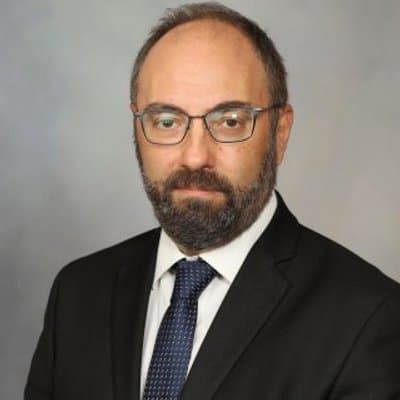
Alejandro Rabinstein, M.D.
Professor of Neurology; Chair, Hospital Neurology and Neurocritical Care Division; Medical Director, Neuroscience Intensive Care Unit
Mayo Clinic
View specialist profileDr. Rabinstein chairs hospital neurology and neurocritical care at Mayo Clinic and serves as medical director of the Neuroscience Intensive Care Unit. He treats the sickest cerebrovascular patients in the hospital — large strokes, brain hemorrhages, ruptured and unruptured aneurysms, and patients on ventilators after severe brain injury. He led the international team that built the unruptured intracranial aneurysm treatment score, now a standard tool for deciding whether a small aneurysm found on a scan should be watched or treated 1. He was also a co-investigator on the Lancet study showing that an AI-read ECG can flag patients likely to have the hidden atrial fibrillation behind cryptogenic stroke 2, and he co-authored the European consensus on mechanical ventilation after brain injury 3.

Dr. Flemming is medical director of the Cerebral Cavernous Malformation Center of Excellence at Mayo Clinic. She takes care of patients with vascular malformations in the brain — cavernomas, AVMs, and some kinds of unusual aneurysms — where the hardest question is usually whether to operate or observe. She led the first large natural-history study of cavernoma bleeding risk 4, contributed to the Lancet Neurology meta-analysis that pooled every patient ever reported with an untreated cavernoma 5, and co-wrote the Angioma Alliance consensus guidelines that now steer treatment decisions internationally 6. Her earlier work on vertebrobasilar aneurysms and intracranial vascular malformations is still cited by neurosurgeons choosing between open and endovascular repair 78.

Dr. Khan is an associate professor of neurology at Mayo Clinic focused on acute ischemic stroke. His clinical work centers on thrombectomy — the emergency procedure that pulls a clot out of a blocked brain artery — and on figuring out why a stroke happened when the obvious causes come up empty. He helped show that outpatient cardiac monitoring finds atrial fibrillation in a surprising share of "cryptogenic" strokes, a finding that has changed how long patients are monitored after discharge 9. He also co-authored one of the early case series on endovascular treatment for tandem occlusions, where two arteries on the same side are blocked at once 10, and contributed to work on blood-based oxidative-stress markers that may one day help emergency teams decide who still has brain tissue worth saving 1112.

Dr. Keser is an associate professor of neurology at Mayo Clinic who sees patients with cervical artery dissection — a tear in the lining of a neck artery that is one of the leading causes of stroke in people under 50. He first-authored the 2022 review that many neurologists now reach for when deciding whether dissection patients need a blood thinner, antiplatelet therapy, or a stent 13. His imaging research uses diffusion tensor MRI to map how stroke damages the brain's white-matter connections, and how those connections recover with rehab — including brain-controlled exoskeleton therapy 1415.

Vijay Ramanan, MD, PHD
Director, Alzheimer's Disease Treatment Clinic
Mayo Clinic
View specialist profileDr. Ramanan directs the Alzheimer's Disease Treatment Clinic at Mayo Clinic, and much of his work sits at the intersection of cerebrovascular disease and dementia. If you or a family member are worried about memory problems that appeared after a stroke or TIA, he is the kind of specialist who can sort out whether it is vascular cognitive impairment, Alzheimer's, or both. He co-authored a 2023 Neurology study showing how few real-world patients actually meet criteria for the new anti-amyloid infusions — many are disqualified by small strokes and microbleeds on their MRI 16. His earlier genetics work on Alzheimer's and Parkinson's helped map which gene pathways drive neurodegeneration 1718.

Rodolfo Savica, MD
Professor of Neurology; Director, Young-Onset Parkinson's Disease Clinic
Mayo Clinic
View specialist profileDr. Savica is a professor of neurology at Mayo Clinic and directs the Young-Onset Parkinson's Disease Clinic. His strongest relevance for cerebrovascular readers is on the diagnostic side: telling apart Parkinson's, Lewy body dementia, and vascular parkinsonism, where a series of small strokes mimics Parkinson's but will not respond to the same medications. He first-authored the paper that reframed when Parkinson disease actually starts 19 and contributed to the most widely cited modern incidence estimate for the condition in North America 20. He was also part of the systematic review that set current accuracy standards for diagnosing dementia with Lewy bodies 21.
What to look for in a stroke and cerebrovascular specialist
- Board certification in neurology, with fellowship training in vascular neurology, neurocritical care, or neurointervention
- Affiliation with a Joint Commission–certified Comprehensive Stroke Center, which is set up for 24/7 thrombectomy and neurosurgery
- A subspecialty focus that matches your condition (aneurysm, cavernoma, dissection, cryptogenic stroke, post-stroke cognitive decline)
- A clinic that coordinates with neurosurgery, neurointerventional radiology, and rehab in one place
- Wait time and whether they are accepting new patients for non-emergency consults
- Insurance compatibility and whether out-of-state second opinions are offered by video
Questions to ask before your first appointment
- How many patients with my condition do you treat each year?
- Is your hospital a Comprehensive Stroke Center, and do you have 24/7 thrombectomy coverage?
- If my aneurysm or cavernoma has not bled, how do you decide between watching and treating?
- What tests will you run to find the cause of an unexplained stroke?
- If I need a procedure, will you perform it or refer me to a colleague on your team?
- What follow-up do you recommend for cognitive and mood changes after a stroke?
The bottom line
If your question is urgent — a new stroke, a suspected dissection, or an aneurysm found on a scan — call your primary care doctor or local emergency department first, then ask for a referral to one of these specialists for definitive management. For non-emergency questions like second opinions on an unruptured aneurysm, a cavernoma, or post-stroke cognitive decline, any of the neurologists above can typically review outside records and see you in clinic or by video.
Sources
- 1.
- 2.
- 3.Plasma Ceramide and Glucosylceramide Metabolism Is Altered in Sporadic Parkinson's Disease and Associated with Cognitive Impairment: A Pilot Study — PLoS ONE, 2013. DOI
- 4.Association of Plasma Total Tau Level With Cognitive Decline and Risk of Mild Cognitive Impairment or Dementia in the Mayo Clinic Study on Aging — JAMA Neurology, 2017. DOI
- 5.Accuracy of clinical diagnosis of dementia with Lewy bodies: a systematic review and meta-analysis — Journal of Neurology Neurosurgery & Psychiatry, 2017. DOI
- 6.An artificial intelligence-enabled ECG algorithm for the identification of patients with atrial fibrillation during sinus rhythm: a retrospective analysis of outcome prediction — The Lancet, 2019. DOI
- 7.
- 8.Contemporary carotid imaging: from degree of stenosis to plaque vulnerability — Journal of neurosurgery, 2015. DOI
- 9.Paroxysmal Sympathetic Hyperactivity after Acquired Brain Injury: Consensus on Conceptual Definition, Nomenclature, and Diagnostic Criteria — Journal of Neurotrauma, 2014. DOI
- 10.Mechanical ventilation in patients with acute brain injury: recommendations of the European Society of Intensive Care Medicine consensus — Intensive Care Medicine, 2020. DOI
- 11.Genetic studies of quantitative MCI and AD phenotypes in ADNI: Progress, opportunities, and plans — Alzheimer s & Dementia, 2015. DOI
- 12.Pathway analysis of genomic data: concepts, methods, and prospects for future development — Trends in Genetics, 2012. DOI
- 13.Genetic analysis of quantitative phenotypes in AD and MCI: imaging, cognition and biomarkers — Brain Imaging and Behavior, 2013. DOI
- 14.Pathways to neurodegeneration: mechanistic insights from GWAS in Alzheimer's disease, Parkinson's disease, and related disorders. — PubMed, 2013.
- 15.Eligibility for Anti-Amyloid Treatment in a Population-Based Study of Cognitive Aging — Neurology, 2023. DOI
- 16.Synopsis of Guidelines for the Clinical Management of Cerebral Cavernous Malformations: Consensus Recommendations Based on Systematic Literature Review by the Angioma Alliance Scientific Advisory Board Clinical Experts Panel — Neurosurgery, 2017. DOI
- 17.Clinical course of untreated cerebral cavernous malformations: a meta-analysis of individual patient data — The Lancet Neurology, 2015. DOI
- 18.Natural History, Evaluation, and Management of Intracranial Vascular Malformations — Mayo Clinic Proceedings, 2005. DOI
- 19.The Natural History of Radiographically Defined Vertebrobasilar Nonsaccular Intracranial Aneurysms — Cerebrovascular Diseases, 2005. DOI
- 20.
- 21.Lifespan Gyrification Trajectories of Human Brain in Healthy Individuals and Patients with Major Psychiatric Disorders — Scientific Reports, 2017. DOI
- 22.Individualized Prediction and Clinical Staging of Bipolar Disorders Using Neuroanatomical Biomarkers — Biological Psychiatry Cognitive Neuroscience and Neuroimaging, 2016. DOI
- 23.Diffusion tensor imaging of the human cerebellar pathways and their interplay with cerebral macrostructure — Frontiers in Neuroanatomy, 2015. DOI
- 24.Neural activity modulations and motor recovery following brain-exoskeleton interface mediated stroke rehabilitation — NeuroImage Clinical, 2020. DOI
- 25.Cervical Artery Dissections: Etiopathogenesis and Management — Vascular Health and Risk Management, 2022. DOI
- 26.Outpatient cardiac telemetry detects a high rate of atrial fibrillation in cryptogenic stroke — Journal of the Neurological Sciences, 2012. DOI
- 27.Limb-shaking transient ischemic attacks: case report and review of literature — BMC Neurology, 2006. DOI
- 28.Endovascular treatment of tandem vascular occlusions in acute ischemic stroke — Journal of NeuroInterventional Surgery, 2014. DOI
- 29.Early molecular oxidative stress biomarkers of ischemic penumbra in acute stroke — Neurology, 2019. DOI
- 30.
Related specialist lists
neurology
Best Neurologists in New York
Six of New York's top neurologists — covering stroke, peripheral neuropathy, multiple sclerosis, epilepsy, and Parkinson's disease — selected by peer recognition and published research.
neurology
Best Neurologists in Ohio
Six of Ohio's top neurologists — covering epilepsy, multiple sclerosis, movement disorders, sleep neurology, and neuromuscular medicine — selected by research output and peer recognition.
neurology
Find a Neurologist in Illinois
Six practicing neurologists in Illinois covering epilepsy, multiple sclerosis, sleep, and cognitive neurology — with research records that shape how these conditions are treated.