Expert list · Last reviewed April 13, 2026
Top Cardiologists in New York 2026
New York's top cardiologists ranked by research output, peer recognition, and subspecialty expertise — covering TAVR, interventional cardiology, and cardiovascular risk.
Loading map…
If you're searching for a cardiologist in New York, you have access to some of the most accomplished heart specialists in the country. The physicians below are among the most cited researchers and clinically active cardiologists practicing at major New York academic medical centers. Whether you're managing coronary artery disease, evaluating a leaky valve, or looking for a second opinion after a heart attack, knowing who leads the field can help you ask better questions and find the right fit.
New York's top cardiologists tend to share a few traits: they're based at academic medical centers with high procedure volumes, they've often led or contributed to the clinical trials that shaped current guidelines, and they see complex cases that community practices refer out. That combination of research depth and procedural experience is part of what distinguishes care at places like Columbia University Irving Medical Center and Mount Sinai from what you'd find at most regional hospitals.

Martin Leon, M.D.
Professor of Medicine at Columbia University Irving Medical Center; Director, Cardiovascular Data Science Center for the Division of Cardiology
NewYork-Presbyterian/Columbia University Irving Medical Center, New York
View specialist profileProfessor of Medicine at Columbia University Irving Medical Center and Director of the Cardiovascular Data Science Center, Dr. Leon sees patients at NewYork-Presbyterian/Columbia University Irving Medical Center and two affiliated sites.
He is one of the cardiologists most responsible for making transcatheter aortic valve replacement what it is today. His focus is structural heart disease — primarily aortic stenosis, the condition where the valve that controls blood flow out of the heart becomes stiff and narrow, a problem that once required open-chest surgery to fix.
The landmark PARTNER trial, which Dr. Leon led as first and corresponding author, showed that TAVR reduced death and rehospitalization in patients with severe aortic stenosis who couldn't tolerate surgery 1. A follow-up published in 2011 found that TAVR and surgical replacement produced similar one-year survival rates in high-risk patients, though with different complication profiles 2. By 2019, the PARTNER 3 trial demonstrated that TAVR actually outperformed surgery in low-risk patients — the composite of death, stroke, or rehospitalization was significantly lower at one year with the catheter-based approach 3. That finding extended TAVR eligibility well beyond the initially cautious indications and changed how cardiologists counsel younger, healthier patients with aortic stenosis.

Deepak Bhatt, MD
Director of the Mount Sinai Fuster Heart Hospital; Dr. Valentin Fuster Professor of Cardiovascular Medicine (with Tenure), Icahn School of Medicine at Mount Sinai
Mount Sinai Hospital, New York
View specialist profileDirector of the Mount Sinai Fuster Heart Hospital and the Dr. Valentin Fuster Professor of Cardiovascular Medicine at Icahn School of Medicine at Mount Sinai, Dr. Bhatt is a preventive cardiologist and interventionalist with a particular focus on reducing long-term cardiovascular risk.
His research touches a wide range of patients: people with type 2 diabetes and heart disease, those on statins who still have dangerous triglyceride levels, and patients recovering from a heart attack who remain at high risk despite standard therapy.
The REDUCE-IT trial, which Dr. Bhatt led, tested a purified omega-3 fatty acid called icosapent ethyl in patients with elevated triglycerides who were already on statins. Among that population, the drug cut the risk of serious cardiovascular events — including cardiovascular death — compared to placebo 5. The DECLARE-TIMI 58 trial evaluated dapagliflozin, an SGLT2 inhibitor used for diabetes, and found it reduced hospitalizations for heart failure even though it didn't lower the overall rate of major cardiac events 6. That distinction matters clinically: heart failure hospitalization is one of the most common and costly complications for people with diabetes, and identifying drugs that specifically reduce it reshapes prescribing decisions. The ODYSSEY OUTCOMES trial showed that alirocumab, a cholesterol-lowering injection, cut recurrent cardiovascular events in patients who had already had an acute coronary syndrome and were on high-intensity statins 9.

Ajay Kirtane, M.D., S.M.
Director, Columbia Interventional Cardiovascular Care; Chief Academic Officer, Division of Cardiology; Professor of Medicine at Columbia University Irving Medical Center
NewYork-Presbyterian/Columbia University Irving Medical Center, New York
View specialist profileDirector of Columbia Interventional Cardiovascular Care and Chief Academic Officer of the Division of Cardiology at Columbia University Irving Medical Center, Dr. Kirtane is one of the busiest interventional cardiologists in New York. His practice spans coronary artery disease, valve disease, and hypertension managed through renal denervation.
His research contributions include work on anticoagulation during primary PCI. The HORIZONS-AMI trial showed that bivalirudin alone — compared with heparin plus more aggressive antiplatelet drugs — significantly reduced major bleeding and net adverse events in patients with ST-elevation heart attacks undergoing emergency stenting 12. That finding changed anticoagulation protocols in cardiac catheterization labs across the country. He was also part of the international collaboration that produced the VARC-2 consensus document, which standardized how outcomes in TAVR trials are defined and reported — work that made it possible to meaningfully compare results across different valve systems and patient populations 13.
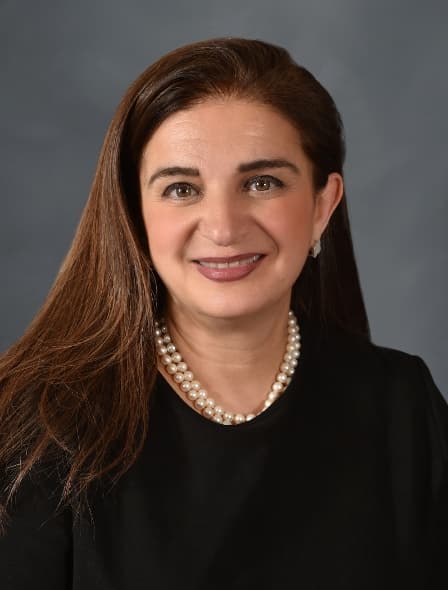
Roxana Mehran, M.D.
Professor of Medicine (Cardiology) and Population Health Science and Policy; Director of Interventional Cardiovascular Research and Clinical Trials, Zena and Michael A. Wiener Cardiovascular Institute; Mount Sinai Professor in Cardiovascular Clinical Research and Outcomes
Mount Sinai Hospital, New York
View specialist profileProfessor of Medicine and Director of Interventional Cardiovascular Research and Clinical Trials at the Zena and Michael A. Wiener Cardiovascular Institute, Dr. Mehran practices at Mount Sinai Hospital and Mount Sinai Queens.
She has spent much of her career on a problem that sounds mundane but turns out to be critical: how you define and measure outcomes in cardiovascular trials. Her work on the Academic Research Consortium produced standardized definitions for clinical endpoints in coronary stent studies 16 — the kind of methodological infrastructure that makes it possible to compare a trial from Milan with one from Houston. The Bleeding Academic Research Consortium (BARC) criteria she co-developed gave the field a common language for classifying bleeding complications in clinical trials, which had previously been defined inconsistently across studies 7. That work underpins much of the safety data you see cited when a cardiologist recommends a particular anticoagulation or antiplatelet strategy.
Her research on plaque biology — specifically the "vulnerable plaque, vulnerable patient" framework — helped shift thinking about why some plaques rupture and cause heart attacks while others don't 17.
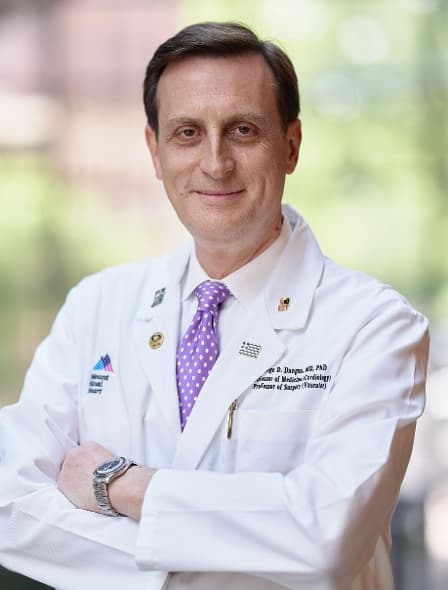
George Dangas, M.D.
Professor of Medicine (Cardiology) and Surgery (Vascular), Icahn School of Medicine at Mount Sinai; Director of Cardiovascular Innovation, Zena and Michael A. Weiner Cardiovascular Institute
Mount Sinai Hospital, New York
View specialist profileProfessor of Medicine (Cardiology) and Surgery (Vascular) at Icahn School of Medicine at Mount Sinai and Director of Cardiovascular Innovation at the Wiener Cardiovascular Institute, Dr. Dangas practices at Mount Sinai Hospital, Mount Sinai Queens, and Mount Sinai Medical Center.
He has a dual focus on interventional cardiology and vascular complications of cardiac procedures. Among his most practically relevant contributions is a risk score he developed for predicting which patients undergoing coronary angiography are likely to develop kidney injury from contrast dye — a complication called contrast-induced nephropathy 21. That score is now built into decision-making at catheterization labs worldwide, helping clinicians identify at-risk patients before the procedure and take steps to protect kidney function.
His involvement in the FREEDOM trial, which enrolled diabetic patients with multivessel coronary artery disease, added important nuance to the bypass surgery versus stenting debate. The trial found that CABG reduced deaths and heart attacks more effectively than PCI in this population, though it came with a higher stroke rate 22. For patients with both diabetes and complex coronary disease, that result still shapes the conversation about which revascularization strategy to choose.

Samin Sharma, M.D.
Professor of Medicine, Icahn School of Medicine at Mount Sinai; Director, S.P. and Seema Lohia Cardiovascular Clinical Institute; Director of Interventional Cardiology, Mount Sinai Health System
Mount Sinai Hospital, New York
View specialist profileProfessor of Medicine at Icahn School of Medicine at Mount Sinai, Director of the S.P. and Seema Lohia Cardiovascular Clinical Institute, and Director of Interventional Cardiology for the Mount Sinai Health System, Dr. Sharma has spent decades building one of the highest-volume interventional cardiology programs in the country.
His clinical focus includes complex coronary interventions — particularly cases involving heavily calcified arteries, where standard balloon and stent techniques fail without additional preparation. He has been a major contributor to the literature on rotational atherectomy, a technique that uses a tiny spinning burr to drill through calcified plaque before a stent is placed 2627. For patients with calcified coronary disease who might otherwise be turned away from catheterization-based treatment, this expertise expands what's technically possible. He has also published on coronary procedures after TAVR — a growing area of concern as more patients who've had their aortic valve replaced via catheter subsequently need coronary interventions 28.
What to look for in a New York cardiologist
- Subspecialty match. Cardiology covers a wide range of conditions. Someone with complex valve disease should see a structural heart specialist; someone managing atrial fibrillation needs an electrophysiologist; a patient with high cholesterol and prior heart attacks often does best with a preventive cardiologist. Make sure the doctor's focus matches your problem.
- Volume at an academic center. High-volume programs tend to have better outcomes for complex procedures, and academic centers see a broader mix of cases than community practices.
- Involvement in clinical trials. Cardiologists who run or participate in trials tend to be current on treatment options that aren't yet in standard guidelines.
- Team-based care. The best outcomes for heart valve disease, heart failure, and complex coronary disease usually come from programs with a multidisciplinary team — cardiologists, cardiac surgeons, and imaging specialists working together.
- Communication style. You'll be making treatment decisions that involve real tradeoffs. A cardiologist who explains the evidence clearly and listens to your priorities is worth as much as any credential.
Questions to ask before your first appointment
- What is the specific diagnosis, and what causes it?
- What are the treatment options, and what does the evidence say about each?
- What happens if I don't treat this right now?
- How many patients with this condition do you treat each year?
- Are there any clinical trials I might be eligible for?
- Who covers for you when you're unavailable, and how do urgent issues get handled between appointments?
The bottom line
New York's top cardiologists concentrate at a handful of academic medical centers — primarily Columbia and Mount Sinai — where high procedure volumes and active research programs go together. If you're dealing with a complex cardiac diagnosis, getting at least one opinion from a specialist at one of these programs is usually worth the effort. The physicians listed here have all contributed substantially to how heart disease is treated today, and most continue to see patients actively.
Sources
- 1.Transcatheter Aortic-Valve Implantation for Aortic Stenosis in Patients Who Cannot Undergo Surgery — New England Journal of Medicine, 2010. DOI
- 2.Transcatheter versus Surgical Aortic-Valve Replacement in High-Risk Patients — New England Journal of Medicine, 2011. DOI
- 3.Transcatheter Aortic-Valve Replacement with a Balloon-Expandable Valve in Low-Risk Patients — New England Journal of Medicine, 2019. DOI
- 4.A Randomized Comparison of Coronary-Stent Placement and Balloon Angioplasty in the Treatment of Coronary Artery Disease — New England Journal of Medicine, 1994. DOI
- 5.Percutaneous Transcatheter Implantation of an Aortic Valve Prosthesis for Calcific Aortic Stenosis — Circulation, 2002. DOI
- 6.Dapagliflozin and Cardiovascular Outcomes in Type 2 Diabetes — New England Journal of Medicine, 2018. DOI
- 7.
- 8.Saxagliptin and Cardiovascular Outcomes in Patients with Type 2 Diabetes Mellitus — New England Journal of Medicine, 2013. DOI
- 9.Alirocumab and Cardiovascular Outcomes after Acute Coronary Syndrome — New England Journal of Medicine, 2018. DOI
- 10.Cardiovascular Risk Reduction with Icosapent Ethyl for Hypertriglyceridemia — New England Journal of Medicine, 2018. DOI
- 11.Cardiovascular Considerations for Patients, Health Care Workers, and Health Systems During the COVID-19 Pandemic — Journal of the American College of Cardiology, 2020. DOI
- 12.Bivalirudin during Primary PCI in Acute Myocardial Infarction — New England Journal of Medicine, 2008. DOI
- 13.Updated Standardized Endpoint Definitions for Transcatheter Aortic Valve Implantation — Journal of the American College of Cardiology, 2012. DOI
- 14.Safety and Efficacy of Sirolimus- and Paclitaxel-Eluting Coronary Stents — New England Journal of Medicine, 2007. DOI
- 15.Updated standardized endpoint definitions for transcatheter aortic valve implantation: the Valve Academic Research Consortium-2 consensus document† — European Heart Journal, 2012. DOI
- 16.
- 17.
- 18.Clonal Hematopoiesis and Risk of Atherosclerotic Cardiovascular Disease — New England Journal of Medicine, 2017. DOI
- 19.
- 20.2016 ACC/AHA Guideline Focused Update on Duration of Dual Antiplatelet Therapy in Patients With Coronary Artery Disease — Journal of the American College of Cardiology, 2016. DOI
- 21.A simple risk score for prediction of contrast-induced nephropathy after percutaneous coronary intervention — Journal of the American College of Cardiology, 2004. DOI
- 22.Strategies for Multivessel Revascularization in Patients with Diabetes — New England Journal of Medicine, 2012. DOI
- 23.
- 24.Impact of Major Bleeding on 30-Day Mortality and Clinical Outcomes in Patients With Acute Coronary Syndromes — Journal of the American College of Cardiology, 2007. DOI
- 25.In-Stent Restenosis in the Drug-Eluting Stent Era — Journal of the American College of Cardiology, 2010. DOI
- 26.
- 27.
- 28.Coronary Angiography and Percutaneous Coronary Intervention After Transcatheter Aortic Valve Replacement — Journal of the American College of Cardiology, 2018. DOI
- 29.Myocardial Bridging: Diagnosis, Functional Assessment, and Management — Journal of the American College of Cardiology, 2021. DOI
- 30.North American Expert Review of Rotational Atherectomy — Circulation Cardiovascular Interventions, 2019. DOI
Related specialist lists
cardiology
Best Cardiologists for Coronary Intervention in Texas
Six Texas interventional cardiologists selected by research output, procedural depth, and peer recognition — covering Dallas, Houston, San Antonio, and Bay City.
cardiology
Top Cardiologists for Atrial Fibrillation in New Jersey
Six New Jersey cardiologists with clinical and research experience in atrial fibrillation, catheter ablation, anticoagulation, and rhythm management.
cardiology / electrophysiology
Best Cardiac EP Specialists in California
Six of California's top cardiac electrophysiologists at UCLA, UCSF, and Stanford — selected by research output, peer recognition, and clinical credentials.