Expert list · Last reviewed April 13, 2026
Best Cardiac EP Specialists in California
Six of California's top cardiac electrophysiologists at UCLA, UCSF, and Stanford — selected by research output, peer recognition, and clinical credentials.
Loading map…
If you have been told you have atrial fibrillation, a dangerous heart rhythm, or a condition that may need catheter ablation, a cardiac electrophysiologist is the right specialist to see — and California has some of the most experienced in the country. The six physicians profiled here hold positions at UCLA, UCSF, and Stanford, have published research that shaped current treatment guidelines, and are actively seeing patients. No one paid to appear on this page.
Cardiac electrophysiology is a subspecialty of cardiology. A general cardiologist manages blood pressure, cholesterol, coronary disease, and heart failure. An electrophysiologist — often called an EP — focuses on the heart's electrical system: what happens when the rhythm goes wrong, why it happens, and how to fix it. That distinction matters because the procedures involved, catheter ablation, device implantation, and nerve modulation, require years of additional training beyond a general cardiology fellowship. When your arrhythmia is complex or recurring, or when medication has not worked, an EP is the right person to evaluate your options.

Jamil Aboulhosn, MD
Director, Ahmanson/UCLA Adult Congenital Heart Disease Center
Ronald Reagan UCLA Medical Center, Los Angeles
View specialist profileRonald Reagan UCLA Medical Center, Los Angeles | Adult congenital heart disease, arrhythmia
Jamil Aboulhosn directs the Ahmanson/UCLA Adult Congenital Heart Disease Center at Ronald Reagan UCLA Medical Center. His practice focuses on adults who were born with structural heart abnormalities — a population that often develops rhythm problems years after childhood repair. Managing arrhythmias in this group requires understanding both the original anatomy and how surgical scars, patches, and residual defects create electrical substrates for reentrant rhythms.
Dr. Aboulhosn was a contributing author on the 2018 AHA/ACC guidelines for adults with congenital heart disease, published in both Circulation and the Journal of the American College of Cardiology 1234. These guidelines — cited more than 1,500 times — define how clinicians should evaluate and manage this population, including arrhythmia monitoring, ablation indications, and device therapy. He also contributed to a multicenter AARCC study published in Circulation in 2010 that quantified the arrhythmia burden in adults with repaired tetralogy of Fallot, finding that more than 43 percent of the 556 patients studied had a sustained arrhythmia or required an arrhythmia intervention 5. For adults living with repaired congenital heart disease who are developing palpitations, syncope, or sustained arrhythmias, Dr. Aboulhosn's program at UCLA is specifically built around that intersection.
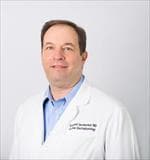
Edward Gerstenfeld, MD
Chief, Section of Cardiac Electrophysiology; Melvin M. Scheinman Endowed Chair, UCSF
UCSF Medical Center, San Francisco
View specialist profileUCSF Medical Center, San Francisco | Atrial fibrillation ablation, pulsed field ablation
Edward Gerstenfeld is Chief of the Section of Cardiac Electrophysiology at UCSF and holds the Melvin M. Scheinman Endowed Chair in Cardiology. He specializes in catheter ablation for atrial fibrillation and ventricular arrhythmias. UCSF's EP program, named after Melvin Scheinman — who performed the first catheter ablation in the world in 1981 — has been at the center of ablation research for decades, and Gerstenfeld has carried that work forward.
Dr. Gerstenfeld was first author and corresponding investigator on the ADVENT trial, a 2023 New England Journal of Medicine study that compared pulsed field ablation to conventional thermal ablation (radiofrequency or cryo) in patients with paroxysmal atrial fibrillation 8. Pulsed field ablation is a newer technique that uses electrical pulses rather than heat or cold to destroy tissue; the trial found it was noninferior to thermal ablation on the primary composite outcome at one year, with a similar safety profile. That result helped move pulsed field ablation toward broader clinical use. He also contributed to the 2017 international expert consensus statement on catheter and surgical AF ablation, co-published in Heart Rhythm and EP Europace, which is the document most EP programs use to benchmark their indications and techniques 67. If you have AF and have been told you are a candidate for ablation, UCSF is where a meaningful portion of the evidence behind that conversation was built.

Olujimi Ajijola, MD, PhD, MD PHD
Professor of Medicine; Co-Director, UCLA-Caltech Medical Scientist Training Program
Ronald Reagan UCLA Medical Center, Los Angeles
View specialist profileRonald Reagan UCLA Medical Center, Los Angeles | Ventricular arrhythmias, cardiac sympathetic denervation, neuromodulation
Olujimi Ajijola is Professor of Medicine at UCLA and Co-Director of the UCLA-Caltech Medical Scientist Training Program. His clinical and research focus sits at the intersection of the nervous system and cardiac arrhythmias — specifically, how the autonomic nervous system drives life-threatening ventricular rhythms, and how disrupting that input can prevent them. He trained in both medicine and neuroscience and holds a PhD alongside his medical degree.
Dr. Ajijola is one of the researchers who helped establish bilateral cardiac sympathetic denervation as a treatment for patients with refractory ventricular arrhythmias. A 2011 JACC paper, on which he is first and corresponding author, reported outcomes in patients with electrical storm — defined as three or more sustained ventricular arrhythmia episodes in 24 hours — who had the procedure after other therapies failed 14. A follow-up Heart Rhythm study in 2013 described intermediate and long-term follow-up in a similar population, further establishing durability of the approach 11. He also published a 2017 JACC Clinical Electrophysiology paper, on which he is corresponding author, examining the efficacy of stellate ganglion blockade for managing acute electrical storm 15. These are niche but meaningful interventions for patients who have exhausted medication and standard ablation options. If you or a family member has had recurrent ICD shocks or electrical storm that has not responded to conventional treatment, Dr. Ajijola's work is directly relevant to what options may remain.
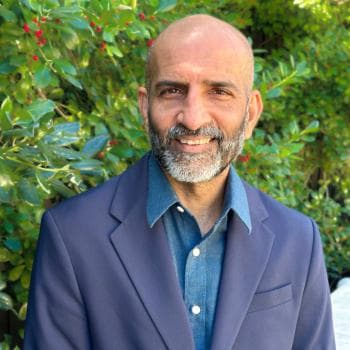
Nitish Badhwar, MD
Clinical Professor, Medicine - Cardiovascular Medicine
Stanford Health Care, Stanford
View specialist profileStanford Health Care, Stanford | Atrial fibrillation, left atrial appendage closure, epicardial ablation
Nitish Badhwar is Clinical Professor of Medicine in Cardiovascular Medicine at Stanford Health Care. He specializes in catheter ablation for AF and ventricular tachycardia, left atrial appendage (LAA) management, and epicardial ablation — procedures that reach the outer surface of the heart to treat scar-related arrhythmias that cannot be addressed from the inside.
Dr. Badhwar has published on LAA closure approaches, a topic directly relevant to AF patients who cannot tolerate long-term anticoagulation. A 2015 Heart Rhythm paper he co-authored compared the Watchman endocardial device to the Lariat epicardial ligation system, characterizing differences in the types and clinical significance of peri-device leaks 17. Separately, he co-authored a 2015 JACC Clinical Electrophysiology paper on combined LAA ligation and ablation for persistent AF 18. He also contributed to a 2015 study in Circulation: Arrhythmia and Electrophysiology comparing complication rates between different needle types for percutaneous epicardial access — a technically demanding step that precedes epicardial ablation — finding that a micropuncture needle significantly reduced major complications 19. For patients who need ablation that extends to the epicardial surface, or who are exploring LAA closure as an alternative to anticoagulation, Dr. Badhwar's practice at Stanford covers both.

Sanjiv Narayan, MD
Professor of Medicine; Co-Director, Arrhythmia Center; Director, Atrial Fibrillation Program, Stanford
Stanford Health Care, Stanford
View specialist profileStanford Health Care, Stanford | Atrial fibrillation mapping, T-wave alternans, AI-assisted electrophysiology
Sanjiv Narayan is Professor of Medicine and Co-Director of the Arrhythmia Center at Stanford, where he also directs the Atrial Fibrillation Program and an NIH-funded training program (T32 CHIP) focused on computational approaches to heart disease. His research sits at the edge of EP and signal processing — developing tools that map AF more precisely and predict arrhythmia risk in individual patients.
Dr. Narayan is first and corresponding author on a 2012 JACC paper describing the ablation of localized AF sources — rotors and focal impulse sources identified using a proprietary mapping system called FIRM — in 107 patients 21. The trial reported a substantially higher freedom from AF at one year in patients who received FIRM-guided ablation compared to conventional ablation alone. He is also a leading researcher on T-wave alternans, a subtle beat-to-beat variation in the ECG waveform that signals elevated risk for ventricular arrhythmias. A 2006 JACC paper, on which he is first and corresponding author, reviewed the evidence linking T-wave alternans to sudden cardiac death risk 24; a 2011 JACC paper updated that evidence base 22. He has also contributed to the literature on deep learning applied to cardiovascular medicine, including a 2019 European Heart Journal paper on machine learning methods in cardiac care 23. For patients with complex or drug-resistant AF, or those being evaluated for arrhythmia risk after a cardiac event, Dr. Narayan's program is among the most research-active in the state.
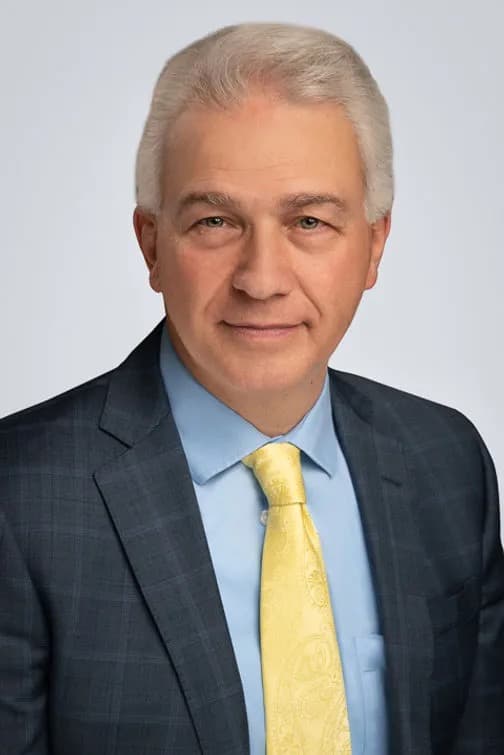
Andrea Natale, MD
Executive Medical Director, Texas Cardiac Arrhythmia Institute; National Medical Director of Cardiac Electrophysiology, HCA Healthcare
St. David's Medical Center; practices in Thousand Oaks, CA
View specialist profilePractices in Thousand Oaks, CA | Atrial fibrillation ablation, AF in heart failure, pulmonary vein isolation
Andrea Natale is Executive Medical Director of the Texas Cardiac Arrhythmia Institute and National Medical Director of Cardiac Electrophysiology for HCA Healthcare. He also sees patients in Thousand Oaks, California. He is among the most cited electrophysiologists in the world, with more than 2,000 published works and an h-index of 136 — a measure of sustained citation impact that places him in a small group globally.
Much of Dr. Natale's most influential work addresses when and how ablation should be used relative to medication for AF. A 2005 JAMA trial, on which he is first author, compared radiofrequency ablation to antiarrhythmic drugs as first-line therapy for symptomatic AF — an early landmark study that helped shift the field toward ablation earlier in the treatment course 27. A 2008 New England Journal of Medicine study examined pulmonary vein isolation in AF patients with heart failure, a population that tends to respond poorly to antiarrhythmic drugs 30. A 2016 Circulation trial, on which he is first and corresponding author, compared ablation directly to amiodarone in persistent AF patients with an implanted device and congestive heart failure 28. He also published a 2012 JACC paper examining whether left atrial appendage morphology predicts stroke risk in AF patients — a question still relevant to how EP programs think about anticoagulation and LAA closure 29. For patients with AF that has not responded to one or more medications, or who are trying to decide whether ablation is right for them, Dr. Natale's research portfolio spans the key comparisons directly.
What a cardiac electrophysiologist treats
- Atrial fibrillation and atrial flutter
- Supraventricular tachycardia (SVT), including Wolff-Parkinson-White syndrome
- Ventricular tachycardia and ventricular fibrillation
- Electrical storm (repeated life-threatening arrhythmias in a short window)
- Heart block and sick sinus syndrome requiring pacemakers
- Sudden cardiac arrest survivors being evaluated for an ICD
- Arrhythmias in adults with repaired congenital heart disease
- Syncope (fainting) when the cause may be a rhythm abnormality
Questions to ask before an EP procedure
- Have you tried medication first? Ablation is usually considered after at least one antiarrhythmic drug has failed, though guidelines support earlier ablation for some conditions.
- What type of ablation would you use — radiofrequency, cryoablation, or pulsed field — and why does that fit my case?
- How many of these procedures do you perform each year, and what is your center's success rate?
- Is the arrhythmia coming from the inside of the heart, the outside (epicardial), or both? That affects which approach is possible.
- If the procedure does not work the first time, what are the options for a repeat attempt?
- What does the recovery look like — how long off work, and when can I stop blood thinners?
- Is there a clinical trial at your program I should know about?
The bottom line
California's leading cardiac electrophysiologists are concentrated at UCLA, UCSF, and Stanford — three programs that collectively produce a disproportionate share of the research that defines how EP is practiced today. The six physicians here are faculty-level clinicians with documented track records in published research. If you have AF that medication has not controlled, a ventricular arrhythmia, or a complex arrhythmia related to congenital heart disease or heart failure, seeing one of these specialists — or getting a second opinion at one of these programs — is worth pursuing. Getting the subspecialty right early tends to matter more than people expect.
Sources
- 1.2018 AHA/ACC Guideline for the Management of Adults With Congenital Heart Disease: A Report of the American College of Cardiology/American Heart Association Task Force on Clinical Practice Guidelines — Circulation, 2018. DOI
- 2.2018 AHA/ACC Guideline for the Management of Adults With Congenital Heart Disease — Journal of the American College of Cardiology, 2018. DOI
- 3.2018 AHA/ACC Guideline for the Management of Adults With Congenital Heart Disease: Executive Summary — Journal of the American College of Cardiology, 2018. DOI
- 4.2018 AHA/ACC Guideline for the Management of Adults With Congenital Heart Disease: Executive Summary: A Report of the American College of Cardiology/American Heart Association Task Force on Clinical Practice Guidelines — Circulation, 2018. DOI
- 5.
- 6.2017 HRS/EHRA/ECAS/APHRS/SOLAECE expert consensus statement on catheter and surgical ablation of atrial fibrillation — Heart Rhythm, 2017. DOI
- 7.2017 HRS/EHRA/ECAS/APHRS/SOLAECE expert consensus statement on catheter and surgical ablation of atrial fibrillation — EP Europace, 2017. DOI
- 8.Pulsed Field or Conventional Thermal Ablation for Paroxysmal Atrial Fibrillation — New England Journal of Medicine, 2023. DOI
- 9.2017 HRS/EHRA/ECAS/APHRS/SOLAECE expert consensus statement on catheter and surgical ablation of atrial fibrillation: Executive summary — Journal of Arrhythmia, 2017. DOI
- 10.2017 HRS/EHRA/ECAS/APHRS/SOLAECE expert consensus statement on catheter and surgical ablation of atrial fibrillation: Executive summary — EP Europace, 2017. DOI
- 11.Cardiac sympathetic denervation in patients with refractory ventricular arrhythmias or electrical storm: Intermediate and long-term follow-up — Heart Rhythm, 2013. DOI
- 12.Permanent His-bundle pacing for cardiac resynchronization therapy: Initial feasibility study in lieu of left ventricular lead — Heart Rhythm, 2017. DOI
- 13.Relationship Between Sinus Rhythm Late Activation Zones and Critical Sites for Scar-Related Ventricular Tachycardia — Circulation Arrhythmia and Electrophysiology, 2015. DOI
- 14.Bilateral Cardiac Sympathetic Denervation for the Management of Electrical Storm — Journal of the American College of Cardiology, 2011. DOI
- 15.Efficacy of Stellate Ganglion Blockade in Managing Electrical Storm — JACC. Clinical electrophysiology, 2017. DOI
- 16.Intracardiac and extracardiac markers of inflammation during atrial fibrillation — Heart Rhythm, 2009. DOI
- 17.Endocardial (Watchman) vs epicardial (Lariat) left atrial appendage exclusion devices: Understanding the differences in the location and type of leaks and their clinical implications — Heart Rhythm, 2015. DOI
- 18.Left Atrial Appendage Ligation and Ablation for Persistent Atrial Fibrillation — JACC. Clinical electrophysiology, 2015. DOI
- 19.Differences in Complication Rates Between Large Bore Needle and a Long Micropuncture Needle During Epicardial Access — Circulation Arrhythmia and Electrophysiology, 2015. DOI
- 20.
- 21.Treatment of Atrial Fibrillation by the Ablation of Localized Sources — Journal of the American College of Cardiology, 2012. DOI
- 22.
- 23.
- 24.T-Wave Alternans and the Susceptibility to Ventricular Arrhythmias — Journal of the American College of Cardiology, 2006. DOI
- 25.Clinical Mapping Approach To Diagnose Electrical Rotors and Focal Impulse Sources for Human Atrial Fibrillation — Journal of Cardiovascular Electrophysiology, 2012. DOI
- 26.
- 27.Radiofrequency Ablation vs Antiarrhythmic Drugs as First-line Treatment of Symptomatic Atrial Fibrillation — JAMA, 2005. DOI
- 28.Ablation Versus Amiodarone for Treatment of Persistent Atrial Fibrillation in Patients With Congestive Heart Failure and an Implanted Device — Circulation, 2016. DOI
- 29.Does the Left Atrial Appendage Morphology Correlate With the Risk of Stroke in Patients With Atrial Fibrillation? — Journal of the American College of Cardiology, 2012. DOI
- 30.Pulmonary-Vein Isolation for Atrial Fibrillation in Patients with Heart Failure — New England Journal of Medicine, 2008. DOI
Related specialist lists
cardiology / electrophysiology
Top Cardiac Electrophysiologists in New York
Six New York cardiac electrophysiologists specializing in AFib ablation, ventricular arrhythmias, pulsed field ablation, and left atrial appendage closure.
cardiology / electrophysiology
Top cardiac electrophysiologists in Virginia 2026
Five Virginia cardiac electrophysiologists selected by research output and clinical focus — covering atrial fibrillation, pacemakers, ICDs, and sudden cardiac death.
cardiology
Top Cardiologists in New York 2026
New York's top cardiologists ranked by research output, peer recognition, and subspecialty expertise — covering TAVR, interventional cardiology, and cardiovascular risk.