Expert list · Last reviewed April 13, 2026
Top movement disorders doctors in New York (2026)
Six leading movement disorders neurologists in New York — what they specialize in, their research, and how to find the right fit for Parkinson's, tremor, or dystonia.
Loading map…
Research-informed directory — last updated April 13, 2026
If you or someone you love has been told they might have Parkinson's disease, tremor, dystonia, or another movement disorder, New York has some of the country's deepest concentrations of specialists in this field. But "deep concentration" does not make choosing easy. Movement disorders is a subspecialty within neurology, and within it, individual doctors have focused research and clinical experience that can vary significantly. One specialist may spend most of their time on deep brain stimulation programming; another focuses on genetic forms of young-onset Parkinson's; another on the non-motor symptoms that often go unrecognized for years.
This guide profiles six movement disorders neurologists practicing in New York, describes their clinical and research focus, and explains what questions to bring to your first appointment.
What movement disorders specialists treat
Movement disorders is the branch of neurology that covers conditions affecting the speed, quality, or control of voluntary movement. The most common conditions these specialists see:
- Parkinson's disease and parkinsonism (umbrella term for several Parkinson's-like conditions)
- Essential tremor (the most common movement disorder overall, often confused with Parkinson's)
- Dystonia (sustained or repetitive muscle contractions causing twisting or abnormal postures)
- Huntington's disease (a genetic condition affecting movement, cognition, and mood)
- Ataxia (problems with coordination, often involving the cerebellum)
- Tourette syndrome and other tic disorders
- Drug-induced movement problems
- Progressive supranuclear palsy (PSP) and corticobasal degeneration — rarer parkinsonism syndromes that are often misdiagnosed early on
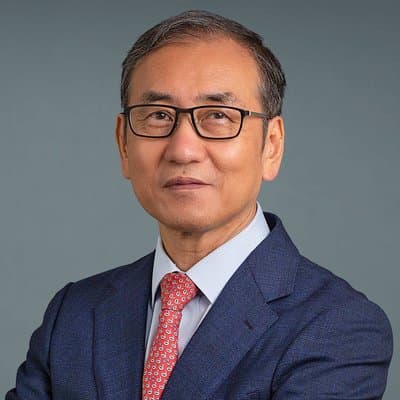
Un Kang, M.D.
Founders Professor of Neurology, Department of Neurology at NYU Grossman School of Medicine
NYU Langone Hospitals
View specialist profileUn Kang holds the Founders Professorship of Neurology at NYU Grossman School of Medicine and practices at NYU Langone Hospitals, including NYU Langone Hospital—Brooklyn. His clinical work centers on Parkinson's disease diagnosis, biomarker development, and understanding how the brain compensates in the early stages of the disease before symptoms appear.
His lab has spent decades on the question of why Parkinson's motor symptoms typically do not appear until 60–80% of dopamine neurons in the substantia nigra have already been lost. A 2000 PET imaging study he contributed to showed that presynaptic dopamine terminals upregulate certain compensatory mechanisms even as others decline, helping explain how the brain masks early neurodegeneration for years 1. More recently, his group has examined neuromelanin MRI — a noninvasive imaging technique that may allow detection of dopamine neuron loss years before symptoms start — as a potential early biomarker for Parkinson's 2.
He has also published on cerebrospinal fluid biomarker panels that can help distinguish Parkinson's from related conditions like multiple system atrophy, findings that bear directly on how patients get diagnosed and tracked over time 3.
If you are looking for a specialist with deep experience in Parkinson's diagnosis, early disease, and the science of how the condition progresses, Kang is worth considering.

Steven Frucht is a movement disorders neurologist at NYU Langone Hospital—Brooklyn with particular expertise in the differential diagnosis of parkinsonism — meaning the work of distinguishing true Parkinson's from the several other conditions that can look like it. His research record includes more than 380 published works spanning Parkinson's, dystonia, and rare genetic movement disorders.
One of his most cited contributions is a 1999 paper in Neurology that first documented sudden-onset sleep attacks in patients taking the dopamine agonists pramipexole and ropinirole — two drugs still widely prescribed for Parkinson's. He was the first author on that paper, which described patients falling asleep without warning while driving, prompting major changes in prescribing guidance 4. The finding illustrates how carefully his work tracks real-world treatment risks that matter to patients on medication.
His later work includes use of FDG-PET metabolic imaging to tell different parkinsonian syndromes apart, a technique that helps confirm diagnoses in cases where clinical examination alone is ambiguous 5.
If you are in a situation where the diagnosis is unclear or where distinguishing Parkinson's from a look-alike condition is important, Frucht's clinical focus is well matched to that question.

Lisa Shulman, M.D.
Professor, Department of Pediatrics (Developmental Medicine); Director, Infant and Toddler Services, Children's Evaluation and Rehabilitation Center (CERC); Director, RELATE Program
Albert Einstein College of Medicine / Rose F. Kennedy Center
View specialist profileLisa Shulman practices in the Bronx and holds a joint academic appointment at Albert Einstein College of Medicine and the Rose F. Kennedy Center, where she directs programs focused on child development and rehabilitation. Her movement disorders research has focused heavily on the non-motor aspects of Parkinson's disease — depression, sleep problems, cognitive changes, and pain — that physicians routinely miss.
A 2002 paper she led documented how often depression and other non-motor symptoms go unrecognized in Parkinson's patients, with consequences for quality of life that can exceed those of the motor symptoms 6. That work has been cited more than 700 times. She has also published on gender differences in Parkinson's, including how symptoms, disease progression, and treatment response can differ between men and women — an area where research lagged for many years 7.
Her clinical profile suggests a specialist attentive to the full picture of how Parkinson's affects daily life, not just the tremor and gait changes that tend to dominate initial consultations.

Susan Bressman is one of the most cited movement disorders neurologists in the country, with an h-index of 86 across 356 published works. She practices at Mount Sinai Hospital and Mount Sinai West in Manhattan. Her career has been defined by research on the genetics of Parkinson's disease and dystonia, including foundational work on identifying the genetic variants that cause early-onset and familial forms of both conditions.
Bressman's genetic work has shaped how both Parkinson's disease and dystonia are understood at the molecular level, and her clinical practice reflects that expertise. If you have a family history of Parkinson's, a young age of onset (under 50), or a suspected genetic form of dystonia, she is among the most experienced specialists in the country for evaluating those questions.
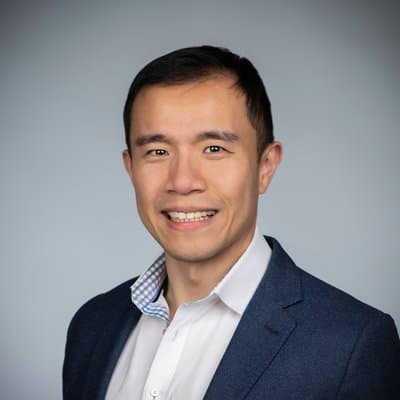
Sheng-Han Kuo, M.D.
H. Houston Merritt Associate Professor of Neurology
NewYork-Presbyterian/Columbia University Irving Medical Center
View specialist profileSheng-Han Kuo is the H. Houston Merritt Associate Professor of Neurology at Columbia University Irving Medical Center, where he practices and runs a research lab focused on Parkinson's disease and cerebellar ataxia. His work has addressed a specific mechanistic question: how does the GBA gene — already known as a risk factor for Parkinson's — interfere with the cellular machinery that clears alpha-synuclein, the protein that accumulates in Parkinson's brain cells?
A 2022 paper he led as first author in Science Advances showed that mutant glucocerebrosidase (the enzyme encoded by GBA1) blocks a protein-clearance pathway called chaperone-mediated autophagy, leading to alpha-synuclein buildup and neuron death — a finding with direct implications for new treatment targets 8.
His research also spans the cerebellum's role in movement disorders, relevant to patients with ataxia or cerebellar tremor. If you have GBA-related Parkinson's risk, early-onset disease, or symptoms suggestive of cerebellar involvement, his specific expertise at Columbia may be worth seeking out.

Michael Pourfar is a movement disorders neurologist at NYU Langone Hospital—Brooklyn who specializes in deep brain stimulation (DBS) — the surgical procedure in which electrodes are implanted in specific brain targets to modulate abnormal movement circuits. DBS is used primarily for Parkinson's disease, essential tremor, and dystonia, and it is also being studied for Tourette syndrome.
His published work includes research on why some patients who are referred to major centers with "failed" DBS do not actually have failed devices — they have programming problems or targeting issues that can often be corrected. A 2005 study he contributed to found that 51% of patients referred for DBS failure ultimately achieved good outcomes after systematic evaluation and reprogramming 9. He has also contributed to multicenter studies on DBS for Tourette syndrome, examining how stimulation placement affects long-term tic control 10.
If you or a family member is being considered for DBS, has had DBS and is not getting the expected benefit, or wants to discuss whether DBS might be appropriate, Pourfar's specialty focus is directly relevant.
Questions to ask at your first appointment
Going into a first visit with a movement disorders specialist is easier if you know what to ask:
- What is the most likely diagnosis, and what conditions are you ruling out?
- Is this Parkinson's disease, or could it be a parkinsonism syndrome like PSP or MSA? How confident are you?
- Are there imaging tests (MRI, DaT scan) or biomarker tests that would help clarify the diagnosis?
- Should I be tested for genetic causes given my age of onset or family history?
- What non-motor symptoms should I be watching for — depression, sleep problems, cognitive changes?
- If medication is recommended, what are the realistic side effects I should know about before I start?
- At what point would you consider referring me for a DBS evaluation?
- Are there clinical trials I would be eligible for?
The bottom line
Movement disorders neurology is a small subspecialty, and the doctors in it can differ substantially in their clinical focus — genetic workup, DBS programming, non-motor symptom management, biomarker-based diagnosis, or distinguishing atypical parkinsonism from Parkinson's proper. New York has a genuine concentration of expertise, with specialists at NYU Langone, Columbia, and Mount Sinai who have shaped the research in this field for decades.
If you are early in the process and unsure of your diagnosis, a specialist with broad diagnostic experience is a reasonable first stop. If you already have a diagnosis and a specific question — about surgery, genetics, or a treatment that is not working — matching yourself to someone whose published work addresses that specific question tends to produce better conversations and better care.
Sources
- 1.In vivo positron emission tomographic evidence for compensatory changes in presynaptic dopaminergic nerve terminals in Parkinson's disease — Annals of Neurology, 2000. DOI
- 2.Neuromelanin detection by magnetic resonance imaging (MRI) and its promise as a biomarker for Parkinson’s disease — npj Parkinson s Disease, 2018. DOI
- 3.Cerebrospinal fluid biomarkers for Parkinson disease diagnosis and progression — Annals of Neurology, 2010. DOI
- 4.Falling asleep at the wheel: Motor vehicle mishaps in persons taking pramipexole and ropinirole — Neurology, 1999. DOI
- 5.Differential diagnosis of parkinsonism: a metabolic imaging study using pattern analysis — The Lancet Neurology, 2010. DOI
- 6.Non-recognition of depression and other non-motor symptoms in Parkinson's disease — Parkinsonism & Related Disorders, 2002. DOI
- 7.
- 8.Mutant glucocerebrosidase impairs α-synuclein degradation by blockade of chaperone-mediated autophagy — Science Advances, 2022. DOI
- 9.
- 10.Image-based analysis and long-term clinical outcomes of deep brain stimulation for Tourette syndrome: a multisite study — Journal of Neurology Neurosurgery & Psychiatry, 2019. DOI
Related specialist lists
neurology / movement disorders
Movement disorders specialists in Florida
Find movement disorders specialists in Florida. Research from Mayo Clinic, UF Health, and USF neurologists informs this guide to Parkinson's disease, essential tremor, and related conditions.
neurology
Best Neurologists in New York
Six of New York's top neurologists — covering migraine, epilepsy, stroke, MS, and brain tumors — selected by peer recognition and published research.
neurology
Top neurologists in California 2026
Six of California's top neurologists — covering stroke, multiple sclerosis, Alzheimer's disease, and epilepsy — selected by published research and peer recognition.