Expert list · Last reviewed April 17, 2026
Top Neurologists for EMG and NCS Testing in Arizona
Arizona neurologists who read EMG and NCS studies with the volume and nerve-disease depth to pinpoint hard cases.
Loading map…
Arizona has a handful of neurologists who read electrodiagnostic testing — EMG and nerve conduction studies — with the volume and nerve-disease expertise to sort out tingling, weakness, and unexplained muscle symptoms that have stumped other clinics.
Electromyography (EMG) uses a thin needle to record electrical activity in muscles, and nerve conduction studies (NCS) send small pulses along nerves to time how fast they respond. Together they are the gold standard for diagnosing carpal tunnel, pinched nerves, ALS, neuropathy, and inherited muscle diseases. The specialists below practice at Mayo Clinic Arizona, Banner, Barrow, Phoenix Children's, and independent Tucson and Phoenix clinics, and each brings a distinct focus — from neuromuscular genetics to pediatric critical care.

Dr. Sivakumar is a neuromuscular neurologist in Phoenix affiliated with St. Joseph's Hospital and Yavapai Regional Medical Center. He sees patients with inherited neuropathies, inclusion body myositis, and muscular dystrophies, and he is one of the few Arizona neurologists who routinely pairs EMG with muscle or nerve biopsy interpretation. His work on glycyl-tRNA synthetase mutations in Charcot-Marie-Tooth disease 1 and desmin myopathy 23 helped define two disorders that patients often spend years trying to name. If your weakness has no clear cause after a standard workup, this is the kind of clinic that finds it.
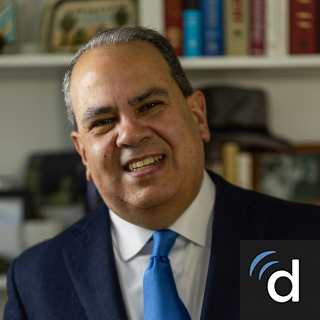
Dr. Sirven is a professor of neurology at Mayo Clinic with a longstanding epilepsy and seizure-disorders practice. While his clinical focus is seizures, Mayo Clinic Arizona runs a high-volume electrodiagnostic lab where EMG and NCS are often part of the workup when patients present with episodes that could be seizures, nerve events, or muscle spasms. His research on the ketogenic diet for adult epilepsy 4 and seizure risk in brain tumor patients 5 is widely cited and reflects the kind of systematic, second-opinion thinking Mayo is known for.

Dr. Chung practices at Banner - University Medical Center Phoenix, where Banner runs one of the larger neurology groups in the state. He is known for bringing clinical trials to Arizona patients, including the pivotal SANTE trial of anterior thalamic stimulation for drug-resistant epilepsy 6 and long-term follow-up on the same therapy 7. For patients whose EMG points to a motor neuron disease or who need complex neuromodulation, Banner's multidisciplinary team is a reasonable destination.

Dr. Drees directs intraoperative monitoring at Mayo Clinic Arizona. That means she is the physician interpreting real-time nerve and brain signals during surgery, which requires fluency in the same electrophysiology principles that underlie EMG and NCS. Her published work covers stereo-EEG mapping for epilepsy surgery 8, MRI-guided laser ablation 9, and wireless single-channel EEG for at-home seizure monitoring 10. Patients referred to Mayo for complex workups often end up on her schedule.
Brian Appavu, M.D.
Assistant Professor, Clinical Scholar, Child Health, Division of Neurology; Neurology (University of Arizona College of Medicine – Phoenix); Program Director, Pediatric Neurocritical Care Fellowship (Barrow Neurological Institute at Phoenix Children’s)
Phoenix Children's Hospital
View specialist profileDr. Appavu is an assistant professor and pediatric neurocritical care fellowship director at Barrow Neurological Institute at Phoenix Children's Hospital. For parents whose child needs EMG or NCS — often to investigate weakness, neuropathy after illness, or recovery from a neurologic injury — Phoenix Children's is the referral center for the state. His research includes a foundational case series on the ketogenic diet for pediatric super-refractory status epilepticus 11 and ongoing work on brain monitoring after pediatric traumatic brain injury 1213.

Dr. Teeple is a general neurologist at Tucson Medical Center. For patients in southern Arizona, he is one of the accessible in-office options for routine EMG and nerve conduction studies — the kind of visit that sorts out carpal tunnel, a pinched nerve in the neck, or diabetic neuropathy without a long drive to Phoenix. He is a good starting point for straightforward cases that primary care wants confirmed.
What to look for in a neurologist who performs EMG and NCS
- Board certification in neurology, ideally with subspecialty certification in clinical neurophysiology or neuromuscular medicine
- Affiliation with a teaching hospital or a high-volume electrodiagnostic lab
- Experience with your specific symptom pattern — weakness, numbness, cramps, or twitching each point to different tests
- Availability for follow-up if the first study does not explain your symptoms
- Acceptance of your insurance and a reasonable wait time
Questions to ask before your first appointment
- How many EMG and nerve conduction studies do you perform each year?
- Will you do the needle portion yourself, or will a technician do part of it?
- How long will the test take, and will I be sore afterward?
- If the study is normal but my symptoms continue, what is the next step?
- Do you read your own studies, or is the interpretation sent out?
- Will you coordinate results with my primary care doctor or surgeon?
The bottom line
If your symptoms are straightforward — numb fingers, a pinched nerve, suspected carpal tunnel — a general neurologist like Dr. Teeple in Tucson or a Banner or Mayo electrodiagnostic lab is a practical starting point. If the picture is confusing, if you have a family history of nerve or muscle disease, or if a prior EMG came back normal despite ongoing weakness, ask your primary care doctor for a referral to a neuromuscular specialist like Dr. Sivakumar. For children, Phoenix Children's under Dr. Appavu is the state's referral center.
Sources
- 1.Seizure Prophylaxis in Patients With Brain Tumors: A Meta-analysis — Mayo Clinic Proceedings, 2004. DOI
- 2.
- 3.
- 4.Frequency of seizures in patients with newly diagnosed brain tumors: A retrospective review — Clinical Neurology and Neurosurgery, 2007. DOI
- 5.
- 6.Electrical stimulation of the anterior nucleus of thalamus for treatment of refractory epilepsy — Epilepsia, 2010. DOI
- 7.Long-term efficacy and safety of thalamic stimulation for drug-resistant partial epilepsy — Neurology, 2015. DOI
- 8.Lacosamide as adjunctive therapy for partial‐onset seizures: A randomized controlled trial — Epilepsia, 2010. DOI
- 9.Randomized phase 2 study of adjunctive cenobamate in patients with uncontrolled focal seizures — Neurology, 2020. DOI
- 10.
- 11.The Histopathology of Hypothalamic Hamartomas — Journal of Neuropathology & Experimental Neurology, 2007. DOI
- 12.Stimulation Mapping Using Stereoelectroencephalography: Current and Future Directions — Frontiers in Neurology, 2020. DOI
- 13.Outcomes after hemispherectomy in adult patients with intractable epilepsy: institutional experience and systematic review of the literature — Journal of neurosurgery, 2017. DOI
- 14.Electrographic seizure monitoring with a novel, wireless, single-channel EEG sensor — Clinical Neurophysiology Practice, 2021. DOI
- 15.Curative and palliative MRI-guided laser ablation for drug-resistant epilepsy — Journal of Neurology Neurosurgery & Psychiatry, 2017. DOI
- 16.Glycyl tRNA Synthetase Mutations in Charcot-Marie-Tooth Disease Type 2D and Distal Spinal Muscular Atrophy Type V — The American Journal of Human Genetics, 2003. DOI
- 17.Missense mutations in desmin associated with familial cardiac and skeletal myopathy — Nature Genetics, 1998. DOI
- 18.Desmin Myopathy, a Skeletal Myopathy with Cardiomyopathy Caused by Mutations in the Desmin Gene — New England Journal of Medicine, 2000. DOI
- 19.Phenotypic spectrum of disorders associated with glycyl-tRNA synthetase mutations — Brain, 2005. DOI
- 20.HLA allele distribution distinguishes sporadic inclusion body myositis from hereditary inclusion body myopathies — Journal of Neuroimmunology, 1998. DOI
- 21.
- 22.Transcranial Doppler Ultrasound During Critical Illness in Children: Survey of Practices in Pediatric Neurocritical Care Centers* — Pediatric Critical Care Medicine, 2019. DOI
- 23.Approaches to Multimodality Monitoring in Pediatric Traumatic Brain Injury — Frontiers in Neurology, 2019. DOI
- 24.Association of Outcomes with Model-Based Indices of Cerebral Autoregulation After Pediatric Traumatic Brain Injury — Neurocritical Care, 2021. DOI
- 25.Clinical trials for pediatric traumatic brain injury: definition of insanity? — Journal of Neurosurgery Pediatrics, 2019. DOI
Related specialist lists
neurology
Best Neurologists in New York
Six of New York's top neurologists — covering stroke, peripheral neuropathy, multiple sclerosis, epilepsy, and Parkinson's disease — selected by peer recognition and published research.
neurology
Best Neurologists in Ohio
Six of Ohio's top neurologists — covering epilepsy, multiple sclerosis, movement disorders, sleep neurology, and neuromuscular medicine — selected by research output and peer recognition.
neurology
Find a Neurologist in Illinois
Six practicing neurologists in Illinois covering epilepsy, multiple sclerosis, sleep, and cognitive neurology — with research records that shape how these conditions are treated.