Expert list · Last reviewed April 17, 2026
Best Movement Disorders Specialists in Minnesota
Movement disorders specialists in Minnesota known for Parkinson's, tremor, and autonomic care — with the research and clinical depth behind each name.
Loading map…
Minnesota has an unusually deep bench of movement disorders specialists, concentrated at Mayo Clinic in Rochester and M Health Fairview in the Twin Cities — here is where to start if you are looking for one of the best.
The doctors below treat Parkinson's disease, tremor, multiple system atrophy, dystonia, and the nerve and autonomic problems that often travel with them. Several of them helped write the research that defines how these conditions are diagnosed today, and most see patients whose symptoms have stumped community neurologists elsewhere.

Rodolfo Savica, MD
Professor of Neurology; Director, Young-Onset Parkinson's Disease Clinic
Mayo Clinic
View specialist profileDr. Savica is a professor of neurology at Mayo Clinic and directs the Young-Onset Parkinson's Disease Clinic in Rochester. He sees patients whose Parkinson's shows up in their 40s or 50s — a group that often needs a different treatment plan than older patients because they will live with the disease for decades. His research has pushed the field to recognize that Parkinson's begins years before the first tremor, with clues like constipation, loss of smell, and REM sleep behavior changes 1. His 2022 study on the incidence of Parkinson disease in North America 2 is the current reference point for how common the disease actually is in the United States and Canada.
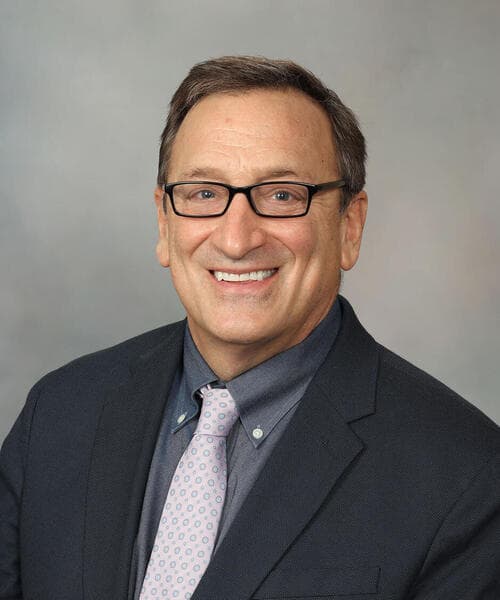
Dr. Bower is a professor of neurology at Mayo Clinic and one of the longest-serving Parkinson's specialists in Rochester. He used Mayo's Olmsted County records to map how often parkinsonism actually occurs in a typical American community 3, work that underpins most later prevalence estimates 4. He was also part of the team that first sounded the alarm on impulse-control problems from dopamine agonist drugs 5, including compulsive gambling — a side effect most patients and families had never been warned about. If you are weighing the trade-offs of Parkinson's medications, his clinic is a good place to get a candid read.
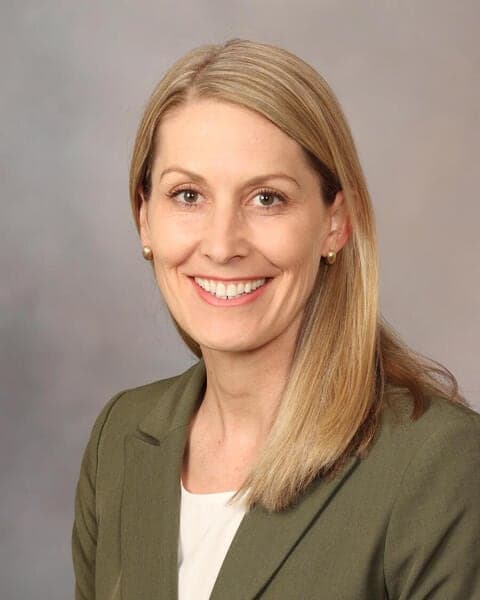
Dr. Coon is an associate professor of neurology at Mayo Clinic and a specialist in multiple system atrophy (MSA) and related conditions where the autonomic nervous system fails. MSA often looks like Parkinson's at first but gets worse faster and brings severe blood pressure drops, bladder problems, and fainting. Her work showed which clinical features and autonomic tests actually predict how long a patient will live with MSA 6, information families rely on to plan care. She also co-authored the national consensus statement on how the autonomic nervous system should be tested 7, and has published on autonomic symptoms that emerged after COVID-19 8.

Dr. Tuite is a professor of neurology at the University of Minnesota and practices through M Health Fairview in Minneapolis. He is one of the Twin Cities' primary destinations for Parkinson's and atypical parkinsonism and has kept a foot in research even while running a busy clinic. His imaging studies showed that Parkinson's brains develop measurable changes in the frontal lobe and basal ganglia that affect balance and movement sense 9, and he helped test whether antioxidant therapy with N-acetylcysteine can raise protective chemicals in the brain 10. For patients in the Minneapolis-St. Paul area, he is often the specialist local neurologists refer complex cases to.

William Litchy, M.D.
Consultant, Department of Neurology, Mayo Clinic, Rochester, MN
Mayo Clinic, Rochester, MN
View specialist profileDr. Litchy is a consultant in Mayo Clinic's Department of Neurology and one of the clinic's most experienced neuromuscular specialists. Movement problems don't always start in the brain — weakness from inclusion body myositis 11, numbness from diabetic neuropathy, and pain from cervical radiculopathy 12 can all look like a movement disorder at first. Dr. Litchy helped build the Rochester Diabetic Neuropathy Study [13, 14, 15], the long-running cohort that set the current standards for measuring nerve damage. If your neurologist isn't sure whether the trouble is in your brain or your peripheral nerves, he is the kind of specialist they send you to.

Dr. Dyck is a professor of neurology at Mayo Clinic who focuses on peripheral nerve disease, including the neuropathies that often complicate Parkinson's and other movement disorders by worsening balance and gait. He led the JAMA trial that repurposed diflunisal for familial amyloid polyneuropathy 16, a once-untreatable inherited disease, and co-authored the international consensus on quantitative sensory testing 17. His earlier population work on diabetic neuropathy 18 and inherited motor-sensory conditions 19 helped define how these nerve diseases are staged today. Ask for him when numbness, weakness, or balance problems don't fit a single diagnosis.
What to look for in a movement disorders specialist
- Board certification in neurology, with fellowship training in movement disorders
- Academic affiliation with a teaching hospital or comprehensive Parkinson's center
- Subspecialty focus that matches your diagnosis — Parkinson's, tremor, dystonia, MSA, or Huntington's
- Experience with deep brain stimulation if that may be in your future
- Wait time, whether they are accepting new patients, and how far you would need to travel
- Insurance compatibility and telehealth availability for follow-ups
Questions to ask before your first appointment
- How many patients with my condition do you treat each year?
- Do you run a multidisciplinary clinic with physical therapy, speech therapy, and social work?
- If my diagnosis is uncertain, what testing do you use to sort it out?
- Are you involved in clinical trials I might qualify for?
- How do you decide when to start medication, and when to consider deep brain stimulation or focused ultrasound?
- Who covers your clinic when you are away, and how do I reach someone urgently?
The bottom line
Most patients in Minnesota start with a community neurologist and only see a movement disorders subspecialist when the diagnosis is unclear, symptoms are progressing fast, or medications stop working. Use this list as a shortlist — Mayo Clinic in Rochester for complex or atypical cases, M Health Fairview in Minneapolis for Twin Cities access — and ask your primary care doctor or general neurologist for a referral. A specialist visit is worth the drive when the answers you have been getting don't match what you feel.
Sources
- 1.
- 2.
- 3.Longitudinal assessment of diabetic polyneuropathy using a composite score in the Rochester Diabetic Neuropathy Study cohort — Neurology, 1997. DOI
- 4.
- 5.
- 6.
- 7.
- 8.Plasma Ceramide and Glucosylceramide Metabolism Is Altered in Sporadic Parkinson's Disease and Associated with Cognitive Impairment: A Pilot Study — PLoS ONE, 2013. DOI
- 9.Association of Plasma Total Tau Level With Cognitive Decline and Risk of Mild Cognitive Impairment or Dementia in the Mayo Clinic Study on Aging — JAMA Neurology, 2017. DOI
- 10.Accuracy of clinical diagnosis of dementia with Lewy bodies: a systematic review and meta-analysis — Journal of Neurology Neurosurgery & Psychiatry, 2017. DOI
- 11.Autonomic dysfunction following COVID-19 infection: an early experience — Clinical Autonomic Research, 2021. DOI
- 12.
- 13.
- 14.Electrodiagnostic assessment of the autonomic nervous system: A consensus statement endorsed by the American Autonomic Society, American Academy of Neurology, and the International Federation of Clinical Neurophysiology — Clinical Neurophysiology, 2020. DOI
- 15.Clinical features and autonomic testing predict survival in multiple system atrophy — Brain, 2015. DOI
- 16.
- 17.Hypertrophic olivary degeneration: metaanalysis of the temporal evolution of MR findings. — PubMed, 2000.
- 18.
- 19.N-acetylcysteine Boosts Brain and Blood Glutathione in Gaucher and Parkinson Diseases — Clinical Neuropharmacology, 2013. DOI
- 20.Altered Diffusion in the Frontal Lobe in Parkinson Disease — American Journal of Neuroradiology, 2008. DOI
- 21.The prevalence by staged severity of various types of diabetic neuropathy, retinopathy, and nephropathy in a population‐based cohort — Neurology, 1993. DOI
- 22.
- 23.Lower Motor and Primary Sensory Neuron Diseases With Peroneal Muscular Atrophy — Archives of Neurology, 1968. DOI
- 24.Value of quantitative sensory testing in neurological and pain disorders: NeuPSIG consensus — Pain, 2013. DOI
- 25.Oral Treatment With α-Lipoic Acid Improves Symptomatic Diabetic Polyneuropathy — Diabetes Care, 2006. DOI
- 26.
- 27.Increased risk of cognitive impairment or dementia in women who underwent oophorectomy before menopause — Neurology, 2007. DOI
- 28.Pathological Gambling Caused by Drugs Used to Treat Parkinson Disease — Archives of Neurology, 2005. DOI
- 29.Incidence and distribution of parkinsonism in Olmsted County, Minnesota, 1976–1990 — Neurology, 1999. DOI
- 30.Anxiety disorders and depressive disorders preceding Parkinson's disease: A case-control study — Movement Disorders, 2000. DOI
Related specialist lists
neurology / movement disorders
Movement disorders specialists in Florida
Find movement disorders specialists in Florida. Research from Mayo Clinic, UF Health, and USF neurologists informs this guide to Parkinson's disease, essential tremor, and related conditions.
neurology / movement disorders
Top movement disorders doctors in New York (2026)
Six leading movement disorders neurologists in New York — what they specialize in, their research, and how to find the right fit for Parkinson's, tremor, or dystonia.
neurology
Best Neurologists in New York
Six of New York's top neurologists — covering stroke, peripheral neuropathy, multiple sclerosis, epilepsy, and Parkinson's disease — selected by peer recognition and published research.