Expert list · Last reviewed April 17, 2026
Top Cardiologists in California 2026
California's leading cardiologists ranked by research depth and subspecialty expertise — covering heart failure, ablation, congenital disease, and transplantation.
Loading map…
If you're searching for a cardiologist in California, you have access to some of the most accomplished heart specialists in the country. The physicians below are among the most cited researchers and clinically active cardiologists practicing at major California academic medical centers. Whether you're managing heart failure, looking at options for atrial fibrillation, or navigating life after a heart transplant, knowing who leads the field can help you ask better questions and find the right fit.
California's top cardiologists cluster at a handful of academic medical centers — UCLA, UCSF, Stanford, and Cedars-Sinai — where high procedure volumes and active research programs go together. The clinicians here have each led or co-authored the studies and guidelines that now shape day-to-day cardiology practice nationwide, and most continue to run clinic and procedure schedules at their home institutions.

Gregg Fonarow, MD
Chief (Interim), UCLA Division of Cardiology; Director, Ahmanson-UCLA Cardiomyopathy Center; Co-Director, UCLA Preventative Cardiology Program; Eliot Corday Chair in Cardiovascular Medicine and Science
Santa Monica UCLA Medical Center and Orthopaedic Hospital
View specialist profileDr. Fonarow is interim chief of cardiology at UCLA and directs the Ahmanson-UCLA Cardiomyopathy Center, a referral program for advanced heart failure. His patients include people with weakened hearts, people evaluating transplant or mechanical support, and people trying to prevent a second cardiac event after a heart attack.
He built much of the practical toolkit that emergency rooms and hospitals now use to manage acute heart failure. A 2005 JAMA study he led created the first widely adopted risk model for in-hospital mortality in decompensated heart failure, giving doctors a way to sort patients who need intensive care from those safe for the regular ward 1. He also co-authored a widely cited analysis showing that higher body weight is associated with better — not worse — survival in chronic heart failure, a counterintuitive finding that reshaped how cardiologists counsel overweight patients about prognosis 2. His reviews in Nature Reviews Cardiology remain among the most cited summaries of heart-failure epidemiology and causes 34.
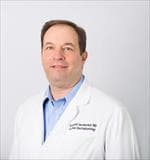
Edward Gerstenfeld, MD
Professor of Medicine; Melvin M. Scheinman Endowed Chair; Chief of the Section of Cardiac Electrophysiology at UCSF
UCSF Medical Center
View specialist profileDr. Gerstenfeld is chief of cardiac electrophysiology at UCSF Medical Center and holds the Scheinman Endowed Chair. He treats patients with heart-rhythm disorders, with a particular focus on atrial fibrillation — the irregular, fast rhythm that raises stroke risk and is one of the most common reasons people end up in a cardiology office.
He was the first and corresponding author on the ADVENT trial, published in the New England Journal of Medicine in 2023, which compared a new technique called pulsed field ablation against conventional heat- or cold-based ablation for paroxysmal atrial fibrillation. Pulsed field ablation uses brief electric pulses that damage heart muscle tissue selectively while sparing nearby structures like the esophagus and phrenic nerve. The trial found it was no worse than conventional ablation for keeping AFib away and caused similar rates of serious complications 5. That result helped move pulsed field ablation into routine use at high-volume centers. He also contributed to the international HRS/EHRA consensus statement that defines how catheter ablation for AFib is done 67.

Jamil Aboulhosn, MD
Director, Ahmanson/UCLA Adult Congenital Heart Disease Center
Ronald Reagan UCLA Medical Center
View specialist profileDr. Aboulhosn directs the Ahmanson/UCLA Adult Congenital Heart Disease Center at Ronald Reagan UCLA Medical Center. His practice is devoted to adults who were born with heart defects — a rapidly growing population, because most children with complex congenital disease now survive into adulthood and need lifelong specialist care.
His clinical focus covers the full range of congenital lesions: tetralogy of Fallot, single-ventricle physiology, coarctation of the aorta, and complications after childhood repairs. He was part of the writing committee for the 2018 AHA/ACC guideline on managing adults with congenital heart disease, which remains the primary reference cardiologists use when a patient with a childhood heart defect walks into an adult clinic 1112. He also contributed to a large multicenter study that quantified the burden of arrhythmias in adults decades after tetralogy of Fallot repair — finding that more than 40 percent of these patients develop a sustained rhythm problem or require an arrhythmia intervention, which is now the basis for long-term monitoring recommendations 15.

Dr. Yeung is a professor of cardiology at Stanford University School of Medicine. His clinical and research focus has been on coronary artery disease, endothelial function, and the microcirculation — the smallest blood vessels in the heart that account for much of the chest pain patients experience even when their large arteries look clean on an angiogram.
A 1991 New England Journal of Medicine study he led as first author showed that mental stress — not just physical exertion — can constrict diseased coronary arteries, a finding that reframed how cardiologists think about angina triggers 20. Earlier work connected abnormal responses to acetylcholine in the coronary arteries to standard risk factors like smoking and high cholesterol, strengthening the link between vascular biology and everyday prevention 17. A 1995 trial he contributed to showed that cholesterol-lowering and antioxidant therapy improved how coronary arteries respond to stress, one of the early mechanistic explanations for why statins help 18. He also helped develop a catheter-based technique for invasively assessing the coronary microcirculation — a tool that now helps diagnose patients with chest pain and no obvious blockages 19.

Jon Kobashigawa, MD, M.D.
Associate Director, Cedars-Sinai Heart Institute; Director, Heart Transplant Program
Cedars-Sinai Medical Center
View specialist profileDr. Kobashigawa is associate director of the Cedars-Sinai Heart Institute and directs the heart transplant program, one of the largest in the country. He cares for patients before, during, and long after heart transplantation, including those dealing with rejection and transplant-related coronary disease.
He was first author on a landmark 1995 New England Journal of Medicine trial showing that pravastatin, a cholesterol-lowering drug, reduced the incidence of severe rejection and slowed the development of coronary disease in transplanted hearts 22. That result made statins a standard part of post-transplant care, and it is a big reason long-term survival improved so dramatically in the years that followed. He also led a randomized trial establishing mycophenolate mofetil — now a workhorse immunosuppressant — as superior to an older drug for preventing rejection in the first year after heart transplant 23. His work on standardizing how pathologists grade rejection on heart-biopsy samples gave the field a shared language and made it possible to compare outcomes across transplant centers 21.

Ingela Schnittger, MD, M.D.
Professor of Medicine (Cardiovascular)
Stanford University School of Medicine
View specialist profileDr. Schnittger is a professor of medicine in cardiovascular medicine at Stanford University School of Medicine. She specializes in echocardiography — the ultrasound imaging used to evaluate the heart's structure and function — and her work has focused on patients whose heart disease comes from unusual sources, including cancer treatment.
She co-authored the 1989 Journal of the American Society of Echocardiography recommendations for measuring the left ventricle by two-dimensional echo, one of the most cited papers in cardiac imaging and still the basis for how heart function is quantified in clinics today 27. Her later work on Hodgkin's lymphoma survivors was among the first to document just how common silent heart disease is in people who were treated with chest radiation years or decades earlier 28. A follow-up study laid out a screening approach for coronary artery disease in this population 29. She also helped establish how transesophageal echocardiography detects the heart-based sources of stroke 30 and evaluates aortic dissection, a life-threatening emergency where early imaging is critical 31.
What to look for in a California cardiologist
- Subspecialty match. Cardiology covers a wide range of conditions. Someone with atrial fibrillation should see an electrophysiologist; a patient with a complex congenital defect needs an adult congenital specialist; advanced heart failure or a potential transplant evaluation requires a heart-failure cardiologist at a transplant center. Make sure the doctor's focus matches your problem.
- Volume at an academic center. High-volume programs tend to have better outcomes for complex procedures, and academic centers see a broader mix of cases than community practices.
- Involvement in clinical trials. Cardiologists who run or participate in trials tend to be current on treatment options that aren't yet in standard guidelines.
- Team-based care. The best outcomes for heart failure, arrhythmias, and adult congenital disease usually come from programs with a multidisciplinary team — cardiologists, surgeons, imaging specialists, and nurse coordinators working together.
- Insurance and access. Check network status and whether the physician is accepting new patients before you book travel across the state.
Questions to ask before your first appointment
- What is the specific diagnosis, and what is causing it?
- How many patients with this condition do you treat each year?
- What are my treatment options, and what does the evidence say about each?
- What happens if I delay or don't treat this?
- Are there clinical trials I might be eligible for?
- Who covers for you when you're unavailable, and how are urgent issues handled between appointments?
The bottom line
California's top cardiologists are concentrated at four academic systems — UCLA, UCSF, Stanford, and Cedars-Sinai — where subspecialty depth and research activity reinforce each other. If you're dealing with a complex or unusual cardiac problem, getting an opinion from a specialist at one of these programs is usually worth the effort. The physicians listed here have all helped shape how heart disease is diagnosed and treated today, and most remain actively involved in patient care.
Sources
- 1.AHA/ACC Guidelines for Secondary Prevention for Patients With Coronary and Other Atherosclerotic Vascular Disease: 2006 Update — Circulation, 2006. DOI
- 2.
- 3.
- 4.Risk Stratification for In-Hospital Mortality in Acutely Decompensated Heart Failure<SUBTITLE>Classification and Regression Tree Analysis</SUBTITLE> — JAMA, 2005. DOI
- 5.The relationship between obesity and mortality in patients with heart failure — Journal of the American College of Cardiology, 2001. DOI
- 6.2017 HRS/EHRA/ECAS/APHRS/SOLAECE expert consensus statement on catheter and surgical ablation of atrial fibrillation — Heart Rhythm, 2017. DOI
- 7.2017 HRS/EHRA/ECAS/APHRS/SOLAECE expert consensus statement on catheter and surgical ablation of atrial fibrillation — EP Europace, 2017. DOI
- 8.Pulsed Field or Conventional Thermal Ablation for Paroxysmal Atrial Fibrillation — New England Journal of Medicine, 2023. DOI
- 9.2017 HRS/EHRA/ECAS/APHRS/SOLAECE expert consensus statement on catheter and surgical ablation of atrial fibrillation: Executive summary — Journal of Arrhythmia, 2017. DOI
- 10.2017 HRS/EHRA/ECAS/APHRS/SOLAECE expert consensus statement on catheter and surgical ablation of atrial fibrillation: Executive summary — EP Europace, 2017. DOI
- 11.2018 AHA/ACC Guideline for the Management of Adults With Congenital Heart Disease: A Report of the American College of Cardiology/American Heart Association Task Force on Clinical Practice Guidelines — Circulation, 2018. DOI
- 12.2018 AHA/ACC Guideline for the Management of Adults With Congenital Heart Disease — Journal of the American College of Cardiology, 2018. DOI
- 13.2018 AHA/ACC Guideline for the Management of Adults With Congenital Heart Disease: Executive Summary — Journal of the American College of Cardiology, 2018. DOI
- 14.2018 AHA/ACC Guideline for the Management of Adults With Congenital Heart Disease: Executive Summary: A Report of the American College of Cardiology/American Heart Association Task Force on Clinical Practice Guidelines — Circulation, 2018. DOI
- 15.
- 16.Close relation of endothelial function in the human coronary and peripheral circulations — Journal of the American College of Cardiology, 1995. DOI
- 17.Coronary vasomotor response to acetylcholine relates to risk factors for coronary artery disease. — Circulation, 1990. DOI
- 18.The Effect of Cholesterol-Lowering and Antioxidant Therapy on Endothelium-Dependent Coronary Vasomotion — New England Journal of Medicine, 1995. DOI
- 19.
- 20.The Effect of Atherosclerosis on the Vasomotor Response of Coronary Arteries to Mental Stress — New England Journal of Medicine, 1991. DOI
- 21.Revision of the 1990 Working Formulation for the Standardization of Nomenclature in the Diagnosis of Heart Rejection — The Journal of Heart and Lung Transplantation, 2005. DOI
- 22.Effect of Pravastatin on Outcomes after Cardiac Transplantation — New England Journal of Medicine, 1995. DOI
- 23.A RANDOMIZED ACTIVE-CONTROLLED TRIAL OF MYCOPHENOLATE MOFETIL IN HEART TRANSPLANT RECIPIENTS1 — Transplantation, 1998. DOI
- 24.National Conference to Assess Antibody-Mediated Rejection in Solid Organ Transplantation — American Journal of Transplantation, 2004. DOI
- 25.Humoral rejection in cardiac transplantation: risk factors, hemodynamic consequences and relationship to transplant coronary artery disease — The Journal of Heart and Lung Transplantation, 2003. DOI
- 26.Recommendations for Quantitation of the Left Ventricle by Two-Dimensional Echocardiography — Journal of the American Society of Echocardiography, 1989. DOI
- 27.Asymptomatic cardiac disease following mediastinal irradiation — Journal of the American College of Cardiology, 2003. DOI
- 28.Screening for Coronary Artery Disease After Mediastinal Irradiation for Hodgkin's Disease — Journal of Clinical Oncology, 2006. DOI
- 29.Enhanced detection of intracardiac sources of cerebral emboli by transesophageal echocardiography. — Stroke, 1991. DOI
- 30.Accuracy of biplane and multiplane transesophageal echocardiography in diagnosis of typical acute aortic dissection and intramural hematoma — Journal of the American College of Cardiology, 1996. DOI
Related specialist lists
cardiology
Cardiologists Near Me: New York Specialists to Know
Find New York cardiologists with deep expertise in valve disease, interventional procedures, heart rhythm care, and prevention research.
cardiology
Top Cardiologists in New York 2026
New York's top cardiologists ranked by research output, peer recognition, and subspecialty expertise — covering TAVR, interventional cardiology, and cardiovascular risk.
cardiology
Best Cardiologists for Coronary Intervention in Texas
Six Texas interventional cardiologists selected by research output, procedural depth, and peer recognition — covering Dallas, Houston, San Antonio, and Katy.