
Best Movement Disorders specialists in Oregon

Match with a top Movement Disorders specialist in Oregon — priority appointment in days, not months.
Movement Disorders · Oregon
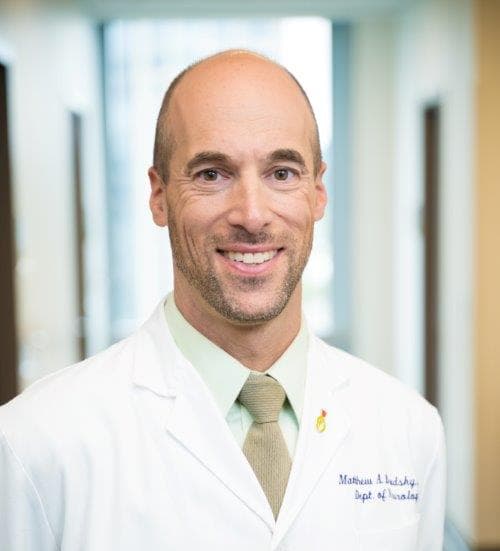
Matthew Brodsky

Matthew Brodsky, MD

Associate Professor of Neurology, Oregon Health and Science University School of Medicine

Neurology

Portland, OR
John Nutt

John Nutt, MD

Professor of Neurology, Physiology & Pharmacology; Jay Nutt, MD Professor of Clinical Research of Movement Disorders

Neurology

Portland, OR
Nicholas Olney

Nicholas Olney, M.D.

Co-Director, Providence Portland ALS Center

Neurology

Portland, OR
John Hammerstad

John Hammerstad, MD

John Hammerstad, M.D. Professor of Basic Research of Movement Disorders

Neurology

Portland, OR
Penelope Hogarth

Penelope Hogarth, MD

Director of Clinical Research, Parkinson Center; Associate Professor of Neurology and Molecular & Medical Genetics

Neurology

Portland, OR
Jeff Kraakevik

Jeff Kraakevik, MD

Assistant Professor of Neurology; Director of Movement Disorders Education

Neurology

Beaverton, OR
Marian Dale

Marian Dale, MD

Director, CurePSP Center of Care

Neurology

Beaverton, OR
Amie Hiller

Amie Hiller, M.D.

Director, Parkinson's Disease Research, Education, and Clinical Center (PADRECC)

Neurology

Beaverton, OR
Rebecca Spain

Rebecca Spain, MD

Associate Professor of Neurology, Oregon Health and Science University School of Medicine

Neurology

Beaverton, OR
Delaram Safarpour

Delaram Safarpour, M.D, MSCE

Associate Professor of Neurology and Medical Director, Deep Brain Stimulation Program, OHSU

Neurology

Portland, OR
Christopher Hollen

Christopher Hollen, MD

Assistant Professor

Neurology

Portland, OR
Ronald Pfeiffer

Ronald Pfeiffer, MD

Professor and Vice-Chairman, Director, Center for Parkinson's Disease and Movement Disorders

Neurology

Portland, OR
Sara Batya

Sara Batya, M.D.

Neurology

Springfield, OR
Michelle Cameron

Michelle Cameron, MD

Associate Professor, Neurology

Neurology

Portland, OR
Kathryn Chung

Kathryn Chung, MD

Associate Professor, Neurology, Oregon Health and Science University School of Medicine

Neurology

Portland, OR

Frequently Asked Questions

What does a Movement Disorders neurologist do?
A Movement Disorders neurologist is a Neurology physician with focused training in the diagnosis and management of conditions that affect movement, including Parkinson's disease and essential tremor. After completing Neurology residency, they pursue additional fellowship training so they can manage cases that fall outside what a general neurologist typically handles day to day.
What conditions does a Movement Disorders neurologist treat?
A Movement Disorders neurologist commonly treats Parkinson's disease, essential tremor, dystonia, Huntington's disease, ataxia, and tic disorders. Many also see closely related conditions within Neurology, particularly when a case is complex, atypical, or has not responded to first-line care from a general neurologist.
When should I see a Movement Disorders neurologist?
Consider seeing a Movement Disorders neurologist when you have a tremor, gait change, or other movement symptom that has not been clearly explained, when a primary care clinician or general neurologist suggests a focused evaluation, or when you want a second opinion from a physician whose practice is concentrated on this exact area. Patients often reach a Movement Disorders neurologist through referral, but you can also seek one directly.
How is a Movement Disorders neurologist different from a general neurologist?
Both are board-eligible neurologists, but a Movement Disorders neurologist has additional fellowship training and a practice that focuses on the diagnosis and management of conditions that affect movement, including Parkinson's disease and essential tremor. General neurologists treat a broad range of Neurology concerns; Movement Disorders neurologists concentrate on the harder or more specific cases within that range, and tend to see a higher volume of patients with Parkinson's disease, essential tremor, dystonia, Huntington's disease, ataxia, and tic disorders.
How does Convene match me with a top Movement Disorders neurologist?
Convene Health evaluates neurologists on peer recognition, clinical leadership, published research, institutional affiliations, and patient feedback. When you complete an intake, our care team reviews your history and matches you with a vetted Movement Disorders neurologist whose focus aligns with your case. Membership covers priority appointment coordination; the match itself is free.