
Best Medical Oncology specialists in New YorkPage 2

Match with a top Medical Oncology specialist in New York — priority appointment in days, not months.
Medical Oncology · New York
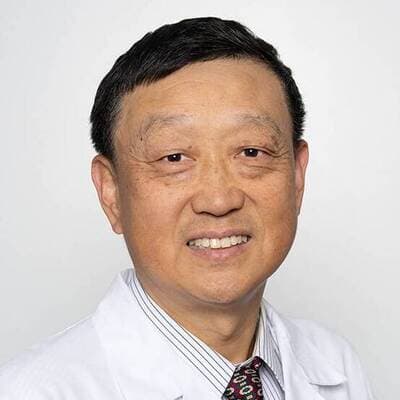
Delong Liu

Delong Liu, M.D., PH.D.

Professor of Medicine, New York Medical College; Director, Non-Myeloablative Transplant Program, Westchester Medical Center

Oncology

Hawthorne, NY
Monica Fornier

Monica Fornier, MD

Associate Attending Physician

Oncology

New York, NY
Maria Theodoulou

Maria Theodoulou, MD

Professor of Medicine at the Joan and Sanford I

Oncology

Albany, NY
Richard Furman

Richard Furman, MD

Professor of Medicine, Weill Cornell Medicine; Morton Coleman, M.D. Distinguished Professor of Medicine, Weill Cornell Medical College; Director, CLL Research Center

Oncology

New York, NY
Nicole Lamanna

Nicole Lamanna, MD

Associate Clinical Professor of Medicine, Hematologic Malignancies Section, Hematology/Oncology Division

Oncology

New York, NY
Jamie Chaft

Jamie Chaft, MD

Oncology

New York, NY
Piro Lito

Piro Lito, M.D., PH.D.

Director of Basic and Translational Research, Enid A Haupt Chair in Therapeutic Research, Professor, Memorial Sloan Kettering Cancer Center

Oncology

New York, NY
Dean Bajorin

Dean Bajorin, MD

Professor of Medicine, Weill Medical College of Cornell University

Oncology

New York, NY
Mark Stoopler

Mark Stoopler, MD

Associate Professor of Medicine, Medical Oncology, Columbia University College of Physicians and Surgeons

Oncology

New York, NY
Ping Chi

Ping Chi, M.D., PH.D.

Sarcoma Medical Oncologist

Oncology

New York, NY
Martin Voss

Martin Voss, MD

Clinical Director, Genitourinary Medical Oncology Service

Oncology

New York, NY
Sham Mailankody

Sham Mailankody, MBBS

Clinical Director, Cellular Therapy Service; Research Director, Myeloma Service; Associate Professor of Medicine

Oncology

New York, NY
Paul Oberstein

Paul Oberstein, MD

Director, Gastrointestinal Medical Oncology Program; Assistant Director, Pancreatic Cancer Center; Associate Professor of Medicine

Oncology

New York, NY
Aiwu He

Aiwu He, MD, PHD

Professor of Medicine; Director of Hepatobiliary Cancers, Division of Hematology and Oncology; Director of Liver Transplant Oncology, Center for Liver Disease and Transplantation

Oncology

New York, NY
Dmitriy Zamarin

Dmitriy Zamarin, M.D., PH.D.

Section Head of Gynecologic Medical Oncology; Co-Director, Center of Excellence for Gynecologic Cancer; Associate Professor | Tisch Cancer Institute

Oncology

New York, NY
David Scheinberg

David Scheinberg, MD

Vincent Astor Chair and Chairman, Molecular Pharmacology Program, Sloan Kettering Institute; Professor of Medicine, Weill Cornell Medicine

Oncology

New York, NY
Daniel Danila

Daniel Danila, M.D.

Associate Attending Physician, Genitourinary Medical Oncologist; Associate Professor of Medicine, Weill Cornell Medical College

Oncology

New York, NY
Andrew Epstein

Andrew Epstein, M.D.

Associate Attending Physician, Gastrointestinal Oncology

Oncology
New York, NY
Joshua Brody

Joshua Brody, M.D.

Professor of Medicine, Hematology and Medical Oncology; Professor of Oncological Sciences; Professor of Immunology & Immunotherapy; Director of the Lymphoma Immunotherapy Program

Oncology

New York, NY
Paul Hamlin

Paul Hamlin, MD

Medical Director, David H. Koch Center for Cancer Care; Clinical Director, Outpatient Lymphoma Service

Oncology

New York, NY

Frequently Asked Questions

What does a Medical Oncology oncologist do?
A Medical Oncology oncologist is a Oncology physician with focused training in the systemic treatment of cancer with chemotherapy, targeted therapy, immunotherapy, and hormonal therapy. After completing Oncology residency, they pursue additional fellowship training so they can manage cases that fall outside what a general oncologist typically handles day to day.
What conditions does a Medical Oncology oncologist treat?
A Medical Oncology oncologist commonly treats breast cancer, colorectal cancer, lung cancer, lymphomas, melanoma, and pancreatic cancer. Many also see closely related conditions within Oncology, particularly when a case is complex, atypical, or has not responded to first-line care from a general oncologist.
When should I see a Medical Oncology oncologist?
Consider seeing a Medical Oncology oncologist when you have a new cancer diagnosis or your treatment plan involves systemic therapy, when a primary care clinician or general oncologist suggests a focused evaluation, or when you want a second opinion from a physician whose practice is concentrated on this exact area. Patients often reach a Medical Oncology oncologist through referral, but you can also seek one directly.
How is a Medical Oncology oncologist different from a general oncologist?
Both are board-eligible oncologists, but a Medical Oncology oncologist has additional fellowship training and a practice that focuses on the systemic treatment of cancer with chemotherapy, targeted therapy, immunotherapy, and hormonal therapy. General oncologists treat a broad range of Oncology concerns; Medical Oncology oncologists concentrate on the harder or more specific cases within that range, and tend to see a higher volume of patients with breast cancer, colorectal cancer, lung cancer, lymphomas, melanoma, and pancreatic cancer.
How does Convene match me with a top Medical Oncology oncologist?
Convene Health evaluates oncologists on peer recognition, clinical leadership, published research, institutional affiliations, and patient feedback. When you complete an intake, our care team reviews your history and matches you with a vetted Medical Oncology oncologist whose focus aligns with your case. Membership covers priority appointment coordination; the match itself is free.